Argentina Accedes to the Patent Cooperation Treaty (PCT)
Translated from the Spanish original. Read the original

Director of Pulso Internacional

On the night of Thursday, November 19, 2026, the Argentine Senate approved Argentina's accession to the Patent Cooperation Treaty (PCT), with 47 votes in favor and 22 against, closing a regulatory gap of almost three decades. Argentina had signed the Patent Cooperation Treaty (PCT) in 1970 and the Senate approved it in 1998, so approval by the lower house was still pending.
The delay in approval was justified on the grounds that, since foreign companies faced a slow and costly national approval procedure, local companies could take advantage of international patents without paying usage fees for them. This was exploited by a limited group of companies, above all pharmaceutical ones, and it constrained industrial SMEs, which had no access to the knowledge and practice involved in using and leveraging patents.
What does registering under the PCT allow?
The PCT, administered by the World Intellectual Property Organization (WIPO), makes it possible to start, through a single international application, the procedure for seeking protection for an invention in multiple countries. The PCT does not create a worldwide patent, nor does it grant automatic protection in all countries. Each state retains the power to evaluate applications and to grant or reject patents under its national legislation, a competence that in Argentina belongs to the National Institute of Industrial Property (INPI). The PCT allows an applicant to defer payment of the high national fees while assessing the likelihood that a patent will be granted for the invention.
What has changed in how patents are applied for internationally from Argentina?
The traditional route an Argentine inventor had to follow was to apply for patents in each of the member countries of the Paris Convention. However, this meant filing separate applications and paying national filing fees, translation costs and attorneys' fees, all within 12 months of the date of the first application, without much information about the likelihood that the patents would be granted. With the PCT, by contrast, a single patent application is filed in a single language at a single office, within 12 months of the date of the first application. This single application has the same legal effect as filing separate patent applications in more than 150 participating member countries.
Foreign inventors have greater ease in protecting their inventions in Argentina
At the same time, foreign companies and inventors can use the PCT system to register patents for their inventions more quickly. This could facilitate the arrival of new investment and technology transfer contracts.
The commitments Argentina assumed in trade agreements that are fulfilled by this new law.
Today 159 countries are part of the PCT system, and Argentina was the only G20 member that had not yet joined. Article 13.40 of the Mercosur-European Union Interim Agreement, in force since May 1, 2026, establishes:
"Each Party shall make all reasonable efforts to accede to the Patent Cooperation Treaty, done at Washington on June 19, 1970"
Sources:
Director of Pulso Internacional
Lawyer specializing in international trade and productive investment, with more than 25 years of experience in international trade negotiations as an adviser to governments and to companies going international. At Pulso Internacional we analyze foreign trade, bringing clarity and international context so that your company can export and invest more.
Related analysis

Argentina Climbs to Fifth Place Among Peru's Suppliers, Overtaking Mexico
November 22, 2026 · 11 min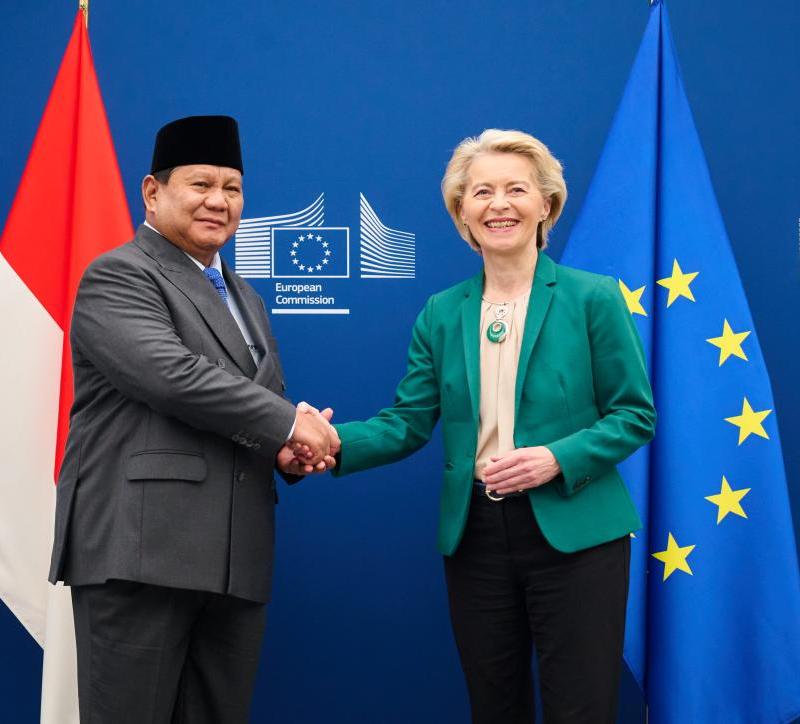
Indonesia Signs Trade Agreement with the EU and Competes with Mercosur in That Market in 2027
November 22, 2026 · 4 min