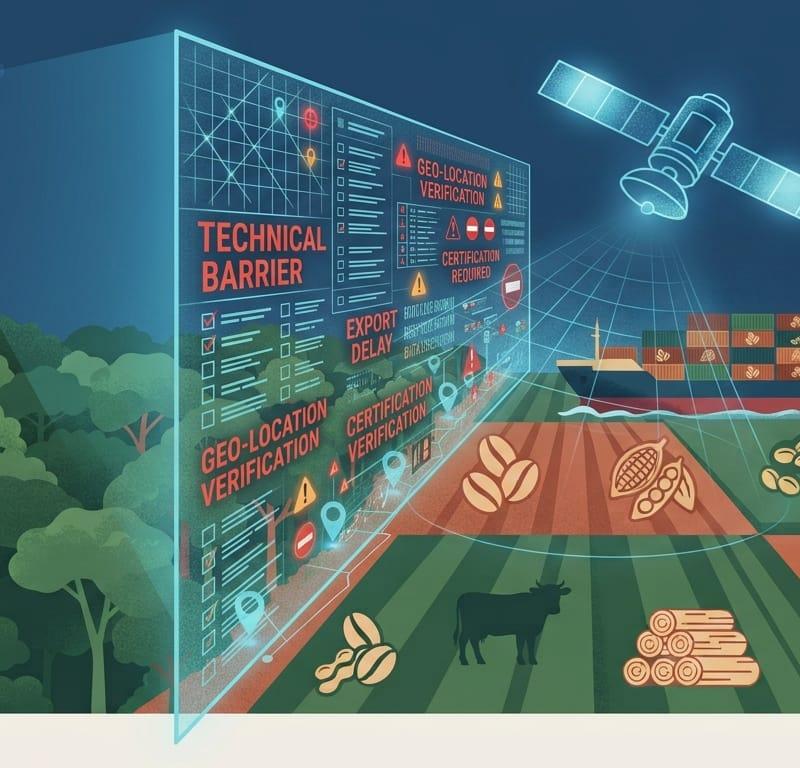
Indonesia Signs Trade Agreement with the EU and Competes with Mercosur in That Market in 2027
Translated from the Spanish original. Read the original

Director of Pulso Internacional
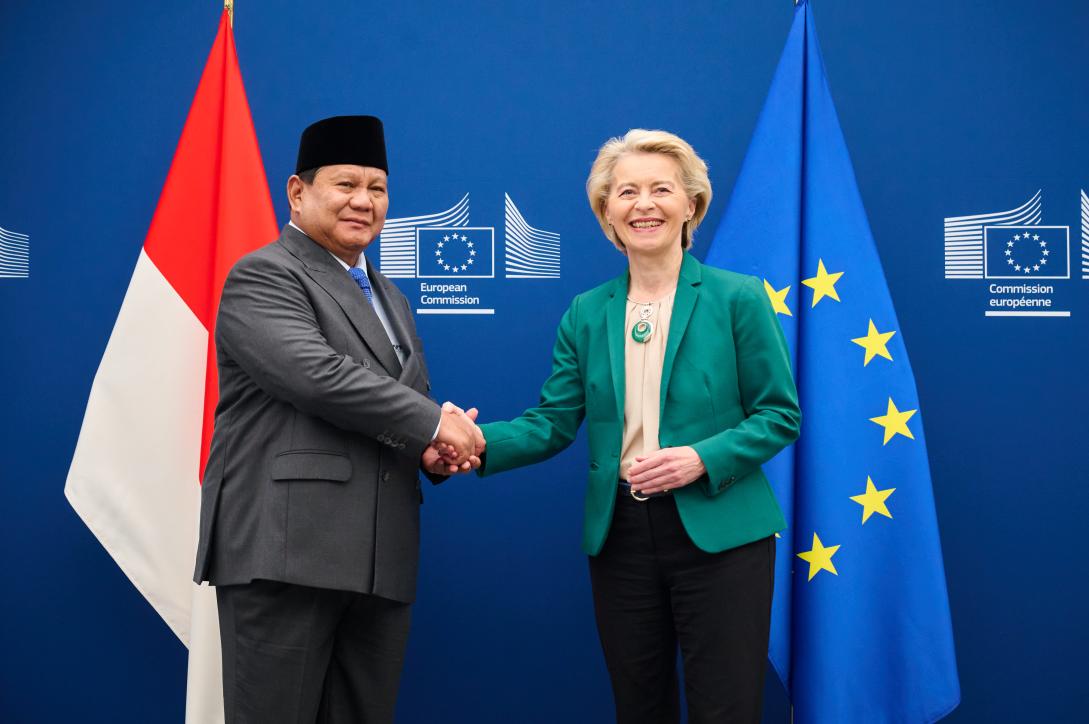
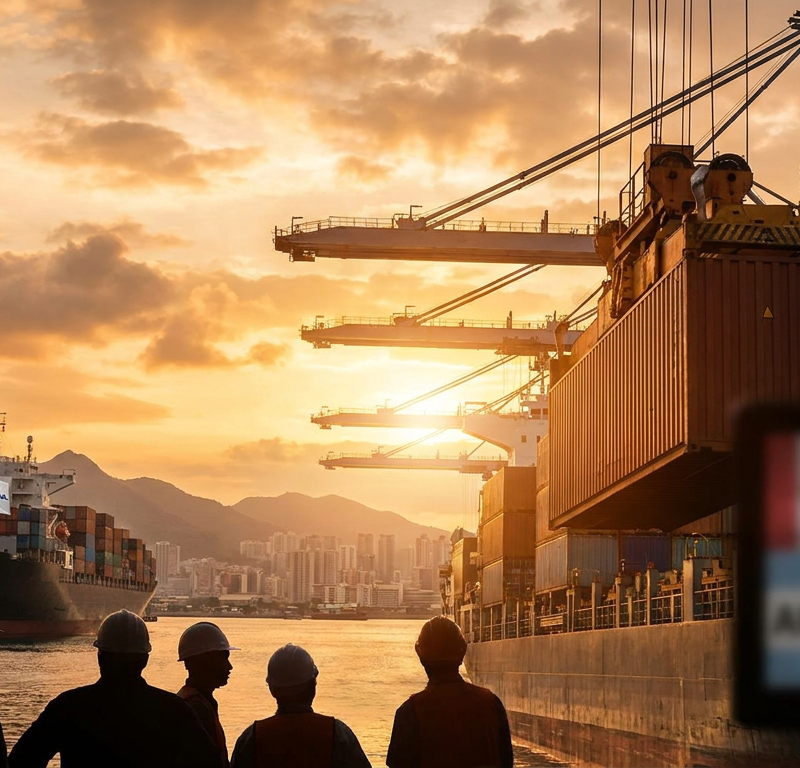
In Brussels, on Saturday, November 21, 2026, the President of the European Commission, Ursula von der Leyen, and Trade Commissioner Maros Sefcovic signed, together with an Indonesian delegation led by the Coordinating Minister for Economic Affairs, Airlangga Hartarto, a free trade agreement called the Comprehensive Economic Partnership Agreement (CEPA), which provides for the elimination of import duties on 98.5% of tariff lines and will enter into provisional application in 2027. The ceremony, held in the presence of the Ministers of Trade, Investment and Industry of the government of Indonesian President Prabowo Subianto, closes almost a decade of negotiations that began in July 2016 under the first Juncker Commission and outlasted three Indonesian presidencies. For Mercosur, and particularly for Argentina, it is a warning sign about the new map of competition for tariff preferences in the EU market, especially in biodiesel, since Indonesia also produces it from palm oil. At the same time, Mercosur has begun talks with Indonesia toward a trade agreement, which has led Brazil to launch public consultations with its business community on the advantages and precautions that such an agreement would entail. The other Mercosur countries have yet to carry out their own assessments.
Source: EU
The content of the agreement: near-universal coverage, sensitive sectors excluded
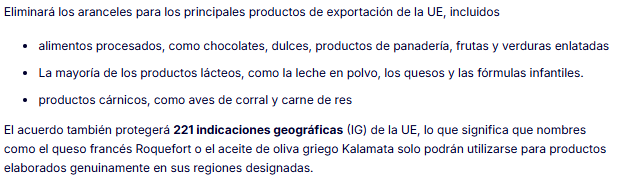
The provisional application of the agreement in 2027 means that most of the trade provisions will begin to operate before the full parliamentary ratification process is complete, a mechanism already used in previous EU agreements, such as the agreement with Mercosur. In quantitative terms, the impact is significant. Once the agreement is in force, European companies will save some 650 million euros a year in customs duties on goods traded with Indonesia. On the Indonesian side, the country committed to eliminating 96% of its tariffs within five years, including levies of up to 50% that it currently applies to imports of European cars, which positions German, French and Italian manufacturers in a market of more than 280 million consumers under unprecedented conditions.
Source: EU
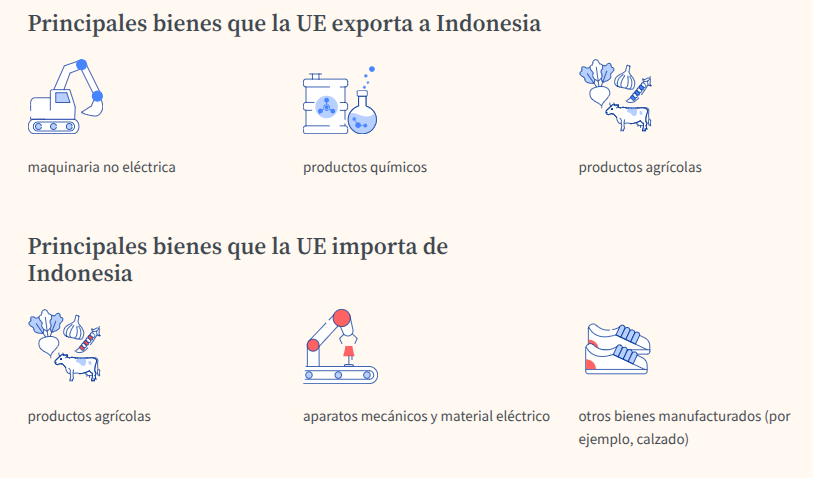
The European agri-food sector, which exports close to 1 billion euros a year to Indonesia, obtains protection for 221 geographical indications. At the same time, sensitive EU products such as rice, sugar and ethanol were left out of the liberalization, in a scheme that preserves the domestic protection mechanisms that the EU systematically applies in all of its latest-generation agreements.
The President of the Republic of Indonesia, Prabowo Subianto, stated:
“ This is an important moment. After many years of hard work, we have agreed to move forward. For Indonesia, the CEPA is not only about trade, but about fairness, respect and building a strong future together. The agreement must support our efforts to boost our industries, create jobs and strengthen our sustainable development goals . We are ready to finalize it soon, in a way that benefits both peoples ”.
Implications for Mercosur: a new competitor in the European market
From the standpoint of regional trade policy, the EU-Indonesia agreement introduces a variable that Mercosur, and Argentina in particular, cannot ignore. The South American bloc is in the phase of regulatory implementation of its own agreement with the EU, whose political signing took place in December 2024 after 25 years of negotiations and whose entry into force occurred in May 2026. While the Mercosur countries advance in the adaptation of their regulatory frameworks to access the European market with tariff preferences, Indonesia enters the same competitive space under equivalent conditions and a provisional application timetable that runs in parallel.
The overlap is neither accidental nor harmless. In manufactures, in processed agri-food products and in industrial goods of medium value added, Indonesian exports will compete directly for European demand.
Why it matters for Mercosur to assess the potential impacts of the agreements with the EU and with Indonesia
The signing of the EU's agreement with Indonesia shows that European trade bilateralism is operating at full speed. While Mercosur consolidates its agreement with Brussels, new competitors are gaining access to the same market under similar conditions and faster timetables. For Argentina, this means that the priority cannot be merely to sign, but to execute and to design a differentiation strategy against the supply from Southeast Asia, and to coordinate among the Ministry of Foreign Affairs, sectoral chambers and provincial governments a policy of access to the European market that is coherent, anticipatory and oriented toward concrete results.
At the same time, the EU competes with products that Mercosur can sell to Indonesia, so Mercosur companies need to know the full range of advantages and market access conditions in order to take advantage of them and anticipate the competition ahead of a possible Mercosur-Indonesia agreement.
It is important to assess the potential impacts that the CEPA between the EU and Indonesia may have on Mercosur products destined for those markets, as well as to take advantage of the niches and opportunities that arise for Mercosur companies. The participation of business chambers and companies from now on is an opportunity to ensure that the agreements do not become an empty shell or, worse still, a weapon against their interests.
Director of Pulso Internacional
Lawyer specializing in international trade and productive investment, with more than 25 years of experience in international trade negotiations as an adviser to governments and to companies going international. At Pulso Internacional we analyze foreign trade, bringing clarity and international context so that your company can export and invest more.
Related analysis
Argentina Climbs to Fifth Place Among Peru's Suppliers, Overtaking Mexico
November 22, 2026 · 11 min
Catamarca Bets on Lithium Mining and Transparency in Mining Royalties
November 21, 2026 · 4 min