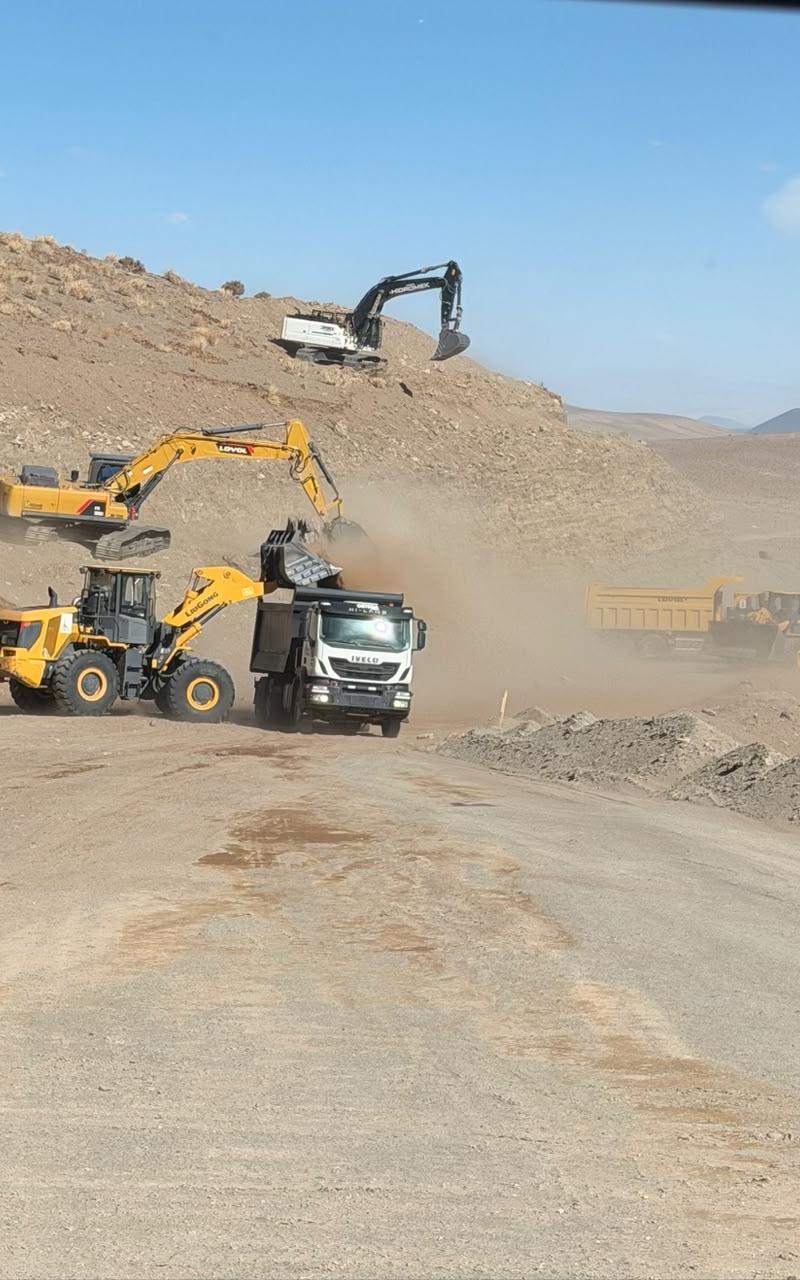
Biofuels and Oil as Drivers of Mercosur's Foreign Trade in 2026
Translated from the Spanish original. Read the original

Director of Pulso Internacional
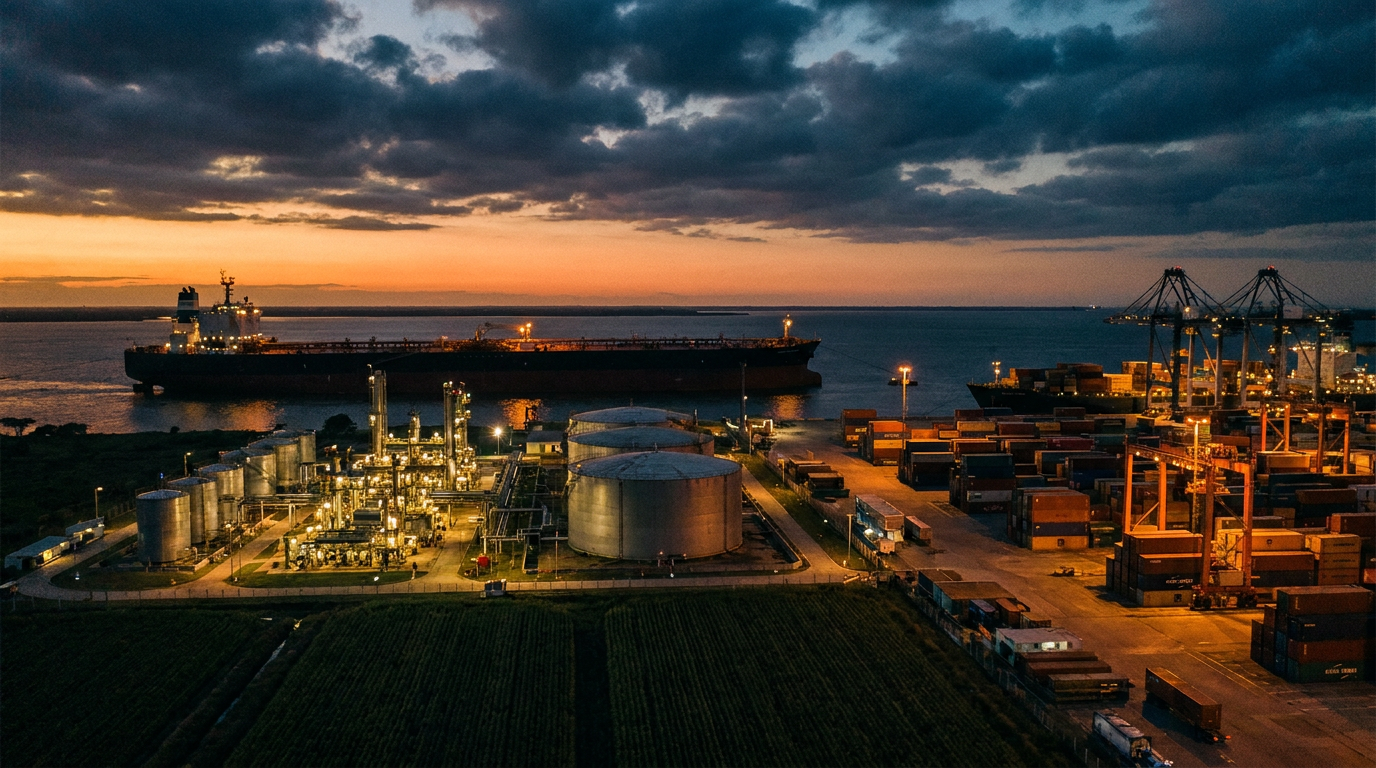
In the first nine months of 2026, Argentina recorded an unprecedented event in its recent export history: crude oil displaced soybean meal as its leading export product, ending a soy leadership that, according to the Rosario Board of Trade (BCR) report based on INDEC data, had extended uninterruptedly since 2002. This is not a short-term price swing or an atypical quarter. It is the cumulative result of a cycle of sustained investment in Vaca Muerta, of an international context that multiplied the value of crude, and of a change in the use of grains, no longer only for food but also as green fuel. According to BCR analysts, the key to understanding this increased competition in the global soybean meal market lies in biofuels, which induced greater global demand for soybean oil and, as a counterpart, left an abundant global supply of soybean meal, owing to productive complementarity.
For industries complementary to or related with the soy complex, this means a need to adapt to the new cycle, whether through sectoral reconversion toward oil and gas or mining on the one hand, or through the search for new markets for biofuels on the other.
The export boom in hydrocarbons, driven by the maturation of Vaca Muerta, and the Brazilian pre-salt reposition Mercosur as a strategic energy supplier in a global context marked by the diversification of sources in the face of volatility in the Persian Gulf markets and by the environmental requirements of developed countries, which are driving biofuels.
The shift in export relevance in Argentina from soybean meal to crude oil
Between January and September 2026, crude oil exports reached US$7,753 million, 58.6% more than in the same period of 2025. Soybean meal, in parallel, recorded sales of US$6,971 million, an improvement of 7.4%: positive in relative terms, but insufficient to sustain its historic leadership. The gap compared with five years ago is striking: the value of crude oil exported in the first nine months of 2026 was 6.5 times that of the same period of 2021, while soybean meal sales, by contrast, remained 25% below those of that time. This divergence in trajectories, one in accelerated ascent, the other in contraction, is what turns this figure into an indicator of structural transformation rather than a statistical anecdote.
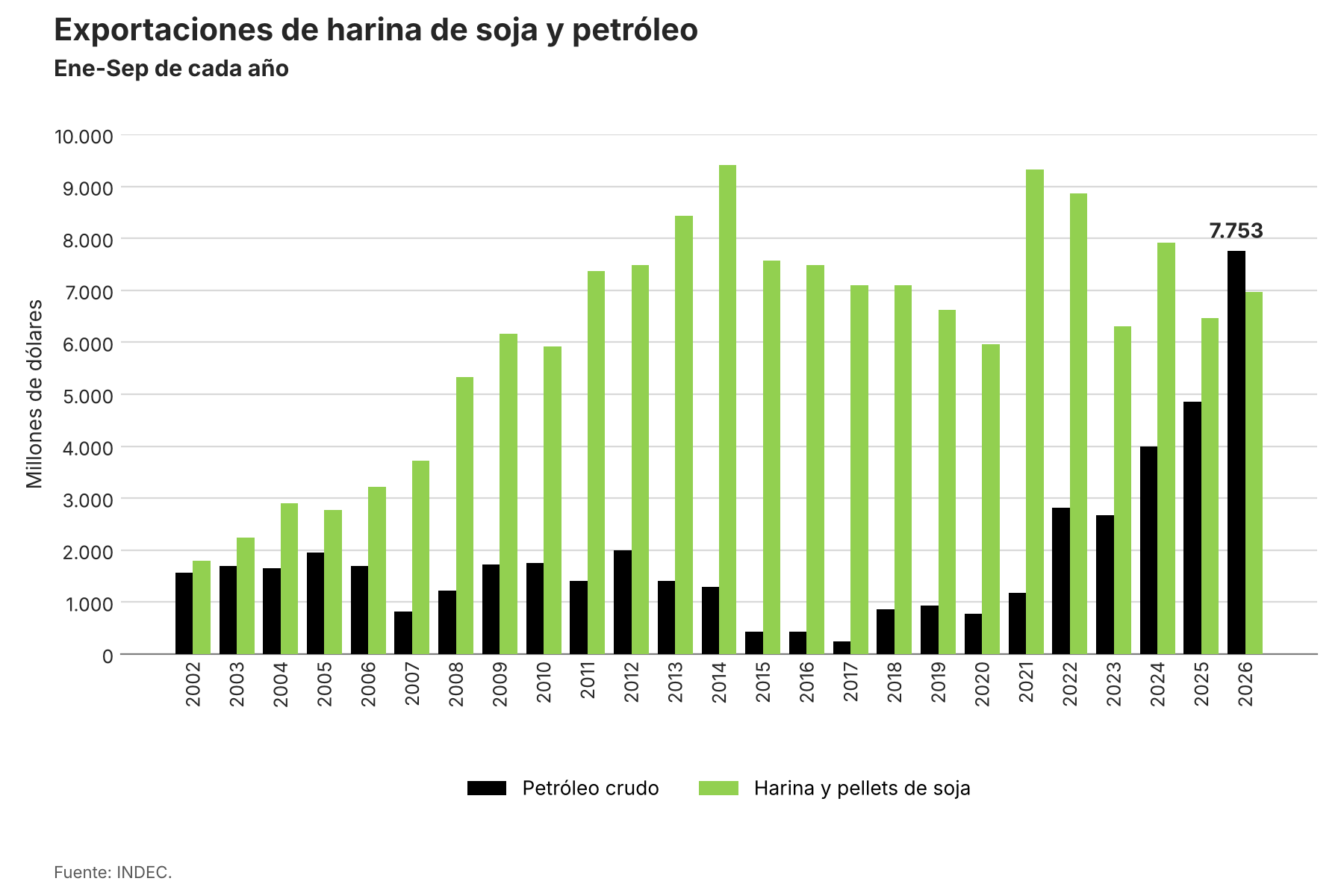
Source: INDEC / Rosario Board of Trade, November 2026
Grains as fuels
Over the last two decades, world production of soybean meal doubled, while consumption grew at a slower pace. Biofuel mandates, in force in the European Union, the United States, and multiple emerging economies, boosted global demand for soybean oil and, because its processing also generates meal as a by-product, expanded the supply of that derivative beyond what demand absorbed. The result was sustained downward pressure on export prices, which eroded Argentina's competitive position in a segment where the country has historically accounted for more than 40% of world exports.
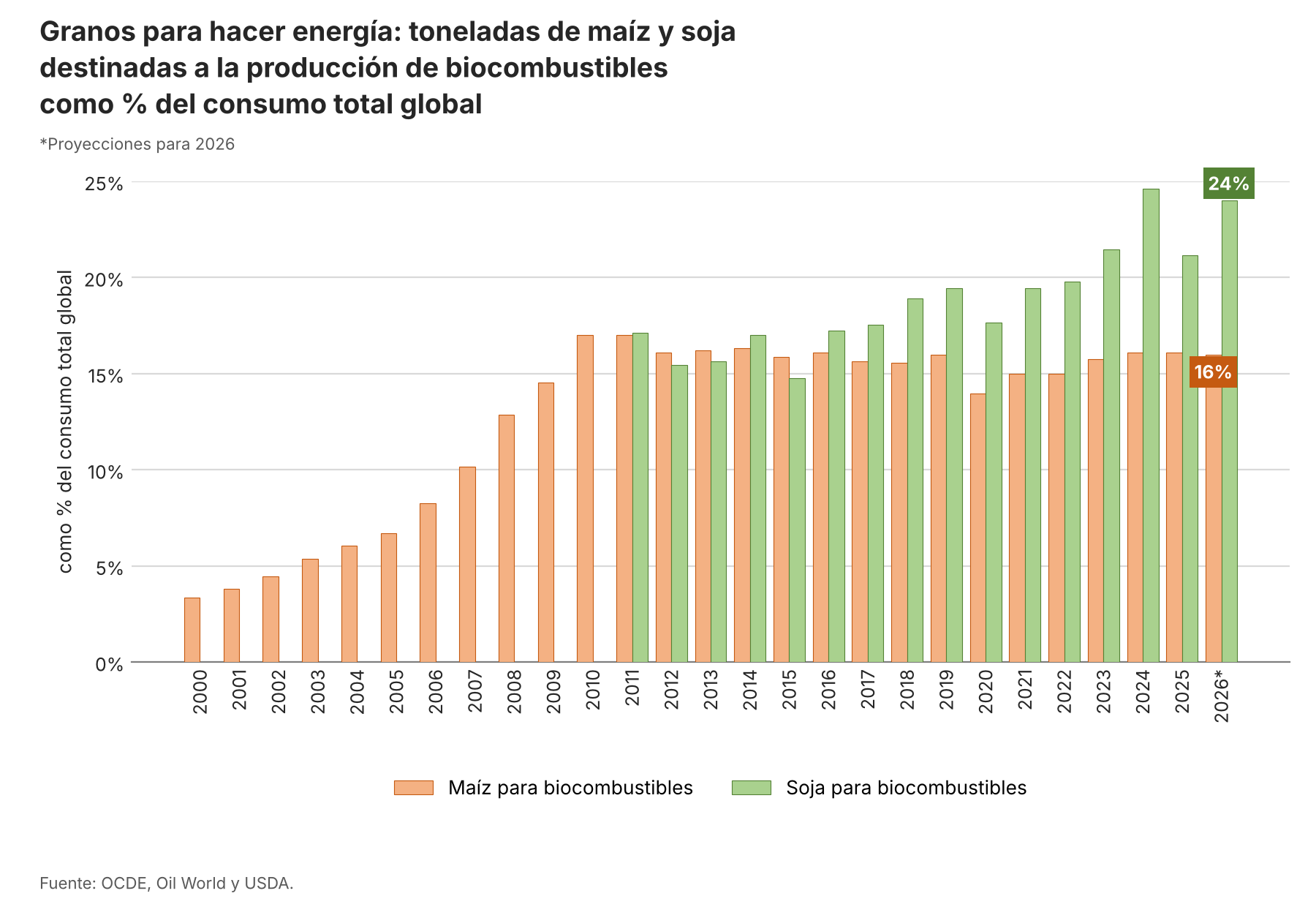
Source: Rosario Board of Trade. October 2026
According to the BCR report, the United States and Brazil account for 79% of world bioethanol production and 73% of consumption. For biodiesel, together they represent 40% of total production and 44% of global consumption. These two countries explain 77% of the world's soybean-oil-based biodiesel production. Both countries are large consumers of the fuels they produce. The difference with Argentina is that most of its production is destined for export for food consumption.
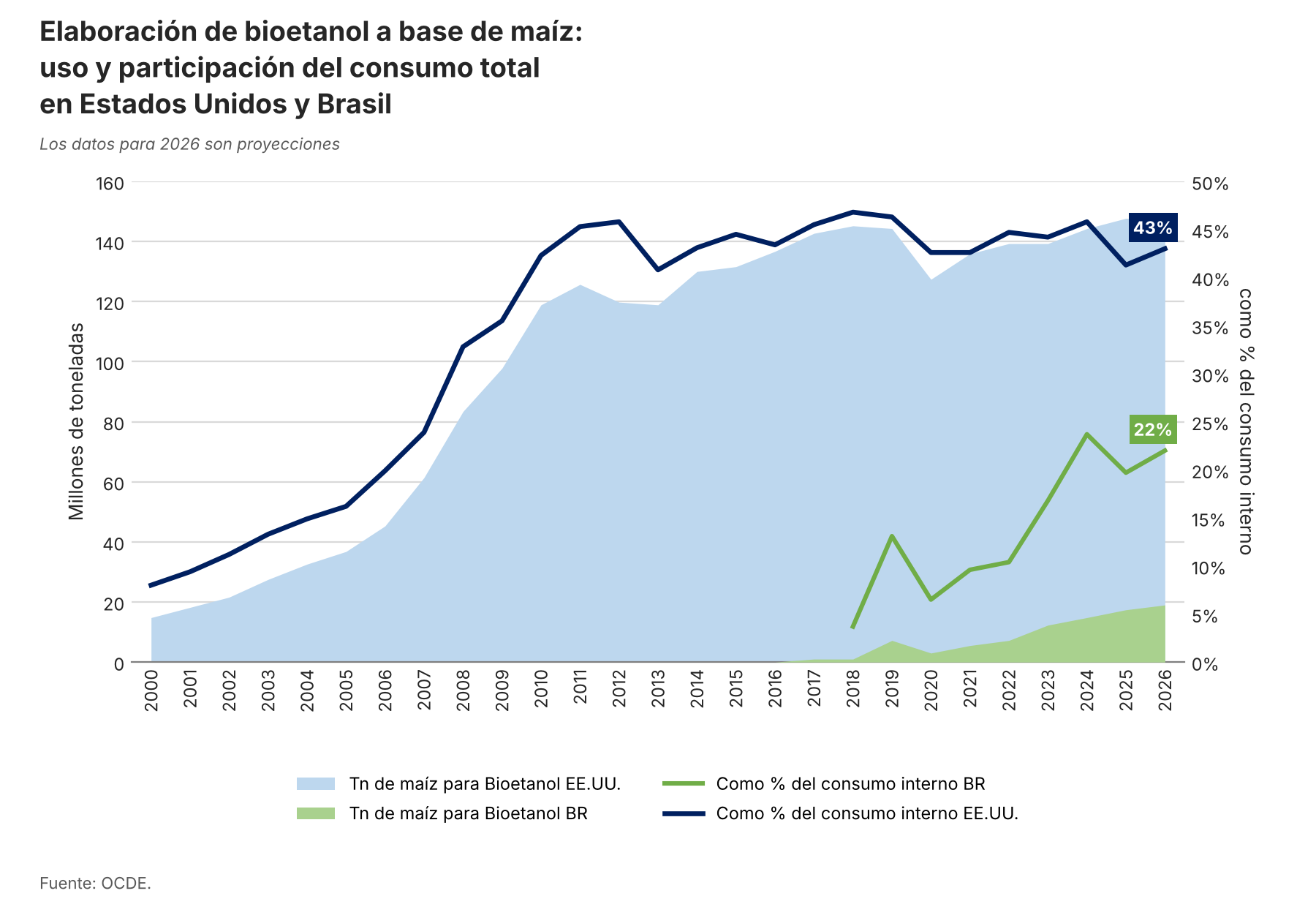
Source: Rosario Board of Trade - October 2026
According to the Rosario Board of Trade report, if we compare Argentina's projected 2025 production with its 2017 record, it fell by 67%, against the global trend. Over the same period, biodiesel production rose 7% in the European Union, 144% in the United States, 344% in Indonesia and 119% in Brazil. Meanwhile, domestic consumption
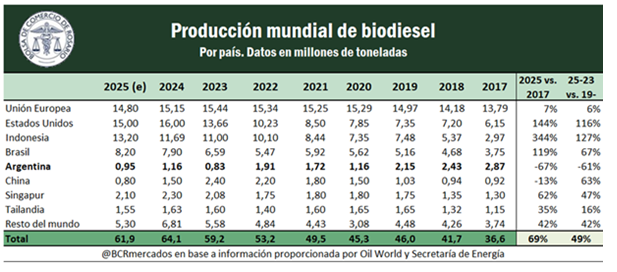
Source: Rosario Board of Trade
The lack of domestic consumption and external demand as constraints on Argentine biofuels
The lack of domestic consumption of biofuels in Argentina is a genuine constraint, as the chart showing biodiesel sales in the country demonstrates. The European Union applied antidumping duties on Argentine biodiesel from 2013. After a 2016 WTO panel that questioned its methodology, the amounts were reduced in 2017 and the European market reopened. According to 2025 reports, the EU withdrew tariffs on most Argentine biodiesel. The United States was harsher: in 2018 it imposed countervailing and antidumping duties of between 71.45% and 72.28% on Argentine biodiesel, and that market, which until 2017 was the main buyer, closed completely. With the European Union as practically the only destination, European rules weigh decisively on the plants, which today operate at around 20% of their capacity.
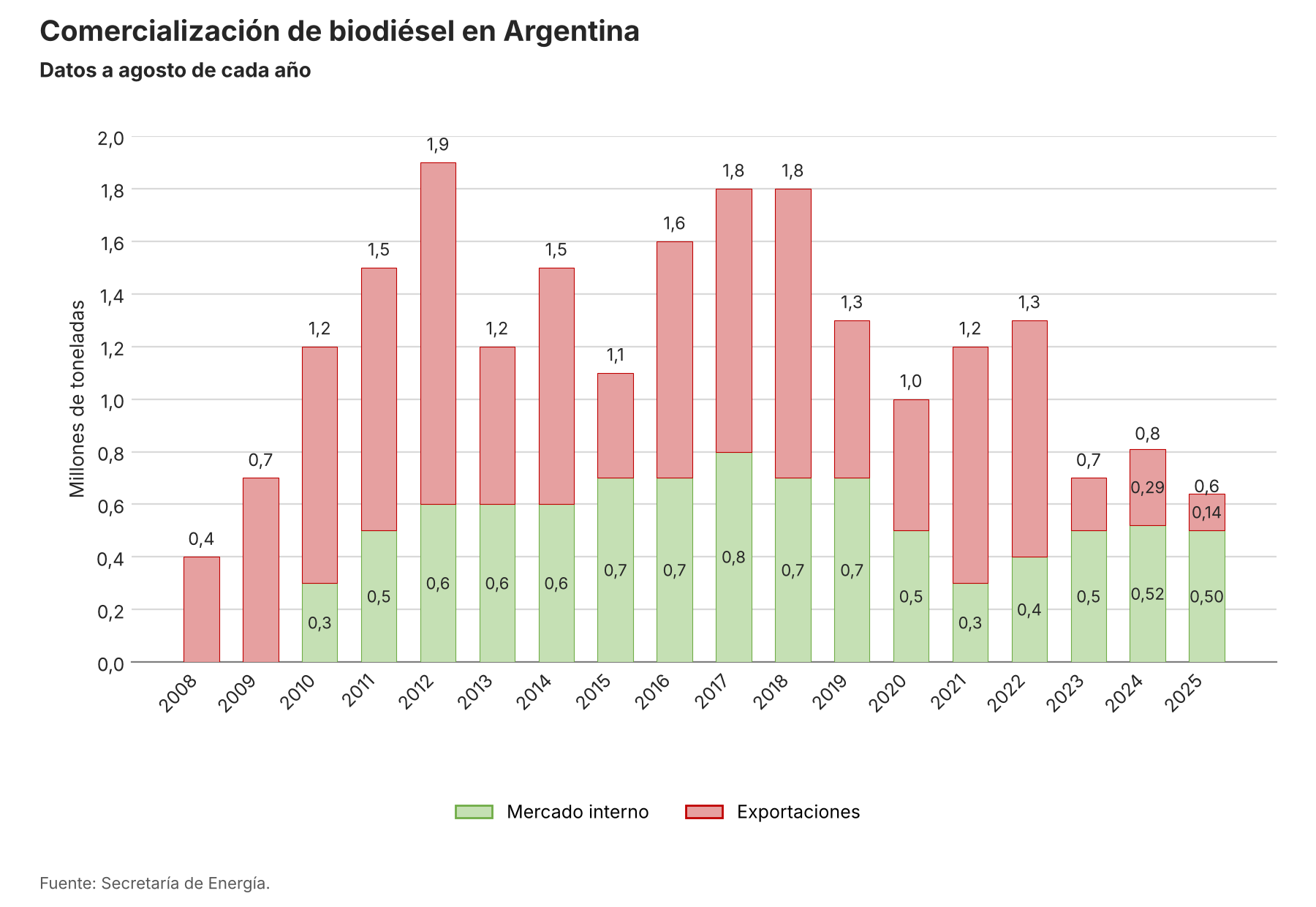
Source: Rosario Board of Trade
Antidumping measures against Argentine biodiesel in the US while it subsidizes its own producers
Argentina's biodiesel sector faces one of its greatest trade challenges in the US market, where antidumping measures in force until June 2028 significantly limit national exports. According to data from the US Department of Commerce, the antidumping measure on Argentine biodiesel remains in force until June 2028, following a recent extension that affects the sector's trade opportunities in the world's main energy market.
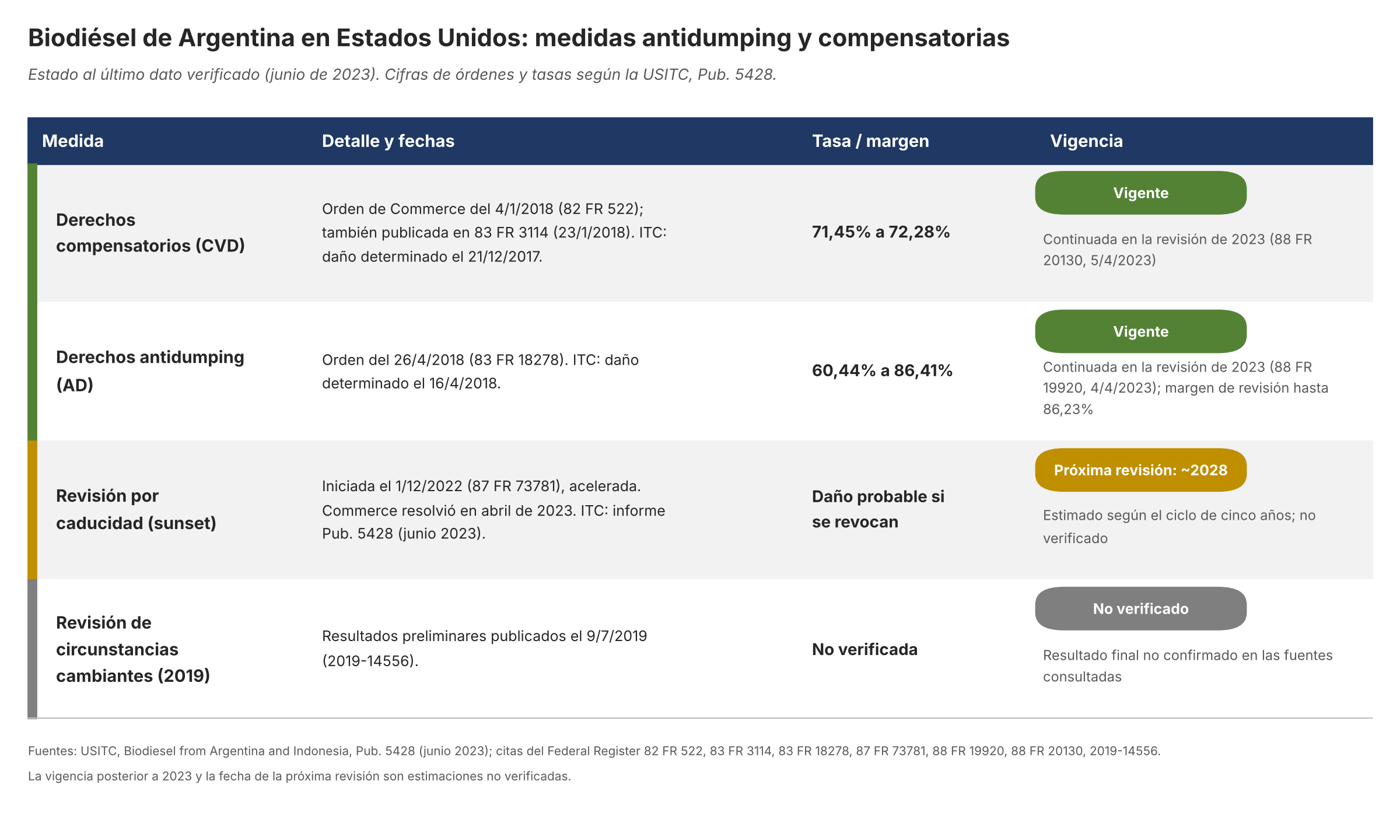
Source: USTR and own elaboration
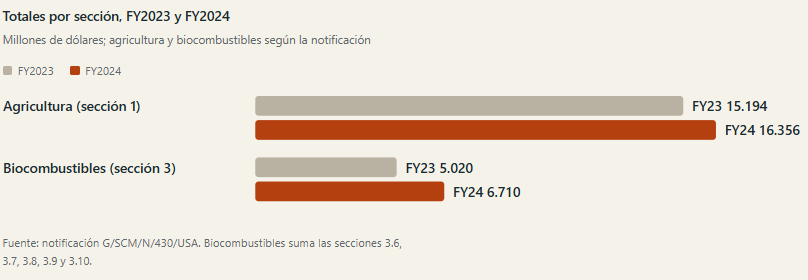
In addition to the protective measures to block the entry of biofuels originating in Argentina, for years the US maintained tax exemptions for biofuels that carry a high fiscal cost, according to the US government's notification to the WTO. According to the government itself, the revenue loss from the biodiesel and renewable diesel credit was US$4.190 billion in 2023 and US$5.840 billion in 2024. That credit, of US$1.00 per gallon, expired on December 31, 2024. The alternative fuel mixture credit cost US$810 million in 2023 and US$840 million in 2024. It expired on the same date. Second-generation biodiesel cost US$20 million per year, and sustainable aviation fuel cost US$10 million in 2024.
Status as of November 2026. According to the IRS website, all the section 40A, blending and SAF credits that appear in the notification remain expired. The exception is the section 40A(b)(4) credit for small agri-biodiesel producers, which expires on 12/31/2026. The credits in force today are 45Z and that agricultural credit. Thus, although most of them have expired, the subsidies made it possible to consolidate the sector, which moreover faced no Argentine competition. And there is a bill introduced in May 2026 to restore the biodiesel credit to US$1/gallon through 2029.
Source WTO: US Report. Own elaboration
The way forward to sustain the competitiveness of Argentina's biofuels sector
It is necessary to reorient the soy, corn and sugarcane sectors toward biofuels, following the trend of the other two main producers, the US and Brazil. In this context, it is essential that the government support Argentine producers and develop specific strategies to eliminate these trade barriers in the two main biofuel-importing markets, the US and the EU. To that end, it is necessary to make use of both the available legal mechanisms and bilateral negotiations with both, and in particular to raise the issue jointly with the other Mercosur members in the framework of the reviews of the Mercosur-EU Interim Trade Agreement.
Director of Pulso Internacional
Lawyer specializing in international trade and productive investment, with more than 25 years of experience in international trade negotiations as an adviser to governments and to companies going international. At Pulso Internacional we analyze foreign trade, bringing clarity and international context so that your company can export and invest more.
Related analysis

Argentina Climbs to Fifth Place Among Peru's Suppliers, Overtaking Mexico
November 22, 2026 · 11 min
Indonesia Signs Trade Agreement with the EU and Competes with Mercosur in That Market in 2027
November 22, 2026 · 4 min