Chinese Taipei Brings 3D Design to Paraguayan Textile SMEs
Translated from the Spanish original. Read the original

Director of Pulso Internacional
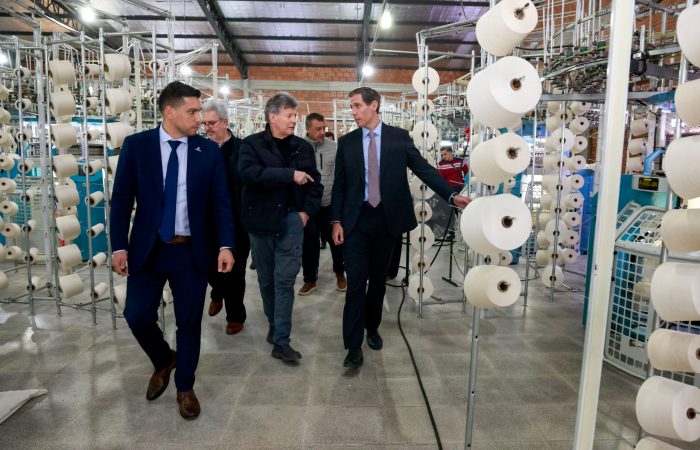
The Paraguayan textile industry accounts for about 7% of GDP and generates more than 33,000 direct jobs. Within that framework, Paraguayan textile small and medium-sized enterprises (SMEs) are adopting three-dimensional garment design technology with the technical and financial backing of Chinese Taipei, in an initiative that amounts to a structural transformation for one of the most vulnerable sectors of the regional economy. The program is part of a network of technical cooperation agreements between Paraguay and Chinese Taipei that has decades of history, but which in 2025-2026 has taken on a new operational dimension: the focus has shifted from the transfer of machinery to the transfer of digital capabilities, with 3D garment design as the linchpin. Through these facilities, an SME that can visualize, adjust and present a garment in a digital environment before producing it not only reduces waste and development times, but also acquires a common language with international buyers who now demand virtual prototypes before committing production orders.
Paraguay's Minister of Industry and Commerce, Marco Riquelme, stated:
“Everything that has to do with textile apparel is, for us in Paraguay, a strategic product for the Government; these are products that can make us a power at the regional level and, why not, at the global level”
The Paraguayan textile and apparel industry in search of differentiation
The Paraguayan textile and apparel industry has for decades been a sector of low technological intensity, oriented predominantly toward the domestic market and border trade. Its competitiveness has rested on a combination of low labor costs and proximity to Brazil and Argentina, two markets that absorb a large share of regional production. That model, however, faces mounting pressures: the advance of Asian manufactures in MERCOSUR markets, the growing sophistication of international buyers' requirements and the accelerated digitalization of global textile value chains, all of which are eroding traditional comparative advantages. The alliance between the Paraguayan government and Chinese Taipei targets design directly as a lever for added value, and 3D software as the tool that allows an SME with limited resources to compete in product presentation and development with larger-scale players.
The role of Chinese Taipei goes beyond technology cooperation with Paraguay
The cooperation of Chinese Taipei with Paraguay, one of the fourteen states that maintain formal diplomatic relations with the island, follows a logic that goes beyond mere solidarity between diplomatic partners. Over the past decades, Chinese Taipei has built a textile and precision manufacturing industry that now holds leading positions in technical design, advanced materials and efficient production processes. Exporting that knowledge to strategic allies in Latin America is at once an instrument of foreign policy and a way of consolidating economic ties that reinforce diplomatic recognition.
The transfer of 3D design capabilities, through specialized software such as CLO3D or Browzwear, widely used in the global industry, entails a significant learning curve for operators and designers at Paraguayan SMEs who have had no prior exposure to these tools. The technical training programs run with institutions such as the SNPP (National Vocational Training Service) and the UIP (Paraguayan Industrial Union) The textile digitalization process has already generated more than US$30,000 in direct orders and more than US$1 million in commercial commitments through the InnovaConnecta 2025 roundtables, networking opportunities that connect local companies with potential partners. 38 instructors have been deployed across the country so that the development of technical capabilities is not concentrated solely in Asunción. This matters because textile skills exist beyond the capital. If training, technology and service centers reach more regions, more micro, small and medium-sized enterprises (MSMEs) will be able to participate. This is how digital transformation becomes inclusive, as Minister Marco Riqueilme commented.
Source: WTO
Production linkages and export opportunities for Paraguayan textiles
In terms of international integration, Paraguay has an advantage in its Maquila regime, which allows foreign companies to set up productive capacity in Paraguayan territory, taking advantage of reduced operating costs, cheap energy and a favorable tax framework. An example of an integrated production chain is the company Indutex, which begins with the import of yarn under the Raw Material Regime of the Ministry of Industry and Commerce (MIC), continues with its transformation into fabric and the dyeing processes, and culminates in the manufacture of finished garments. Currently, the apparel manufacturing stage employs 200 people, including workers involved in cutting, sewing and finishing the garments. The company began operations in Paraguay in 1995 and, over three decades, evolved from production with second-hand machinery to incorporating new equipment and progressively expanding its processes.
Combining bilateral and multilateral aid for Paraguay's productive development
The combination of that regime with a base of technologically up-to-date textile SMEs in design creates attractive conditions for regional or international brands to consider Paraguay as a production destination with added value in design, not just in basic garment manufacturing.
The WTO's Aid for Trade initiative has identified Paraguay among the countries benefiting from programs aimed at strengthening productive capacity and trade infrastructure, which opens a window of multilateral financing that complements bilateral cooperation with Chinese Taipei. Coordinating these two vectors of support, bilateral and multilateral, is an exercise in economic diplomacy that the Paraguayan government can leverage systematically.
Sources
Director of Pulso Internacional
Lawyer specializing in international trade and productive investment, with more than 25 years of experience in international trade negotiations as an adviser to governments and to companies going international. At Pulso Internacional we analyze foreign trade, bringing clarity and international context so that your company can export and invest more.
Related analysis
Argentina Climbs to Fifth Place Among Peru's Suppliers, Overtaking Mexico
November 22, 2026 · 11 min
Indonesia Signs Trade Agreement with the EU and Competes with Mercosur in That Market in 2027
November 22, 2026 · 4 min