Industry invests in technology to turn waste into alternative fuels
Translated from the Spanish original. Read the original
By Azul Martínez Lo Re
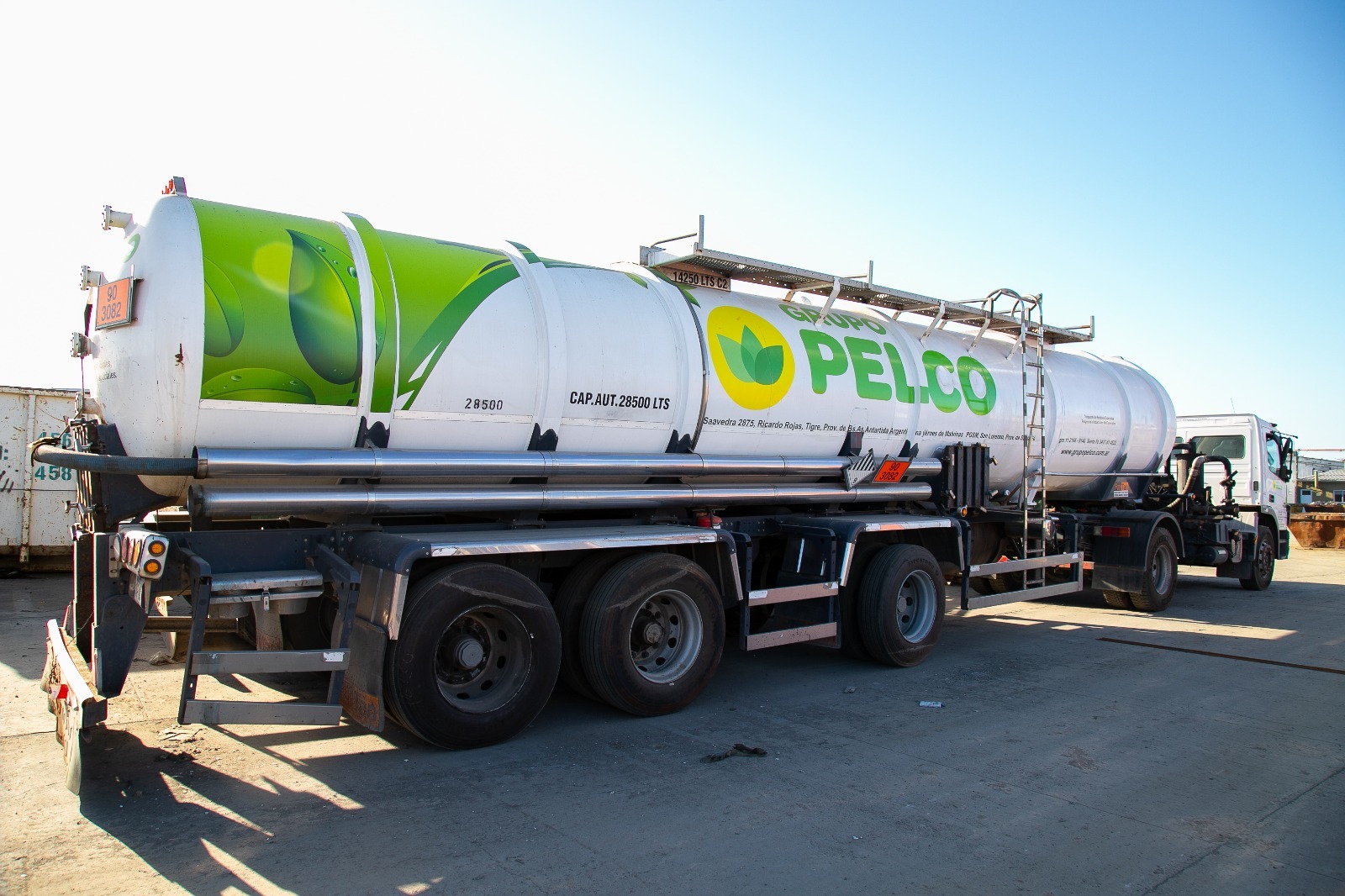
Industrial waste management is ceasing to be solely an activity linked to treatment and final disposal. For Grupo Pelco, the challenge of the coming years lies in recovering materials and converting part of the waste into valuable resources such as energy, before it is definitively eliminated. Headquartered in Puerto General San Martín, the company manages more than 90,000 tonnes of industrial waste per year and in recent fiscal years has managed to increase the volumes treated, even in a scenario of low growth in Argentine manufacturing activity. According to the company, this performance was mainly linked to a larger market share and to growing demand for services that combine environmental safety, traceability and waste recovery alternatives. Founded in 1993, Grupo Pelco also has a plant in Tigre and develops various technologies for the treatment and use of waste. Among them is blending for the production of alternative fuels, a process that makes it possible to condition certain hazardous waste for use as fuel in cement kilns.
From waste to fuel
The logic is to make use of waste that can no longer return to the traditional recycling circuit but still retains energy content. Contaminated plastics, cardboard, textiles and other streams can be analyzed to determine whether they meet the conditions necessary to enter the process.
“There is enormous potential. We have waste with energy content, technology to condition it and an industry that can replace part of the traditional fuels it consumes. The challenge is to connect those three points with traceability, scale and environmental safety,” says Claudia Kalinec, partner and director of Grupo Pelco.
Before being used, the materials are sampled and analyzed in a laboratory. The parameters evaluated include calorific value and moisture, as well as the specifications required by the cement industry. They then undergo conditioning and shredding processes and, through blending, different streams are combined to obtain a homogeneous product suitable as an alternative fuel. Grupo Pelco obtained approval of the R1 technology for this activity and backed the development with investments in new shredders and equipment aimed at increasing its alternative fuel production capacity.
The growth opportunity, according to the company, is significant. The Argentine cement industry shows levels of alternative fuel use three to four times lower than those recorded in other countries, which opens room to replace part of the consumption of traditional fuels.
Growing by adding value
Energy recovery is, in any case, one of the alternatives within a broader strategy. The company also works with recycling and reuse, physicochemical treatment, material recovery and controlled thermal treatments for the streams that require that type of technology. According to data provided by Pelco, between 30% and 40% of the waste it receives currently finds some route of recovery or revalorization, although the proportion varies according to the characteristics of each material. In the specific case of waste that can be used in the formulation of alternative fuels, around 30% currently meets the conditions to evaluate its incorporation into that circuit.
Kalinec notes that this percentage can grow as the company incorporates new technologies, demand for alternative fuels increases and generating industries improve the separation and characterization of their waste. In that process, the company seeks to position itself not only as a waste treatment operator but as a link in the industrial chains of material and energy recovery. The strategy involves moving from a model centered on managing an environmental cost to one capable of generating new uses and markets from that same waste, a shift that can open growth opportunities both for Pelco and for the industries that generate those materials.
Investments for a new stage
This shift also changes the relationship with industrial clients. The approach consists of analyzing each stream before defining its destination and determining whether there is a recovery, recycling or waste recovery alternative that would reduce the amount of waste sent for elimination.
The growth plan is complemented by investments in infrastructure and operating capacity. In recent years, Pelco renewed and expanded its truck fleet, added new storage areas and maneuvering yards, made improvements to its facilities and modernized the control systems of its kilns. It also renewed its triple ISO certification and added a code of ethics and an anti-corruption policy. A renewable energy project is also part of this agenda. At its Puerto General San Martín complex, the company is moving forward with the installation of a photovoltaic park that will supply 100% of the electricity consumed by the plant from renewable sources. The project also envisages generating a surplus that could be fed into the grid for use by other industries.
For Pelco, the transformation of the business thus rests on a combination of scale, technology and investment. The company seeks to ensure that an ever-larger proportion of the more than 90,000 tonnes it manages annually can recover materials or energy before reaching the point of elimination.
After more than three decades dedicated to industrial waste management, the company aims for its next stage of growth to be defined not only by how many tonnes it can treat, but also by how much value it can recover and return to the production cycle.
Investments for a new stage
This shift is also changing the relationship with industrial clients. The approach is to analyze each waste stream before deciding its destination and to determine whether there is a recovery, recycling or waste recovery alternative that would reduce the amount of waste sent for elimination.
The growth plan is complemented by investments in infrastructure and operating capacity. In recent years, Pelco has renewed and expanded its truck fleet, added new storage areas and maneuvering yards, upgraded its facilities and modernized the control systems of its kilns. It also renewed its triple ISO certification and adopted a code of ethics and an anti-corruption policy. A renewable energy project adds to this agenda. At its complex in Puerto General San Martín, the company is moving forward with the installation of a photovoltaic park that will supply 100% of the electricity consumed by the plant from renewable sources. The project also contemplates generating a surplus that could be fed into the grid for use by other industries.
For Pelco, then, the transformation of the business rests on a combination of scale, technology and investment. The company aims for an ever-larger share of the more than 90,000 tonnes it handles each year to have its materials or energy recovered before reaching the elimination stage.
After more than three decades devoted to industrial waste management, the company intends for its next stage of growth to be defined not only by how many tonnes it can treat, but also by how much value it can recover and return to the production cycle.
Related analysis

European Assessment of the EU-Mercosur Agreement: In 4 Months, European Exports Grow 9%
November 5, 2026 · 2 min
Why Has the US Increased Its Investment in Germany?
November 3, 2026 · 5 min