US Moves Ahead with Fintech Deregulation
Translated from the Spanish original. Read the original

Director of Pulso Internacional
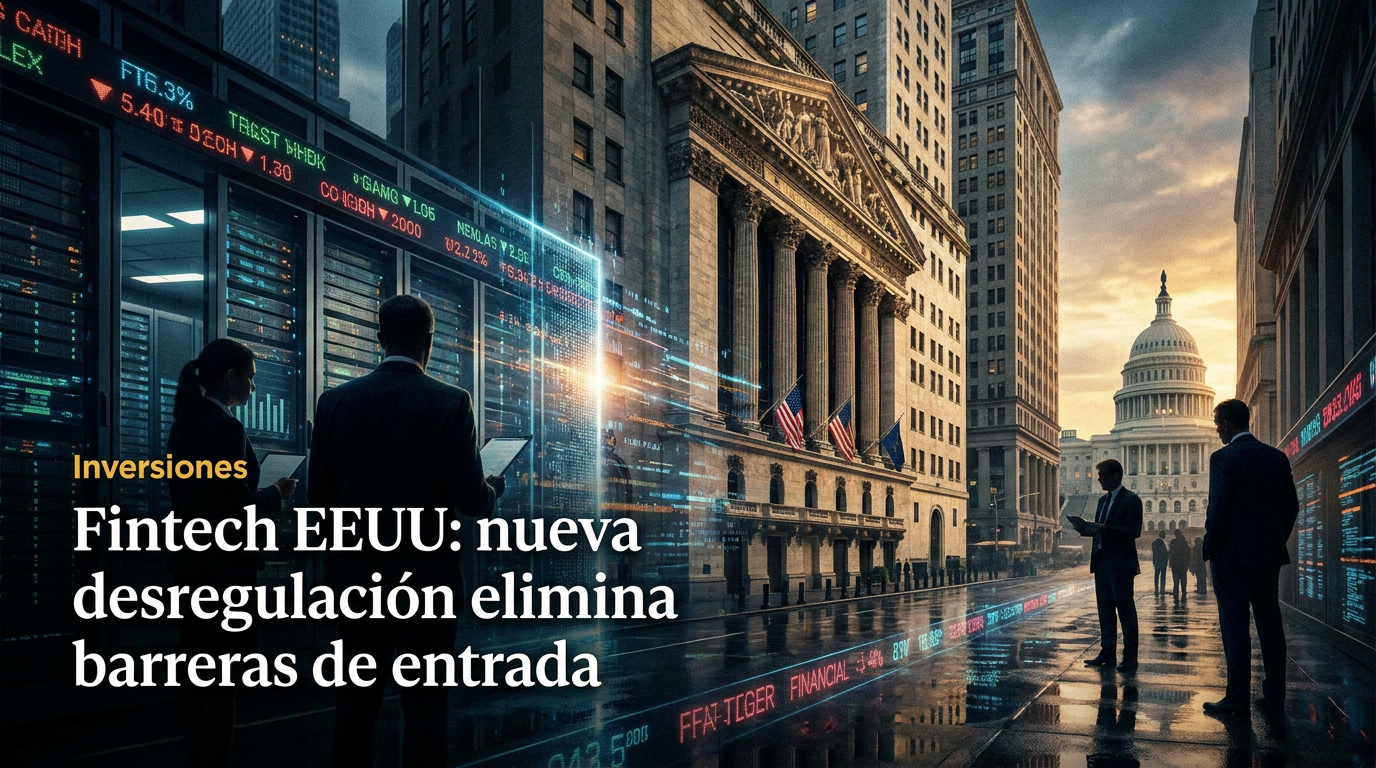
On May 19, 2026, Donald Trump issued Executive Order 14405, which directs his administration to seek innovative solutions to support the development of financial technology (fintech) companies. Legislative initiatives such as the CLARITY Act (Digital Asset Market Structure Act) and the frameworks for stablecoins show the importance the US government attaches to fintech, reducing barriers to entry into the market without eliminating prudential supervision. This regulatory modernization strategy rests on the need to avoid competitive barriers vis-à-vis traditional banks, while maintaining controls on misleading advertising and specific limits on investment products.
Fintech in Argentina
One of the sectors that has developed the most within Argentina's software industry is fintech companies. These companies offer innovative services and solutions that improve access to financial products and services for businesses and consumers, such as payment processing, lending, deposit-taking, derivatives, investment management and brokerage services, without being banking institutions. Many of them are grouped in the Argentine Fintech Chamber, according to which 939 companies make up the sector in our country and operate in 10 major business verticals; added to the companies that are not fintech but support the industry by providing services, the total comes to 1,027 companies.
10 Business verticals of fintech in Argentina
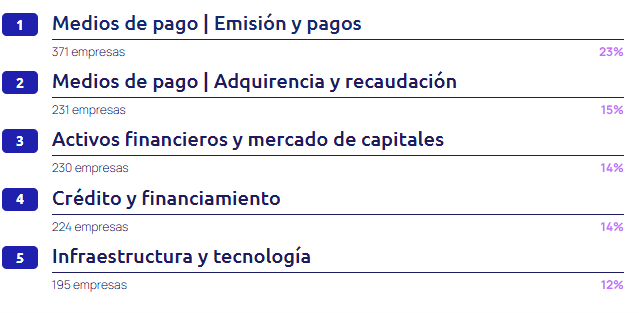
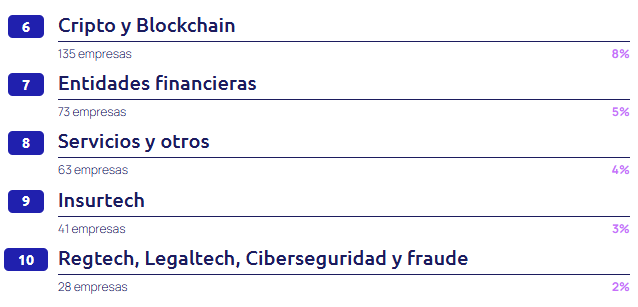
The development achieved by Argentine companies across the region leads us to pay attention to the implementation of the actions to simplify fintech regulation being carried out by the US government, which sets a precedent in the global competition for investment in financial technology. The new US regulation matters for Latin America because it accelerates competitive pressure on regional regulatory frameworks. US fintechs operating under clearer rules can scale payment, remittance and digital custody products more efficiently into Latin American markets, where traditional banking has higher operating costs and lower levels of financial inclusion. The US simplification process represents both an opportunity and a challenge for the regulatory framework of MERCOSUR, particularly for Argentina. The recent experience of Argentina's National Securities Commission (CNV) in automating public offering authorizations, which seeks to unblock processes and bring the capital market closer to more companies, shows that the region is also moving toward less bureaucratic schemes. For Argentine fintechs seeking to access the US market, this selective deregulation represents a window of opportunity for exporting their products and services.
Outlook for fintech in the US and Europe
The US process of simplifying fintech regulation must be analyzed in the context of strategic competition with the European Union for leadership in global financial technology standards. While the European Union moves forward with more heavily regulated frameworks such as MiCA (Markets in Crypto-Assets), the United States opts for a simplification strategy that favors speed of market entry and innovation over exhaustive regulatory harmonization. For Latin America, this divergence of approaches between the two leading global economies represents an opportunity to position itself. The countries of the region that manage to develop regulatory frameworks combining the innovation of the US model with the consumer protection elements of the European approach can establish themselves as regional hubs for fintech expansion toward both markets. The bloc's ability to anticipate and counter the effects of investment concentration in jurisdictions with more competitive frameworks will determine whether the region maintains its position as a destination market or becomes a source of talent and capital for more developed fintech ecosystems. Regional fintechs that fail to establish strategic partnerships or direct access to the US market in the coming months will face significantly more complex competitive conditions once the new regulatory system is consolidated.
Sources
- Ámbito — The US crypto regulation bill advances, but the war between banks and exchanges has yet to subside
- iProfesional — Regulating cryptocurrencies in the US puts the market on alert and sets multimillion-dollar fines
- El Observador — Regulatory big bang: the CNV automates public offering authorizations and speeds up market access
Director of Pulso Internacional
Lawyer specializing in international trade and productive investment, with more than 25 years of experience in international trade negotiations as an adviser to governments and to companies going international. At Pulso Internacional we analyze foreign trade, bringing clarity and international context so that your company can export and invest more.
Related analysis
European Assessment of the EU-Mercosur Agreement: In 4 Months, European Exports Grow 9%
November 5, 2026 · 2 min
Why Has the US Increased Its Investment in Germany?
November 3, 2026 · 5 min