Argentine auto parts companies and the competition between China and the US
Translated from the Spanish original. Read the original

Director of Pulso Internacional

China begins to let go of subsidies for electric car manufacturing
In Argentina we have recently seen the arrival of Chinese cars, which we had anticipated a year and a half ago, and which seems unstoppable.
Sales of electric vehicles in China, which account for 50 % of all cars sold in that country, grew a modest 1% in January 2026, mainly due to the expiration of subsidies in December 2025 and the introduction of a new 5 % purchase tax from January 2026, replacing the previous full exemption from the 10% rate.
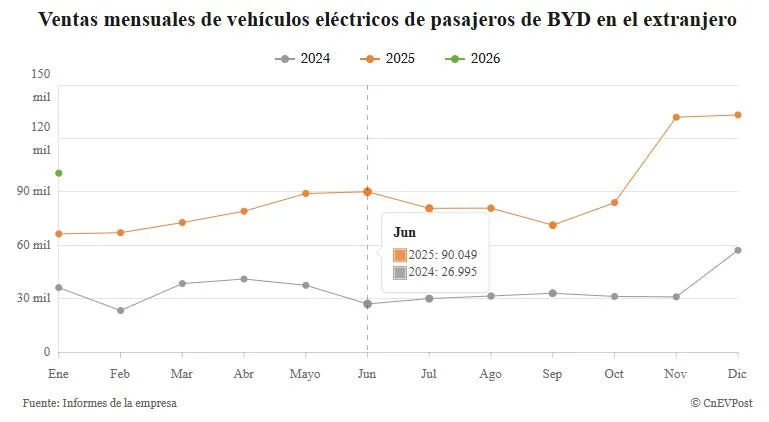
Sales of BYD, China's largest electric car maker, fell 30 % year-on-year, to just over 210,000 units.
But its exports have risen: BYD exported 100,482 electric vehicles in January, 51.47% more than in the same month of the previous year, and Argentina is emerging as a new destination.
The new opportunity for Argentine auto parts makers
In light of this reality and the new US-Argentina agreement, under which US vehicles will enter with quotas and a preferential tariff (10,000 cars per year without paying the 35% tariff) and under which Argentina accepts US safety standards for cars and auto parts, it remains to be seen whether the US or China will win the competition for the Argentine market.
A new opportunity arises for Argentine auto parts companies, which will have to adapt in order to integrate into this new reality, and they are more likely to find US counterparts through licenses, patents, technology transfer agreements and investments than Chinese companies, which so far have shown no willingness to engage in auto parts manufacturing in our country, as they have done in Brazil.
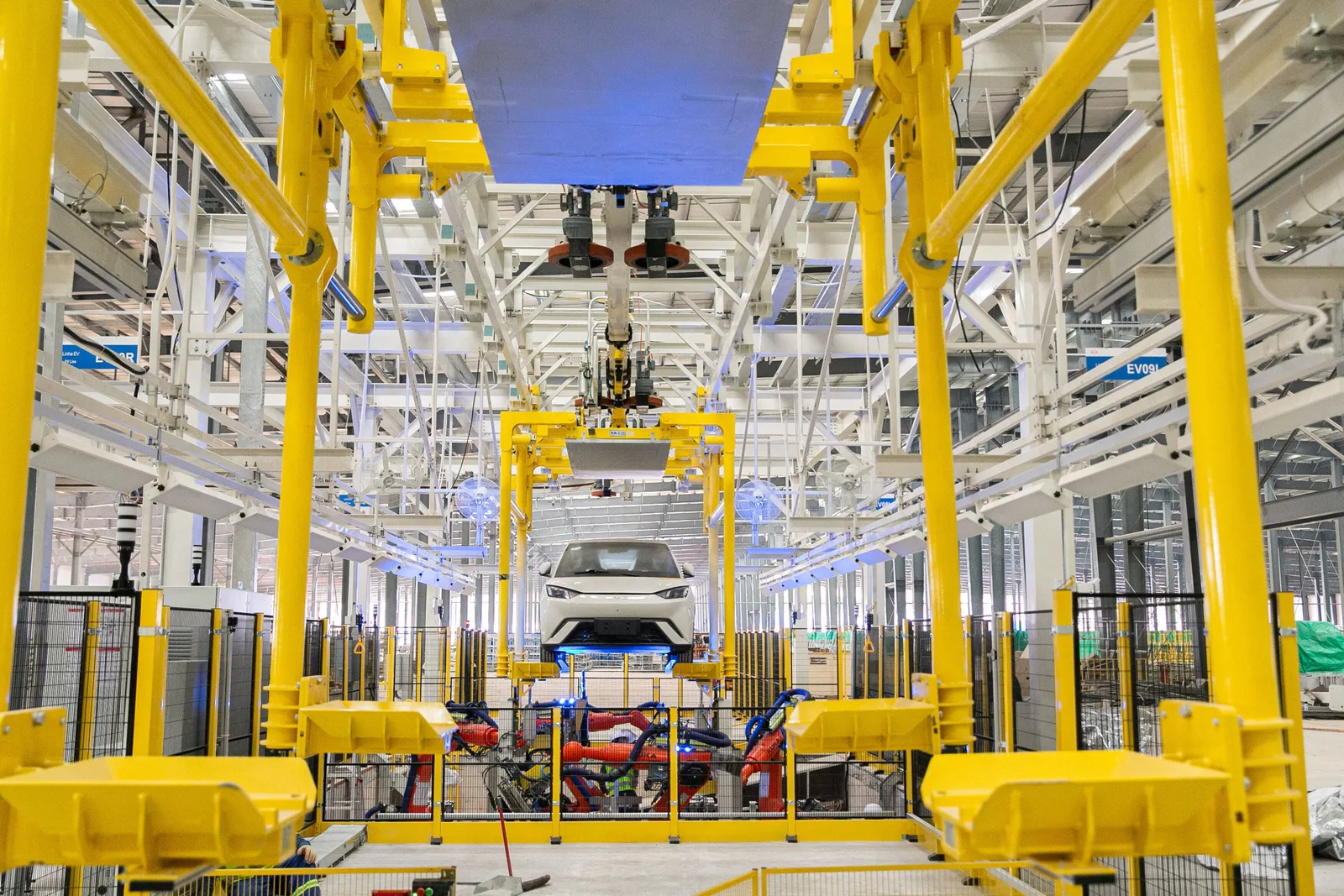
Photo: BYD factory in Camaçari, Bahia (Brazil)
Argentine auto parts companies must begin without delay a process of adapting their products to US technical regulations, the Federal Motor Vehicle Safety Standards (FMVSS), which specify the design, construction, performance and durability requirements for motor vehicles, in order to enter that market; in this regard, INTI and the OAA could actively collaborate in this adaptation process.
Although this adaptation entails a higher cost, it can serve to increase competitiveness (including domestically, since automakers will no longer have any excuse not to buy the domestic product) and to enter the largest market in the world, something that does not happen with China.
References:
- “BYD Led China’s EV Boom. Now It Has Some Bad News” Inside EV - insideevs.com
- “BYD sells 210,051 new electric vehicles in January, 30.11% less than in the same period of the previous year.” cnevpost.com
- BYD OPENS ITS NEW FACTORY IN BRAZIL WITH THE PRODUCTION OF ITS FIRST 100% ELECTRIC VEHICLE byd.com
- China's BYD plans to have two research centers in Brazil -
americaeconomia.com xnpe_tifc=bDBLxuUuhubXbfbDOknZOypsafeWaeiWhFWZbuU3EyPLafscalB9afeWaG8.adJS4Ix7bDnp4folxFBNbIL_bXTT&utm_source=exponea&utm_campaign=fDi%20-%20Beyond%20Borders%20-%20Newsletter%2027.03.25&utm_medium=email
BYD sues the US government for a refund of tariffs 2-9-2026
- US-Argentina agreement; ·Article 1.2: Motor Vehicles and Parts: Argentina shall accept, in accordance with its laws and regulations,6 vehicles and vehicle parts that are manufactured to comply with U.S. Federal Motor Vehicle Safety Standards (FMVSS) and U.S. emissions standards and sold in the United States, and accept U.S. compliance procedures for automotive products without additional conformity requirements to enter Argentina’s market.7, 8 For vehicles, Argentina agrees that a Blue Ribbon letter identifying the vehicle identification number (VIN), and a sworn statement from the manufacturer detailing the tests and standards with which the vehicle complies shall constitute proof of compliance with U.S. FMVSS. 2. 3. The Parties agree to share relevant recall and safety information on vehicles and vehicle parts. The United States shall accept vehicle parts manufactured in Argentina complying with U.S. FMVSS, subject to U.S. enforcement procedures. 4. Argentina shall address any other standards or requirements that discriminate against U.S. vehicles and vehicle parts."
Director of Pulso Internacional
Lawyer specializing in international trade and productive investment, with more than 25 years of experience in international trade negotiations as an adviser to governments and to companies going international. At Pulso Internacional we analyze foreign trade, bringing clarity and international context so that your company can export and invest more.
Related analysis

European Assessment of the EU-Mercosur Agreement: In 4 Months, European Exports Grow 9%
November 5, 2026 · 2 min
Why Has the US Increased Its Investment in Germany?
November 3, 2026 · 5 min