Bolivia Expands Its Agricultural Frontier
Translated from the Spanish original. Read the original

Director of Pulso Internacional
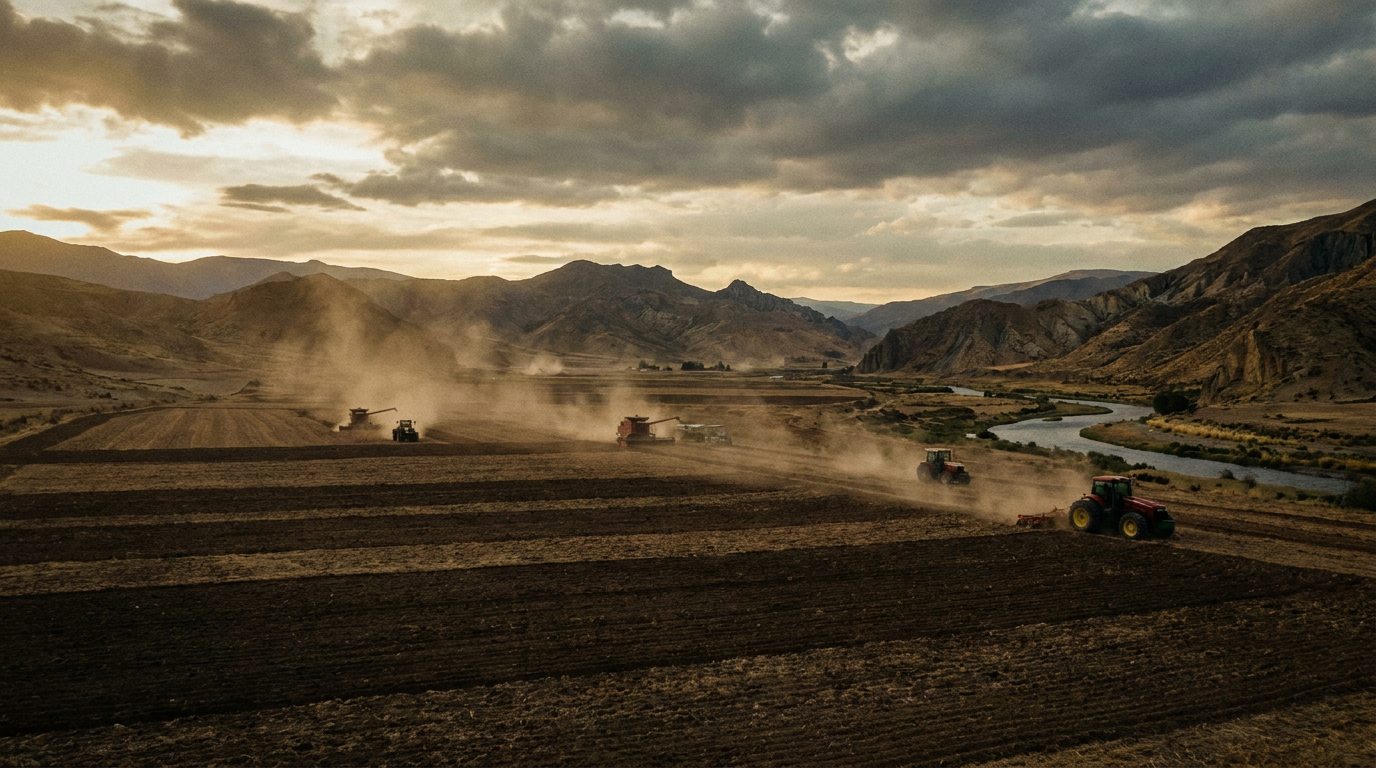
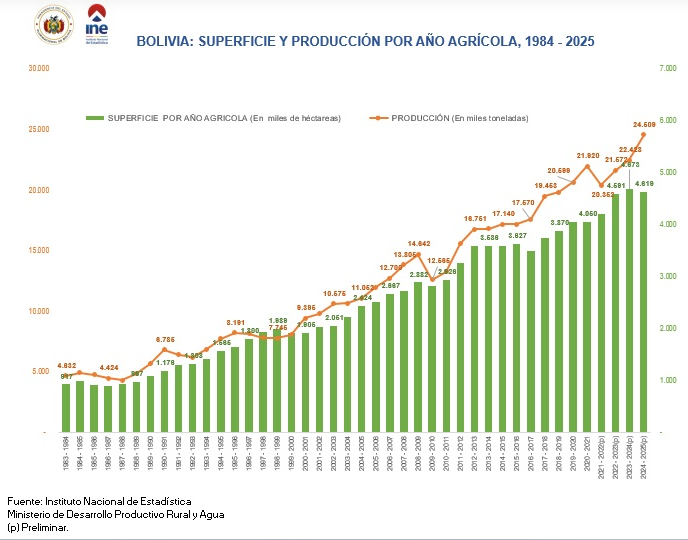
Cultivated area in eastern Bolivia has grown at a pace that few regional analysts had projected. Between 2023 and 2026, the expansion of the agricultural frontier in the agro-productive corridor linking the departments of Santa Cruz, Beni and Pando is evident in the addition of hundreds of thousands of new hectares to the production of soybeans, corn, sunflower and cotton and, with growing weight, to intensive livestock farming and commercial poultry production. This phenomenon stems from a combination of Bolivian public policies to expand the agricultural frontier, authorized deforestation in transition zones and, ever more visibly, the arrival of Brazilian capital buying land near the border with the clear intention of moving the Mato Grosso agro-industrial model westward, with intensive livestock farming and commercial poultry production gaining a growing share of the productive mix.
For Argentina, and in particular for its agricultural machinery industry, the textile sector (cotton, almost nonexistent today, has high potential in the new agricultural regions) and the peanut cluster, as well as the food processing industry, this process represents a major opportunity.
Growth of Poultry Production in Bolivia
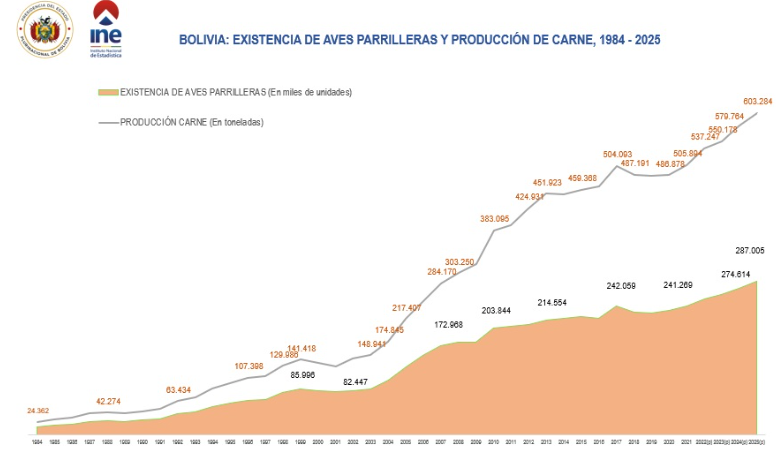
Poultry production, in particular, shows sustained growth: poultry production data from INE Bolivia (National Statistics Institute) confirm the expansion of commercial farms in the Santa Cruz–Beni corridor, with growing demand for climate-control equipment, automated feeders and biosecurity systems. Here, too, Argentine industry can take advantage of this growth.
The Epicenter of the Expansion: Santa Cruz, Beni and the Border with Brazil
The Santa Cruz–Beni–Brazil border triangle (the departments of Pando and Beni) accounts for most of Bolivia's new agricultural area. According to data from the National Statistics Institute of Bolivia, the country's agricultural sector maintains a productive structure firmly anchored in the east, where the combination of suitable soils, river connectivity and proximity to Brazilian markets creates distinctive conditions compared with the Altiplano.
The Phenomenon of Land Purchases by Brazilian Capital
Land purchases by Brazilian capital in the border area have been facilitated by the elimination of the restrictions on land purchases by foreigners of up to 5,000 ha imposed by the Evo Morales government. Producers from the neighboring states of Mato Grosso and Rondônia, who operate on areas of between 5,000 and 50,000 hectares in Brazilian territory, have been acquiring properties in Pando and northern Santa Cruz at prices substantially lower than those in any productive area of Brazil. The pattern is well known in the region: Brazilian capital, seeds, herbicides and machinery cross the border together with the management model.
Added to this are investments by investment funds with larger volumes of hectare purchases, and even the world's largest soybean producer, Erai Maggi, head of Grupo Bom Futuro and owner of more than one million hectares in Brazil, has bought land in Bolivia.
The Regulatory Framework: Bolivia, a New Mercosur Member State
The Plurinational State of Bolivia is a new State Party, in accordance with Decision 20/19. The Protocol of Accession of Bolivia to Mercosur was signed by all the States Parties in 2015. Bolivia deposited its Instrument of Ratification in July 2024 and has up to 4 years to incorporate the bloc's body of rules.
Bolivia's agricultural expansion in the Santa Cruz–Beni–Pando corridor is one of the most significant processes of incorporating new productive frontier in South America this decade. For Argentine investors in land (who have already done so in Uruguay) and for Argentine industry, backed by tariff preferences in force under Mercosur, it is an opportunity that remains open, bearing in mind that cooperation, and business, rest on personal interactions, and that institutions and their legal framework alone are not enough.
Sources
Director of Pulso Internacional
Lawyer specializing in international trade and productive investment, with more than 25 years of experience in international trade negotiations as an adviser to governments and to companies going international. At Pulso Internacional we analyze foreign trade, bringing clarity and international context so that your company can export and invest more.
Related analysis
European Assessment of the EU-Mercosur Agreement: In 4 Months, European Exports Grow 9%
November 5, 2026 · 2 min
Why Has the US Increased Its Investment in Germany?
November 3, 2026 · 5 min