Business Alternatives Amid Tensions Between China and the West
Translated from the Spanish original. Read the original

Director of Pulso Internacional

Since the COVID-19 pandemic, China's tensions with the US and the European Union (EU) have intensified, both ideologically and in the sphere of international trade; the increase in tariffs on products from strategic sectors between the two sides has become the most visible sign of these tensions. Argentine companies could take advantage of these tensions.
Background:
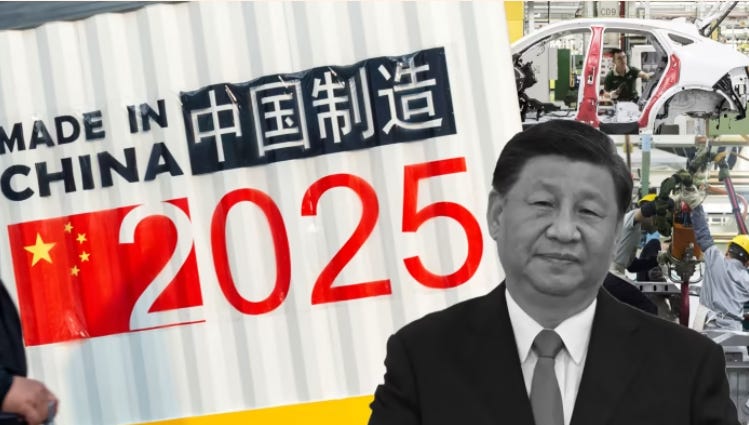
The current consequences of China's industrial strength and its advance in foreign trade go back to the plan launched in 2015 called Made in China 2025, announced by Xi Jinping and Premier Li Keqiang. The plan stated that "manufacturing is the core of the national economy, the root on which the country stands, the tool for national strengthening and the foundation of a strong country". It is a ten-year government plan to upgrade China's industrial base through the rapid development of ten high-technology industries in order to achieve, by 2049 (the centenary of the People's Republic of China), a dominant position in global markets. (1) The extensive vertical integration of Chinese industry that has resulted from this industrial policy (from raw materials to the ships that carry the products abroad) is reminiscent of what Henry Ford achieved at the beginning of the 20th century, and it is the antithesis of the just-in-time system or "Toyota model" that has prevailed since the last quarter of the last century and that symbolizes globalization.
How can Argentine companies take advantage of this scenario?
- With regard to Western countries;
a) assess the market niches in Western countries that Chinese products are leaving behind as a result of the tariff or non-tariff restrictions imposed; b) analyze the level of market access (to the US and the EU) and the degree of linkage between the Argentine company and companies from Western countries in the supply chains restricted to China.
2. With regard to China;
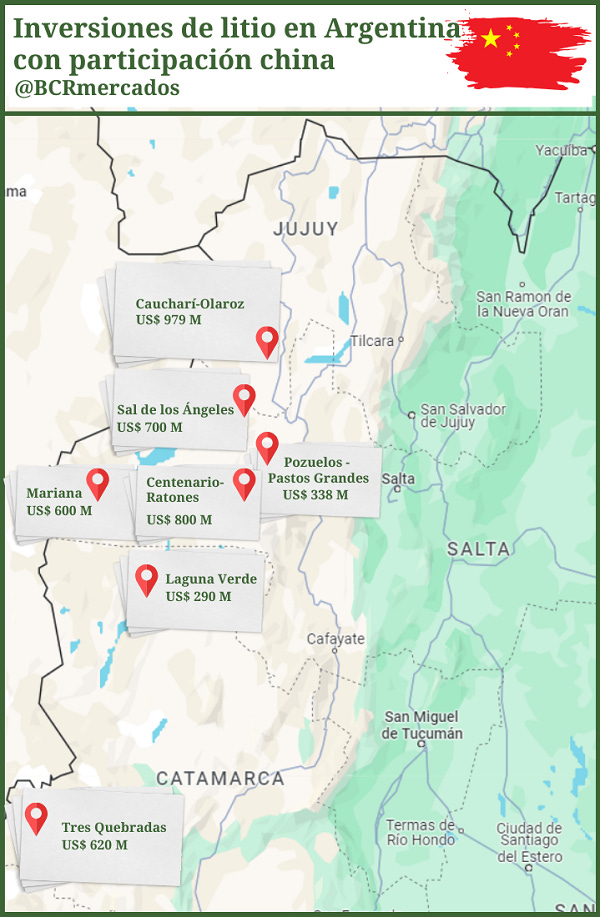
a) assess the possibility of accessing Chinese technology, machine tools and inputs, and of taking advantage of the financing available in China from companies with surplus stock. b) explore the possibility of attracting Chinese investment in specific sectors, whether with current suppliers or in little-explored sectors such as agricultural machinery. c) Be ready to qualify as local suppliers to Chinese companies in the lithium and copper supply chain, since China would make investments for an estimated amount of US$ 3,383 million in seven lithium projects under development in Argentina's Northwest. d) Seek direct investment, the establishment of research and development centers and the attraction of specialized human resources to Argentina from some of the more than 400 Chinese companies engaged in processing battery materials, taking advantage of the fact that the average capacity utilization of battery plants in China fell from 51% in 2022 to 43% in 2023, and will be lower again this year.
References:
(1) "'Made in China 2025' plan issued" May 2015. The main sectors are electric cars and other new energy vehicles, next-generation information technology (IT) and telecommunications, and advanced robotics and artificial intelligence. The other important sectors include agricultural technology; aerospace engineering; new synthetic materials; advanced electrical equipment; emerging biomedicine; high-end rail infrastructure; and high-tech maritime engineering. english.www.gov.cn
(2) "Made in China 2025 plan thrives with subsidies for tech and EV makers" (2022) ft.com
(3) "Argentine lithium: China invests close to US$ 3,400 million in seven projects" BCR, June 28, 2024 "bcr.com.ar
Director of Pulso Internacional
Lawyer specializing in international trade and productive investment, with more than 25 years of experience in international trade negotiations as an adviser to governments and to companies going international. At Pulso Internacional we analyze foreign trade, bringing clarity and international context so that your company can export and invest more.
Related analysis

European Assessment of the EU-Mercosur Agreement: In 4 Months, European Exports Grow 9%
November 5, 2026 · 2 min
Why Has the US Increased Its Investment in Germany?
November 3, 2026 · 5 min