Flood of Electric Cars Heads for Mercosur
Translated from the Spanish original. Read the original

Director of Pulso Internacional

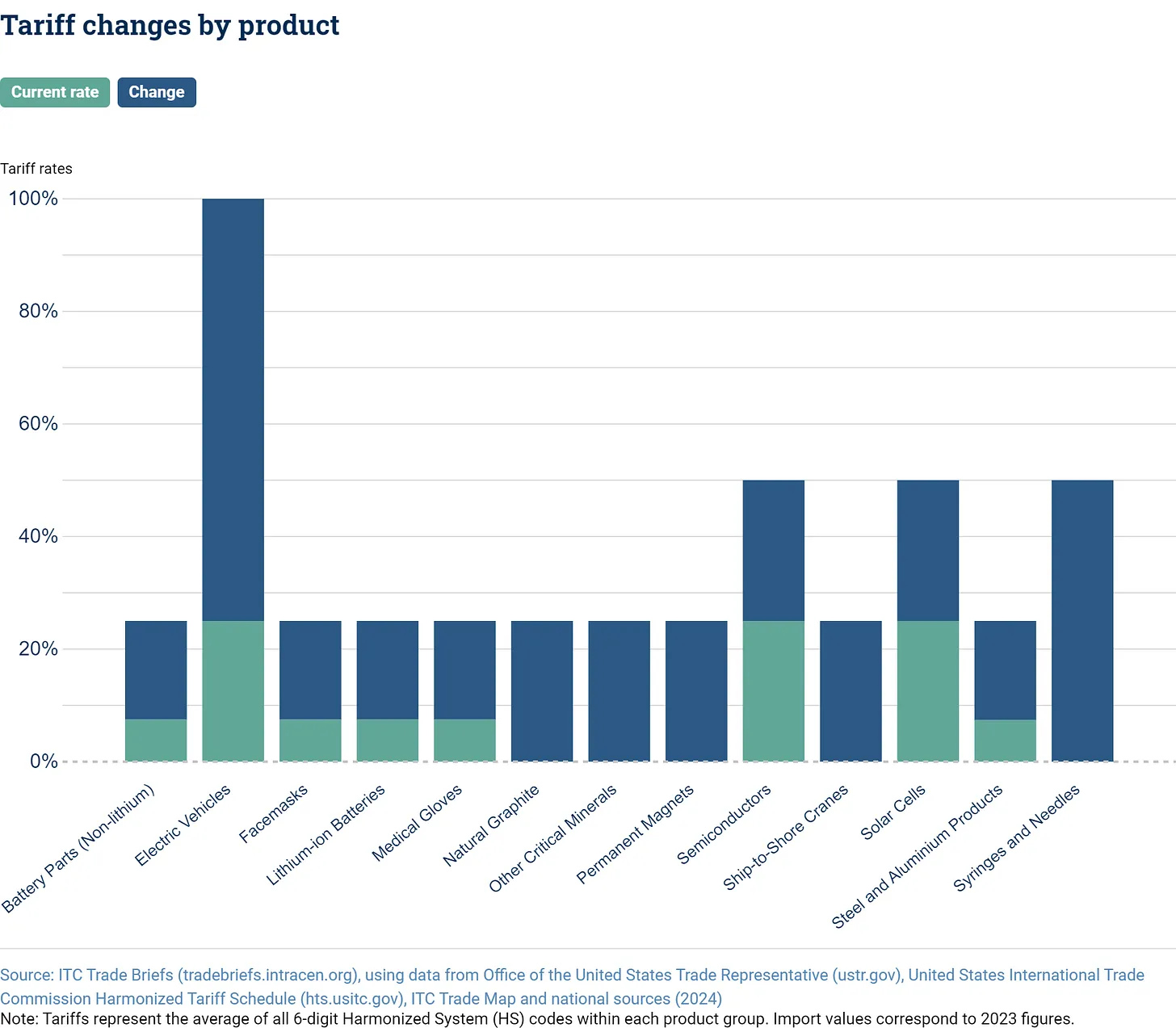
The US raises protection for its electric vehicle industry
Manufacturing of electric vehicles (EVs) in China has exceeded domestic demand by between 5 and 10 million vehicles annually. Electric car sales approached 14 million worldwide in 2023, with China accounting for 60%. US President Joe Biden announced measures to protect American workers by raising tariffs on Chinese EVs from 25% to 100% in 2024. Canada joined in with 100%. The EU applied differentiated countervailing duties: 17.4% for BYD, 20% for Geely and 38.1% for SAIC.
The provisional tariffs began on July 4, and the definitive measures would be adopted within the following four months (in August they were reduced slightly, by less than 1%). Tesla, for its part, managed to get the European Commission to levy only 9% on its vehicles manufactured in China, arguing that it did not receive as many subsidies from the Chinese government. All of this is on top of the 10% tariffs paid by vehicles imported from outside the EU. (5) In response to the measures adopted by the EU, China requested consultations at the WTO, considering them arbitrary, and opened an anti-dumping investigation into dairy products imported from Europe. (6) Since then, the position within the EU has already begun to crack. Spanish Prime Minister Pedro Sánchez stated during his visit to China that the EU should review the tariff increases on electric vehicles. (7)
China's response and Mercosur as a new destination
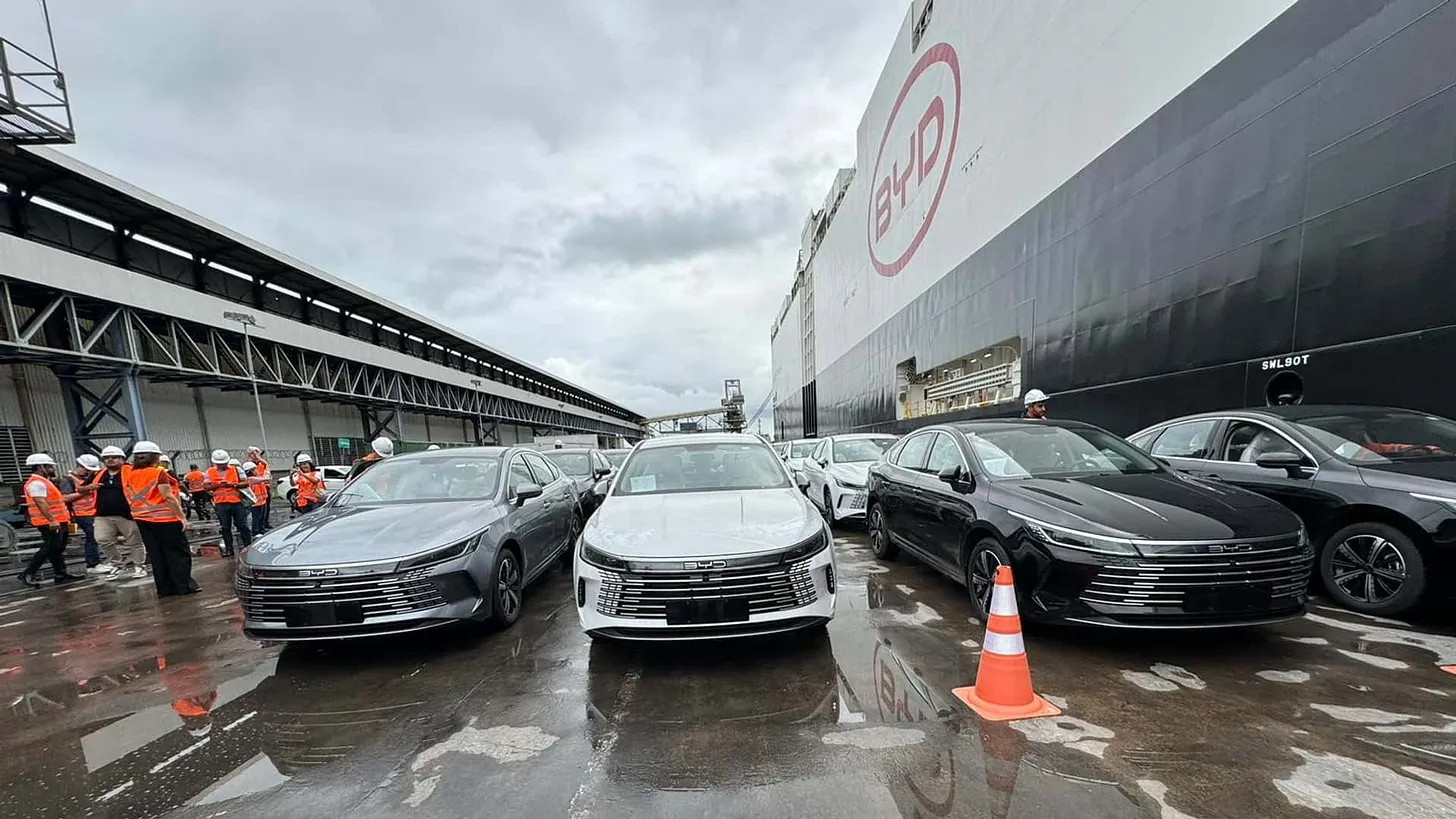
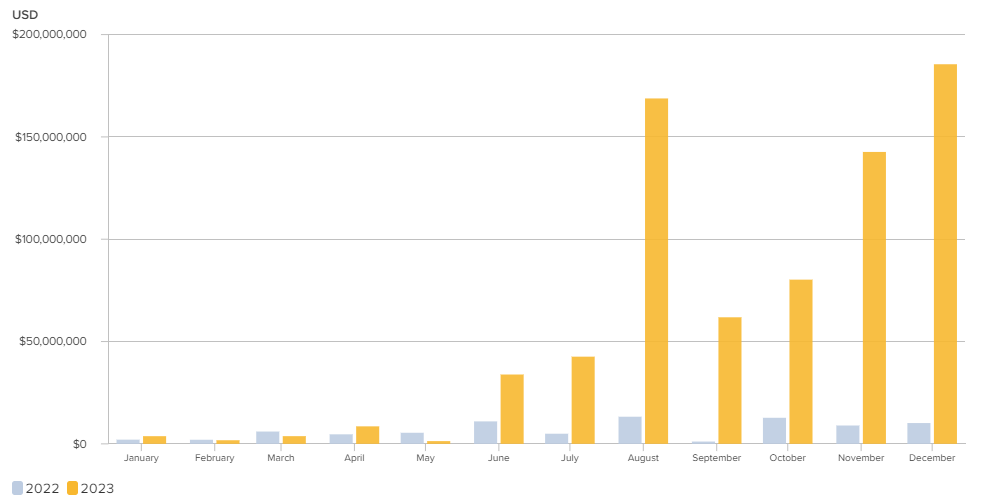
In response, China requested consultations at the WTO and opened an anti-dumping investigation into European dairy products. Brazil has been one of the destinations chosen by China for its electric cars, with exponential growth. The Lula government intends to mitigate this through a staggered increase in tariffs up to 35% by 2025. However, these measures may not be enough. GAC confirmed an investment in Brazil of US$ 1,000 million. BYD announced its expansion with an investment in the state of Bahia and unloaded 5,400 vehicles from its own ship, the Explorer 1, in addition to a new R&D center in Rio de Janeiro.
Mexico is also a channel that the Chinese will use to reach the Mercosur market, since three Chinese-origin electric vehicle megafactories are being set up there, with investments of more than US$ 2,400 million announced in September 2023, whose main objective is to get around the limitations on Chinese products and take advantage of the US government's nearshoring policy, using the USMCA free trade agreement with the US to enter that market. However, it is very likely that they will be denied access if they do not invest in the US, so they will send the surplus production to the markets with which Mexico has tariff preferences. (11) North American automakers operating in that market are also increasing their production of electric cars: from January to July 2024, 85 thousand 598 units of electric or hybrid vehicles were produced in Mexico, compared with the 106 thousand 527 produced in all of 2023. (12) We recall that Mercosur has signed with Mexico the Economic Complementation Agreement ACE 55, which lays the foundations for establishing free trade in the automotive sector and for promoting the integration and productive complementation of their automotive sectors, so it will surely prove to be a direct gateway, and one we will need to watch closely. (13)
It is necessary to prepare for future scenarios and to evaluate the development of new auto parts that make it possible to increase regional content, substitute imports and improve the export offering.
Because of the transition to electric cars in China, carmakers have been forced to cut prices on unwanted gasoline cars and sell them abroad. Last year, most of the cars that China sold overseas were traditional gasoline-engine cars.

China has more than 100 factories with a combined capacity to build close to 40 million internal combustion engine cars a year. That is more than double what Chinese citizens want to buy, and sales of these cars are falling rapidly as electric vehicles become more popular. As a result, some assembly plants have been suspended or closed, but carmakers, reluctant to shut down facilities, are selling many gasoline-burning cars abroad at steep discounts. (14) Meanwhile, in Japan, talks have begun on a merger of its two major automakers, Honda and Nissan, in an attempt to join forces to face the sector's new challenges, which may have repercussions on the production structure they have in Mercosur. (16)

References:
(1) “China EV overcapacity fix would be a crowd pleaser” reuters.com
(2) “Global EV Outlook 2024 Trends in electric cars” . IEA. International Energy Agency www.iea.org
(3) White House, US – Press release, 5-14-24 whitehouse.gov.
The United States announced the following tariff increases:
1. Steel and aluminum: The tariff will increase from 0-7.5% to 25% in 2024. 2. Semiconductors: The tariff will increase from 25% to 50% by 2025. 3. Electric vehicles: The tariff will increase from 25% to 100% in 2024. 4. Batteries, components and critical minerals: Various tariff increases to 25% between 2024-2026. 5. Solar cells: The tariff will increase from 25% to 50% in 2024. 6. Ship-to-shore cranes: The tariff will increase from 0% to 25% in 2024. 7. Medical products such as syringes, masks and gloves: Tariff increases to 25-50% between 2024-2026.
(4) “ Canada to slap 100% import tariffs on Chinese electric vehicles over ‘unfair’ competition”cnbc.com
(5) EU press release. 6-12-2024 ec.europa.eu
(6) WT/DS626/1 - 8-14-2024 wto.org
(7) “Germany Lines Up With Spain Against EU Tariffs on Chinese EVs” Bloomberg . 9-11-2024 - bloomberg.com
(8) From June 2023 to June 2024, China led Brazil's imports in terms of volume, and the main imported product was passenger cars, with an increase of +924% in value and a share of 8.8%. China is now the main origin of Brazil's total imports with a share of 23.3%, followed by the United States, with 15.5%. Source: INDICADOR DE COMÉRCIO EXTERIOR - ICOMEX FGV portalibre.fgv.br
“Mover: Programa de Mobilidade Verde é lançado” 12-30-2023 Planalto. Brazilian government program that reduces the tax for those who pollute less and raises sustainability requirements gov.br
(9) “GAC confirma fábrica de veículos elétricos no Brasil” 7-2-2024 automotivebusiness.com.br 6-30-2024
“ BYD anuncia aumento de investimento no Brasil para R$5,5 bilhões” 03/18/2024 byd.com.br
“China's BYD plans to have two research centers in Brazil” Friday, March 21, 2025. americaeconomia.com
(10) “Report To Congress On The Operation Of The United States-Mexico-Canada Agreement With Respect To Trade In Automotive Goods” 1-7-2024 - p. 32 ustr.gov and “ United States, Canada, and Mexico Joint Statement of the Fourth Meeting of the USMCA//CUSMA//T-MEC Free Trade Commission” 5-23-2024 ustr.gov
(11) “Trump threatens 100% tariffs on cars imported from Mexico” elpais.com
(12) “Vehicle production and exports on the rise: AMIA” 8-6-24 Ofelia Rangel revistamagazzine.com
(13) ACE 55 - ALADI www2.aladi.org
(14)nytimes.com
(15) cfr.org
(16) asia.nikkei.com
(17) BYD just killed your EV argument with a battery that competes with gas engines- 3-5-2026 fastcompany.com
Director of Pulso Internacional
Lawyer specializing in international trade and productive investment, with more than 25 years of experience in international trade negotiations as an adviser to governments and to companies going international. At Pulso Internacional we analyze foreign trade, bringing clarity and international context so that your company can export and invest more.
Related analysis

European Assessment of the EU-Mercosur Agreement: In 4 Months, European Exports Grow 9%
November 5, 2026 · 2 min
Why Has the US Increased Its Investment in Germany?
November 3, 2026 · 5 min