A major opportunity for Argentine auto parts manufacturers in Ecuador
Translated from the Spanish original. Read the original

Director of Pulso Internacional
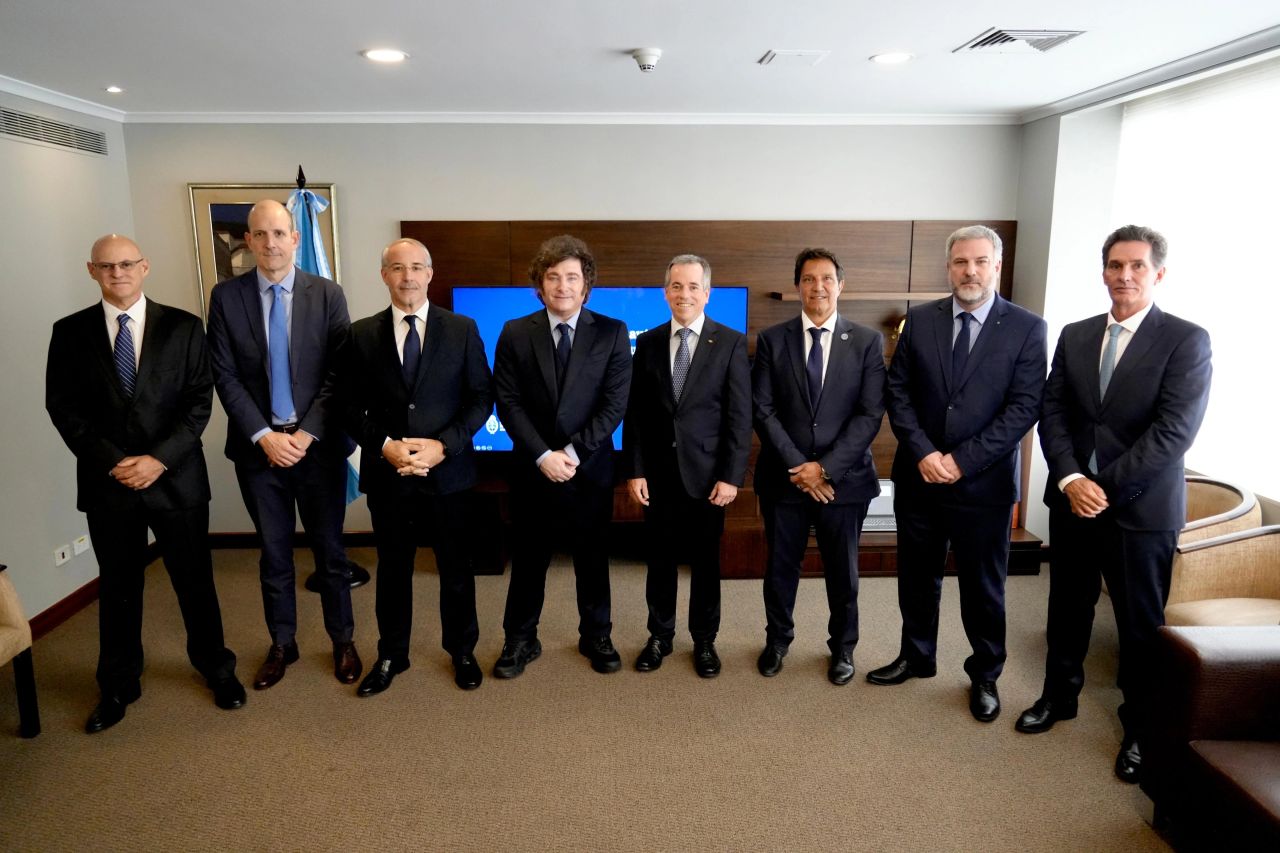
On August 6, 2026, Argentina and Ecuador signed a new bilateral automotive agreement that eliminates tariffs on the sector, opening a first-rate strategic window for Argentine auto parts manufacturers. The instrument, signed within the framework of trade negotiations between the two countries, establishes a tariff reduction that would bring the duties applicable to a set of automotive and auto parts tariff lines down to zero percent. In addition, Argentina will be able to export 3,000 cars per year with a tariff preference.
The legal framework: the ACE and its role as a negotiating platform
The agreement falls within the system of Economic Complementation Agreements (ACE) administered by the Latin American Integration Association (ALADI), specifically under ACE No. 59, which governs trade relations between Mercosur and Colombia, Ecuador and Venezuela, and which constitutes the underlying legal instrument on which specific preferences are negotiated for sensitive sectors such as the automotive sector, with the aim of reaching a free trade area.
The new automotive instrument incorporates tariff lines from Chapter 87 of the Harmonized System and from related chapters covering automotive parts, pieces and components, bringing the applicable tariff to 0% for products originating in Argentina. Rules of origin and the Mercosur cumulation principle are also important here: an Argentine auto parts manufacturer that incorporates inputs of Brazilian or Uruguayan origin can, under the regional cumulation scheme, qualify as an originating product of the bloc and access the preference. This possibility considerably expands the universe of potential beneficiaries and reinforces the logic of intra-Mercosur productive complementarity.
The role of Rodrigo Perez Graziano: technical negotiation with industrial impact
It should be noted that the signing of the agreement involved the participation of Rodrigo Perez Graziano, head of the Association of Automotive Manufacturers (Asociación de Fábricas de Automotores, ADEFA), who played a prominent role in the process that led to this result. His role shows that effective international integration requires specialized technical cadres with an industrial policy perspective, capable of translating geopolitical opportunities into concrete legal instruments with an impact on domestic industry; a capacity that Argentina has cultivated only intermittently and that, when deployed consistently, produces measurable results. As Rodrigo Pérez Graziano was quoted by Rodar Post:
“The signing of the Quito Manifesto last May and the progress on the addendum to the ACE-59 agreement are part of the work we have been doing with the Government and the value chain (AFAC, ACARA) for the international integration of our industry. In a scenario of macroeconomic stabilization, this strategic step allows us to keep consolidating Argentina as an export hub in the region and shows that the path to sustainable growth is tied to the smart opening of new markets and better agreements.”
The Ecuadorian market: size and opportunity for auto parts SMEs
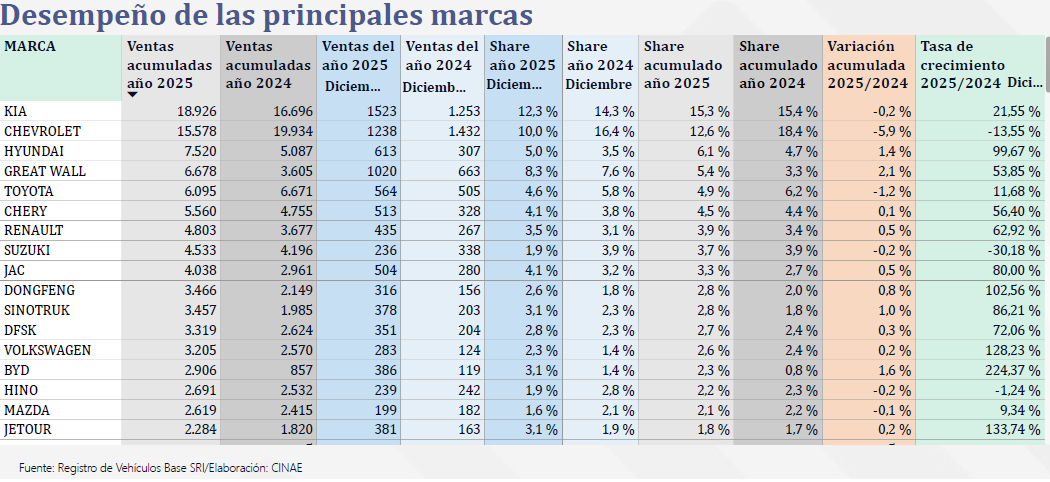
Ecuador assembles vehicles locally through plants located mainly in Quito and Guayaquil, accounting for 11.74% of vehicles sold in 2025, with demand for auto parts that combines domestic supply with imports from Colombia, Brazil, China and the United States. Argentina's position in that market has historically been modest; however, the tariff differential introduced by the new agreement partially rebalances that equation. The auto parts segment with the greatest potential includes suspension components, brake systems, filters, shock absorbers, electrical parts and body parts for mid-size and utility vehicles, categories in which Argentine industry has developed recognized technical capabilities and in which price competition from Asian suppliers can be offset by attributes of quality, traceability and delivery times compatible with the needs of Ecuadorian assemblers and the Ecuadorian aftermarket.
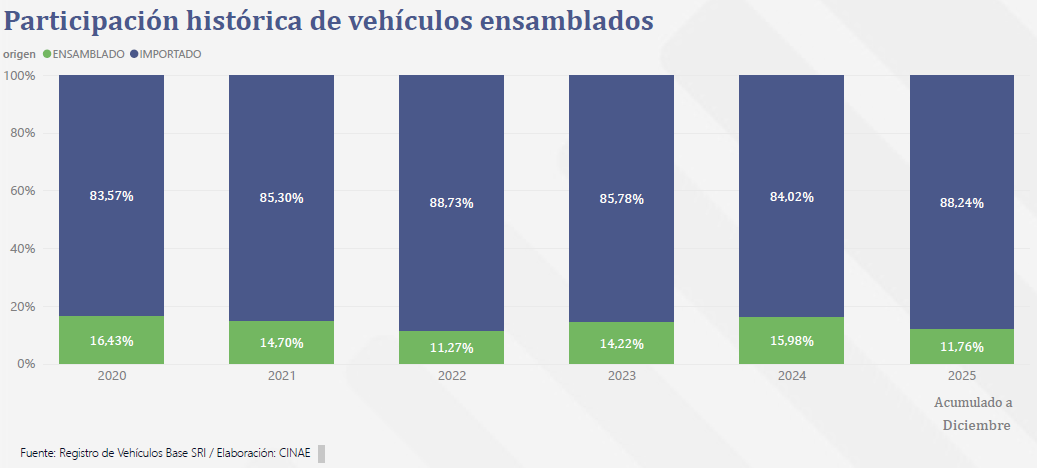
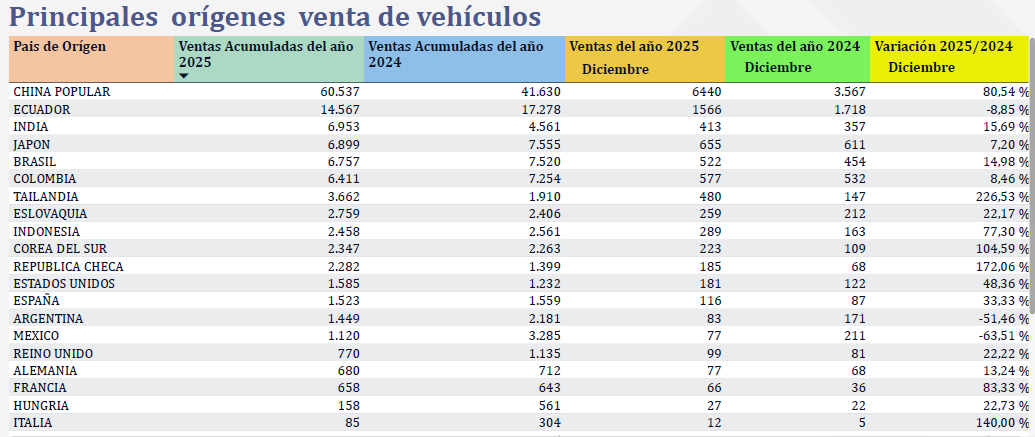
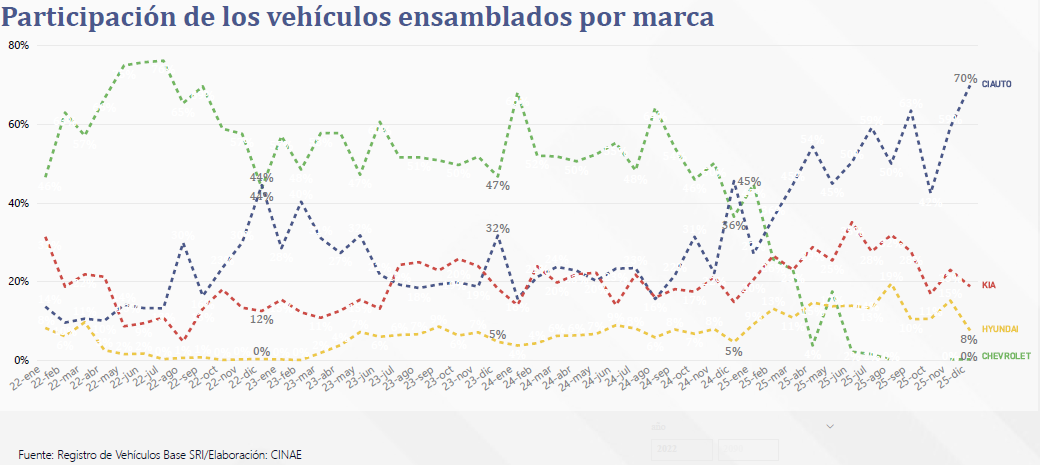
Source: CINAE - Sales Bulletin, Dec. 2025
Sources
- Ministry of Foreign Affairs, International Trade and Worship (MRECIC) — Argentina and Ecuador sign a new automotive agreement to reduce tariffs and boost the sector (August 2026)
- Infobae — Argentina and Ecuador signed a new automotive trade agreement: the details and what changes for the sector (August 6, 2026)
- ALADI — Economic Complementation Agreement No. 59 (ACE 59): text of the instrument
Director of Pulso Internacional
Lawyer specializing in international trade and productive investment, with more than 25 years of experience in international trade negotiations as an adviser to governments and to companies going international. At Pulso Internacional we analyze foreign trade, bringing clarity and international context so that your company can export and invest more.
Related analysis

European Assessment of the EU-Mercosur Agreement: In 4 Months, European Exports Grow 9%
November 5, 2026 · 2 min
Why Has the US Increased Its Investment in Germany?
November 3, 2026 · 5 min