Mercosur-Canada Trade Agreement Picks Up Pace, Targeting Conclusion in 2026
Translated from the Spanish original. Read the original

Director of Pulso Internacional
Seizing the Momentum of the Negotiations
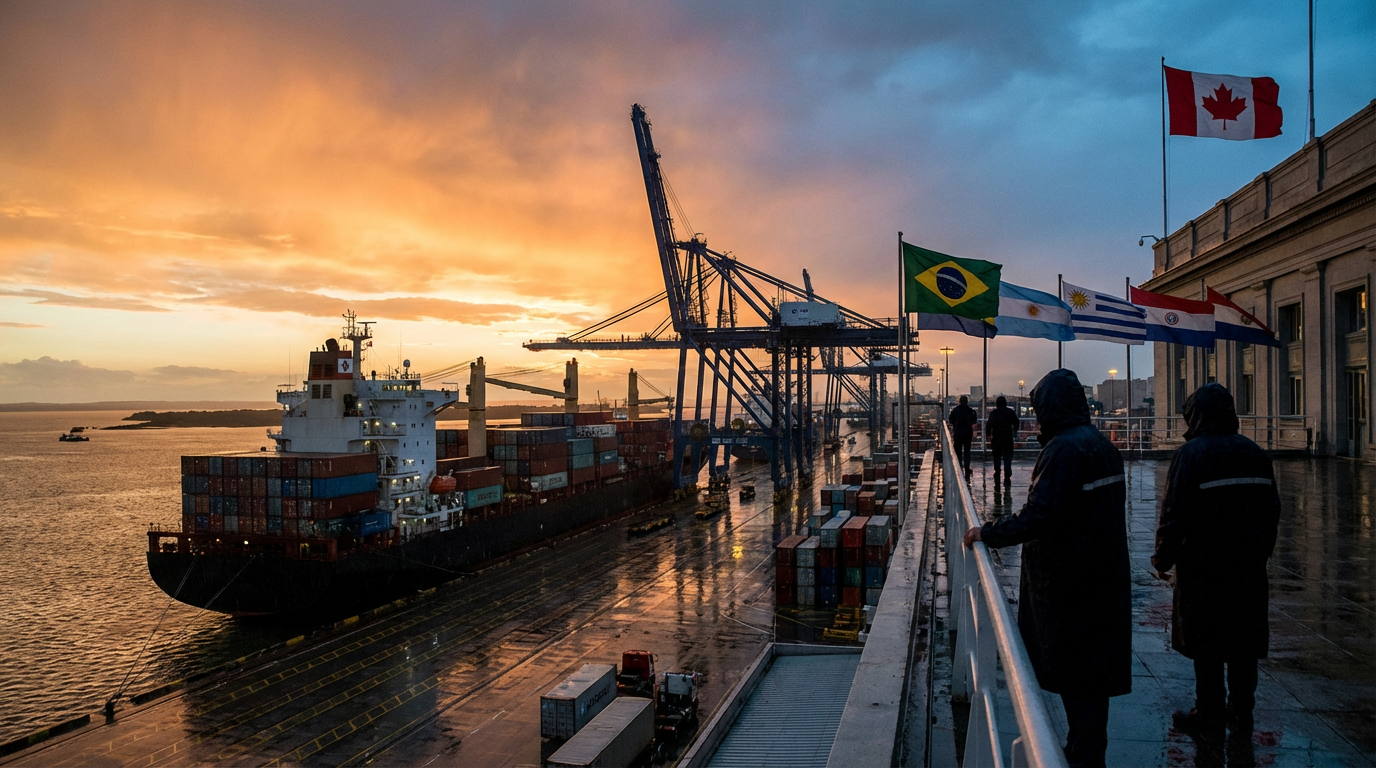
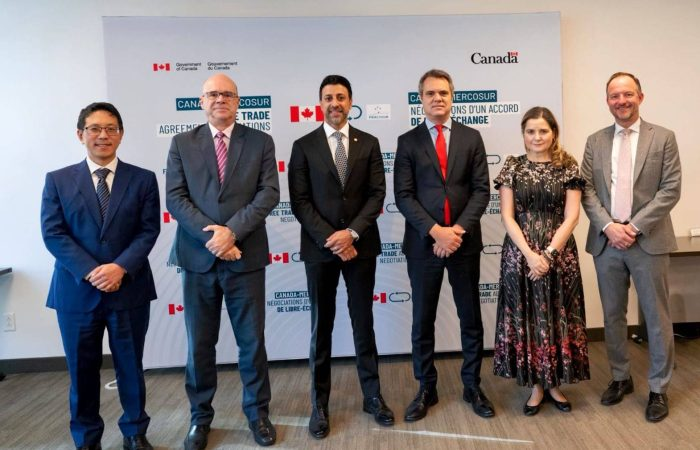
Seizing the momentum of international trade negotiations to gain access to new markets is something that Argentine companies should pay attention to. With the Mercosur-EU Agreement now concluded, a climate of liberalizing euphoria permeates the negotiations. The free trade agreement between Mercosur and Canada has entered a decisive negotiating phase after more than a year of technical exchanges that intensified notably in the first quarter of 2026. Officials from Canada, Argentina and Brazil hope to sign it in 2026, possibly in September or October, setting an accelerated timetable that began in February and includes three additional rounds through the end of July; the new round is scheduled for April 2026 in Brasilia, with a fourth in August. Mercosur and Canada held the Tenth Round of Negotiations from May 25 to 29 in the city of Toronto, with the participation of technical delegations and chief negotiators from both sides, and with sessions of the working groups on trade in goods; rules and procedures of origin; intellectual property; trade in services; financial services; e-commerce; telecommunications; and temporary entry of business persons.
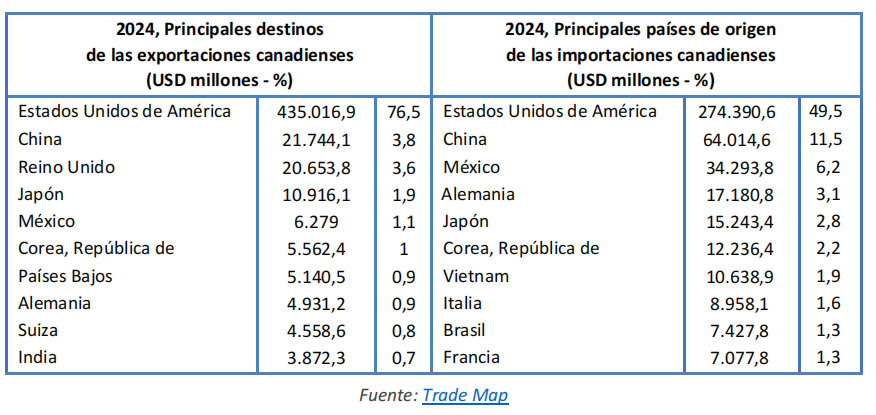
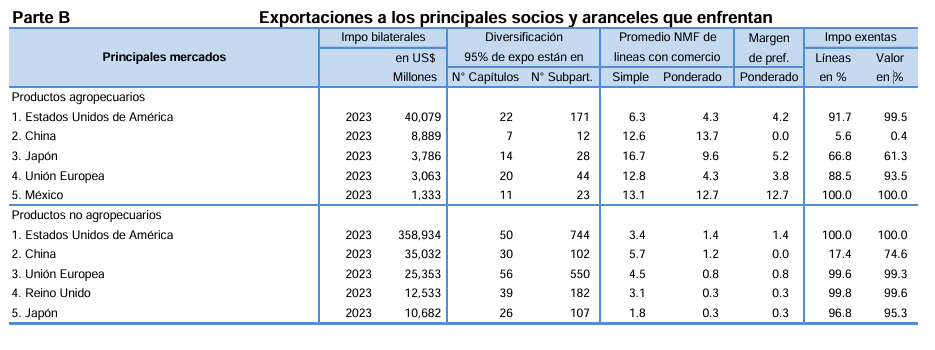
The renewed momentum in the negotiations responds to concrete geopolitical factors that have redefined Canada's trade priorities. The Donald Trump administration and its tariff policies have led Ottawa to diversify its foreign trade, given that Canada is clearly dependent on trade with the United States, which was the destination of 76.5% of its exports and the origin of 49.5% of its imports, with China accounting for 11.5% and the EU and the United Kingdom together for 13%. The USMCA (with Mexico and the US) accounted for 77.6% of its exports and 55.7% of its imports.
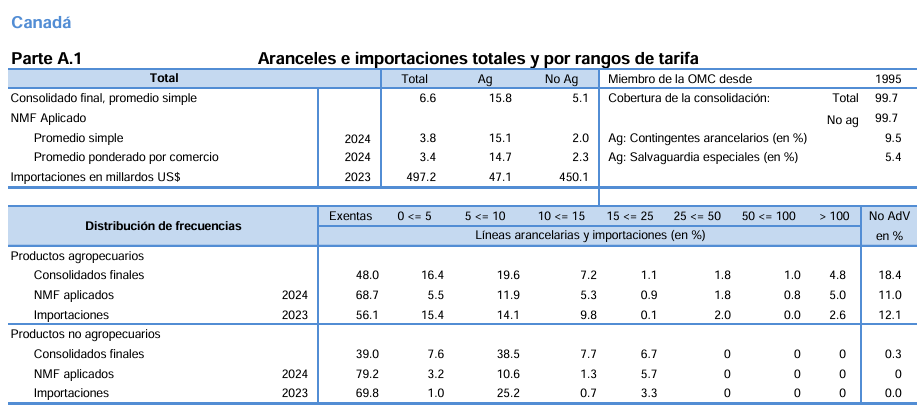
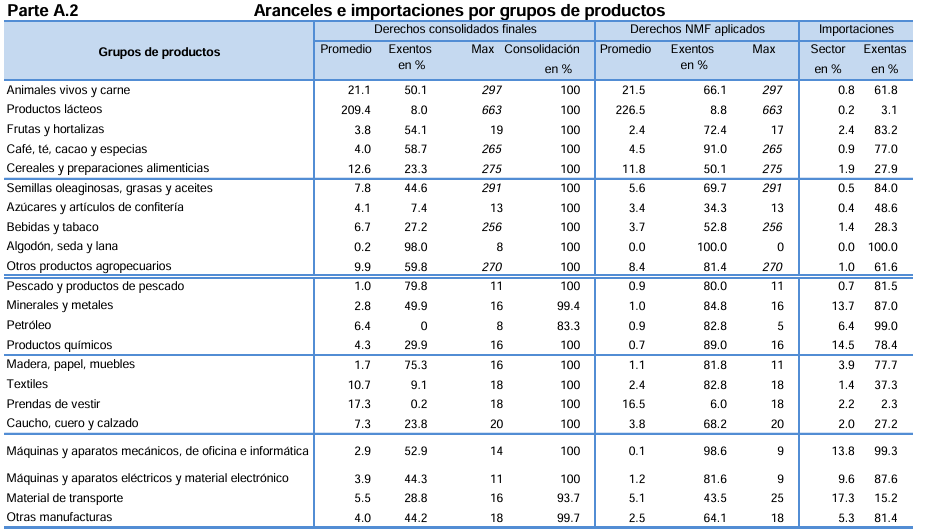
Customs Tariffs Applied by Canada
Knowing the ranges of tariffs that Canada currently applies can give us an idea of the scope of the tariff reductions that a free trade agreement between Mercosur and Canada could bring.
Strategic Sectoral Complementarities
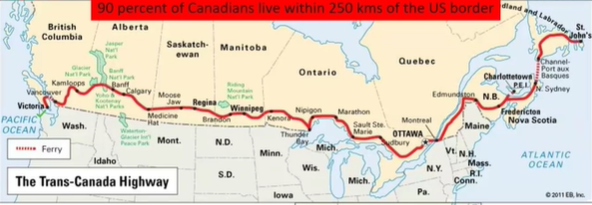
The agreement's potential lies in the marked complementarities between the economies. For Mercosur, the agreement would mean privileged access for its flagship products —beef, soybeans, minerals and wine— to a developed market with high purchasing power, where most of the population lives close to the border with the United States. From the Canadian perspective, the agreement would offer opportunities for companies and investors seeking diversification, especially in sectors where Canada holds competitive advantages, such as extractive technology, financial services and high-complexity manufacturing like the aeronautical sector.
Bilateral Trade between Argentina and Canada
The bilateral trade balance is in surplus for Argentina; let us look at how it has evolved. Canadian exports to Argentina reached US$396.2 million in 2025, a decrease of 6.5% compared to 2024. This figure represented 0.1% of Canada's total exports. Exports were led by industrial machinery, equipment and parts, which accounted for 25.3% of total exports to Argentina. Meanwhile, imports from Argentina into Canada reached US$2.4 billion in 2025, 11.9% more than in 2024. This represented a meager 0.3% of Canada's total imports. Imports were headed by agricultural, fishing and intermediate food products, which accounted for 47.6% of imports from Argentina.
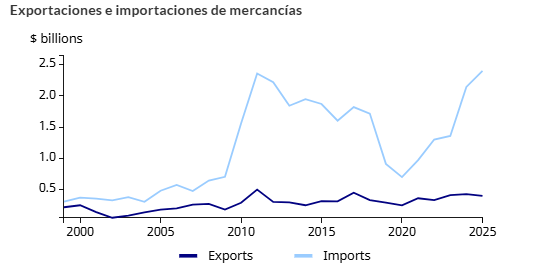
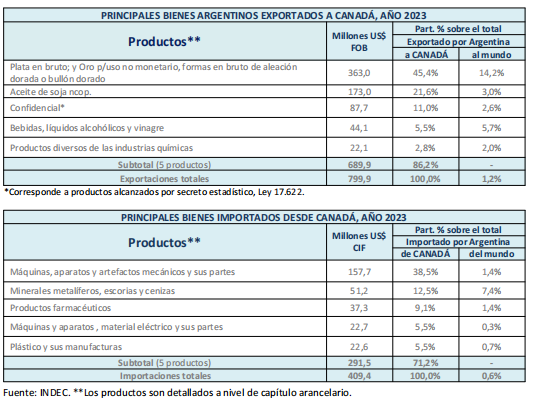
In 2024, Argentine exports to Canada reached US$1.542 billion, an increase of 53.3% compared to the previous year. This level of exports was the highest value recorded in the last 10 years. That year saw a notable 211.8% increase in exports of soybean oil and its fractions, which reached a total of US$756.3 million. These were the statistics for the main products in bilateral foreign trade in 2023:
Canadian Direct Investment in Argentina
Until 1996, Canada was a net recipient of foreign investment, but for a little over 25 years now Canada has significantly diversified its outward FDI, moving away from the United States. In 2024, the stock of Canadian direct investment in Argentina amounted to US$6.4 billion, a decline of 16.1% compared to 2023. Direct investment in Argentina accounted for 0.3% of total direct investment abroad. Argentine direct investment in Canada, meanwhile, was US$238 million, 25.9% more than in 2023. In 1991, Argentina and Canada signed a Bilateral Treaty for the Reciprocal Promotion and Protection of Investments, approved in Argentina by Law No. 24125 in 1992 for a term of 15 years; it is therefore no longer in force and is currently being renegotiated. In 2024, Canadian multinationals employed 19,648 people through their subsidiaries in Argentina, a decline of 8.9% compared to the previous year; sales were US$19.4 billion, 4.5% lower.


Opportunities for Argentina
For Argentina, the free trade agreement represents a strategic window in multiple dimensions. In the beef sector, where the country faces restricted quotas in markets such as the United States, Canada would offer smoother access with preferential tariffs that could position Argentine meatpackers on Canada's Atlantic coast. The Argentine oilseed complex, the world's second-largest exporter of soybean meal, would find in Canada a market for processed products that currently have limited access to North America. Companies such as Cargill, ADM and Bunge, which operate in both countries, could optimize their regional supply chains. It will also boost investment in Argentina's mining sector through the import of specific Canadian capital goods for its development. Argentine companies interested in investing in Canada must take into account the Investment Canada Act (Investment Canada Act: Industry Canada).
How to find Canadian trade counterparts?
The Canadian government, interested in diversifying and multiplying its sources of supply and in finding companies that can provide it with products, maintains a database, the " Canadian Importers Database", which is very useful for finding importing trade counterparts. On the website of the Canada Border Services Agency you will find all customs matters: tariffs, quotas, etc. Another possibility is to find Canadian SME counterparts to import products of that origin, which can be supported by the Government of Canada through the financial assistance of the CanExport program.
The culmination of the negotiations
The experience of the Mercosur-EU Agreement, which required more than two decades of negotiations, contrasts with the accelerated pace of these talks, suggesting that both parties have prioritized an agreement of medium scope over a comprehensive liberalization that could generate domestic resistance.
For Argentine companies, especially in agribusiness and mining as well as in manufactures of industrial origin, it is essential to prepare to take advantage of the windows that will open in a market of 40 million consumers with high purchasing power. This year will be decisive in determining whether both blocs manage to crystallize a historic opportunity in a geopolitical context that favors hemispheric integration.
References
- Infobae — Mercosur and Canada advance in free trade agreement negotiation (March 27, 2026)
- Sufragio — Canada and Mercosur advance toward free trade agreement 2026 (2026)
- MarketScreener — Mercosur and Canada finalize a free trade agreement with a new round in April
- Ámbito — Hopeful, Mercosur and Canada draw closer to reaching a free trade agreement this year
- La Jornada — Canada aims to close trade agreement with Mercosur in the fall, minister says
- Trade Diversification: Canada as an Alternative Export Market youtube.com
- Canada Business Guide. 2025 MRECIC
Director of Pulso Internacional
Lawyer specializing in international trade and productive investment, with more than 25 years of experience in international trade negotiations as an adviser to governments and to companies going international. At Pulso Internacional we analyze foreign trade, bringing clarity and international context so that your company can export and invest more.
Related analysis

European Assessment of the EU-Mercosur Agreement: In 4 Months, European Exports Grow 9%
November 5, 2026 · 2 min
Why Has the US Increased Its Investment in Germany?
November 3, 2026 · 5 min