How Companies Can Improve Access to Foreign Markets
Translated from the Spanish original. Read the original

Director of Pulso Internacional

Improving Access to Foreign Markets
When we see the protests of European farmers against the Mercosur-EU Agreement, who see a potential threat to their survival and actively and loudly influence the negotiations, we can understand the importance of international trade negotiations. For Argentine companies, it is important to take part in negotiations through the Ministry of Foreign Affairs, whether to obtain tariff reductions, secure quotas or eliminate non-tariff barriers. And once negotiations are concluded, to take advantage of the benefits obtained through proactive export promotion actions.
1. Argentina's Current Trade Negotiations
Trade negotiations between countries include, among other matters, lists containing tariff reductions on tariff lines or quotas for products that allow better access to the respective markets. Companies should pay special attention to them and take an active role in supporting the negotiations and obtaining better access to foreign markets.
Argentina is negotiating the following trade agreements:
- MERCOSUR – UNITED ARAB EMIRATES - Launched: 2024. 4 rounds. Under active negotiation.
- MERCOSUR – CANADA - Launched: 2018. 8 rounds. Under active negotiation.
- MERCOSUR – EL SALVADOR - The terms of reference were signed in December 2024.
- MERCOSUR – VIETNAM - On December 20, 2025, negotiations for a Preferential Trade Agreement (PTA) were officially launched.
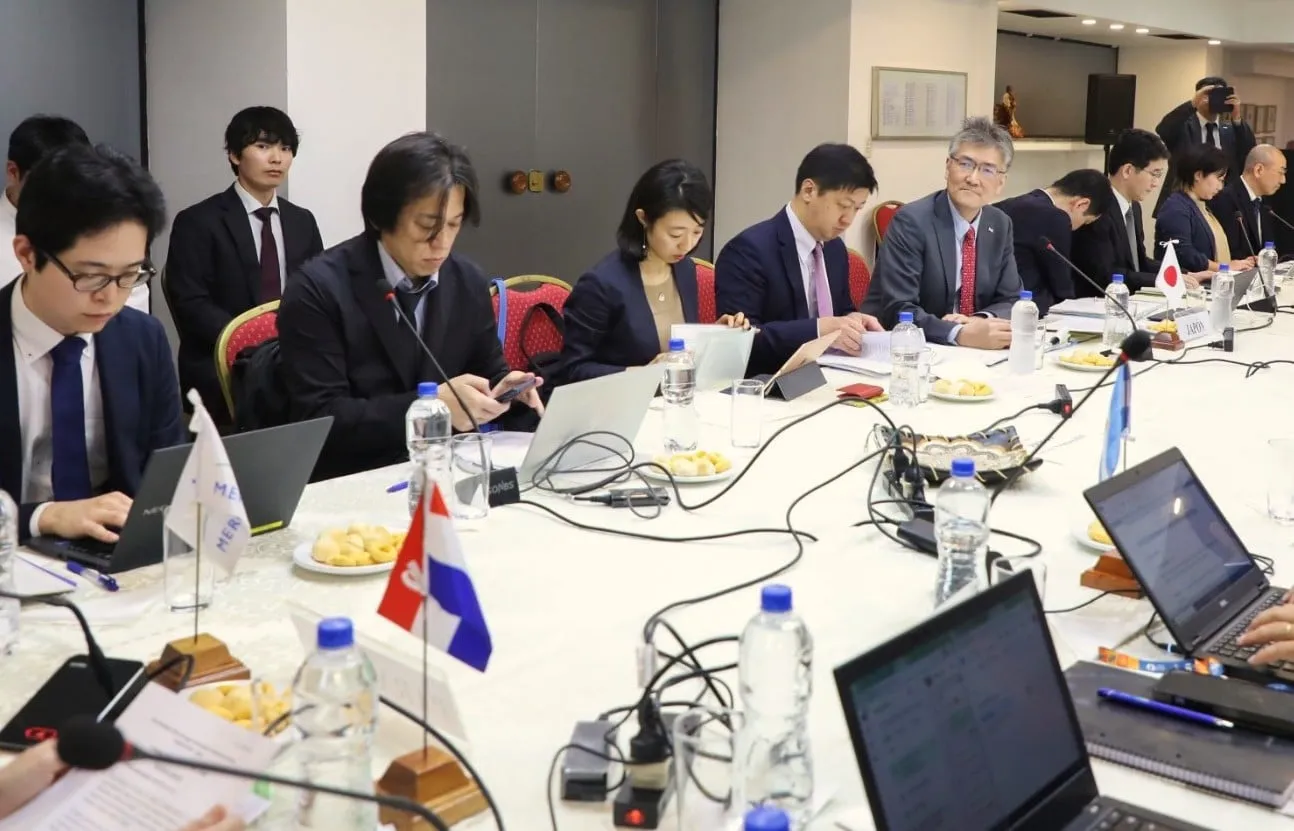
- MERCOSUR – JAPAN - In December 2025, the "Framework for Cooperation to Strengthen Economic Relations" was signed. (1)
2. The Voice of Companies and Workers in Trade Negotiations
In many countries, public consultations are held to learn the views of companies and workers and their interest in protecting the domestic market or accessing that of the other party. On other occasions, governments turn to business chambers or propose lists of tariff lines based on actual foreign trade data and projections for industries they want to promote. (5)
In Argentina, the national government consults business or sector chambers, and these in turn ask their member companies, some of which have little awareness of how important their participation is for the future. In other cases, they are companies that manufacture some products but are also importers and consequently have conflicting interests. As a result, the lists are often incomplete and end up being of little use, especially for SMEs.
It would be advisable to hold public consultations on these matters. Companies themselves could turn to business chambers, and provincial and municipal governments, interested in protecting the productive investments located in their territory, could also support these processes and make submissions to the negotiators at the Ministry of Foreign Affairs and the Ministry of Economy to achieve better access to markets.
3. Making Use of Tariff-Rate Quotas in Existing Agreements
Many trade agreements contain tariff-rate quotas for certain products, which consist of reducing or eliminating tariffs until the set quota level is reached; from that point on, a higher out-of-quota tariff is applied to all subsequent transactions involving the same good or group of goods. They mainly apply to agricultural products, but in some cases also to industrial products.
In Argentina's case, as of 2025 the status of tariff-rate quotas for agricultural products is shown on the Foreign Trade Single Window (Ventanilla Única de Comercio Exterior, VUCE). (2) For example, Resolution 178/2025 of the Ministry of Economy - Secretariat of Agriculture, Livestock and Fisheries allocates sugar quotas in the US market. (3)
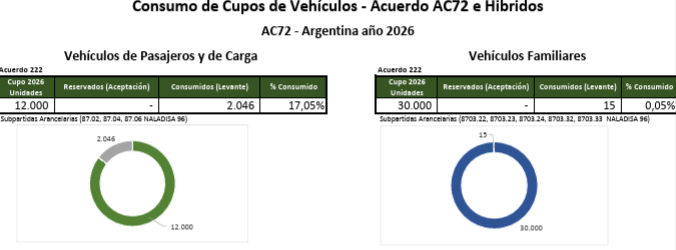
Some quotas are underused by Argentina's vehicle manufacturers, such as the one provided for in ACE 72 - MERCOSUR-COLOMBIA. (4)
References:
(1) Trade agreements in force and ongoing negotiations - MRECIC . cancilleria.gob.ar
(2) VUCE Quota List - vuce.gob.ar
The methods used to give exporters access to quotas include first-come, first-served allocation of applications, the granting of import licenses based on quotas allocated in the past and other criteria, administration through state trading enterprises, bilateral agreements and allocation by auction.
(3) Sugar example; Resolution 178/2025 of the Ministry of Economy - Secretariat of Agriculture, Livestock and Fisheries - Allocation of sugar quotas in the US market. boletinoficial.gob.ar
(4) Example: ACE 72 - MERCOSUR-COLOMBIA - Use of vehicle quotas updated as of February 24, 2026. This quota is clearly underutilized by Argentina's vehicle manufacturers. dian.gov.co
(5) USTR - Public consultation prior to the joint review (Joint Review) of the Agreement between the United States of America, the United Mexican States and Canada (USMCA or T-MEC) on July 1, 2026.ustr.gov
Director of Pulso Internacional
Lawyer specializing in international trade and productive investment, with more than 25 years of experience in international trade negotiations as an adviser to governments and to companies going international. At Pulso Internacional we analyze foreign trade, bringing clarity and international context so that your company can export and invest more.
Related analysis
European Assessment of the EU-Mercosur Agreement: In 4 Months, European Exports Grow 9%
November 5, 2026 · 2 min
Why Has the US Increased Its Investment in Germany?
November 3, 2026 · 5 min