Mexico cuts tariffs on auto parts to attract investment
Translated from the Spanish original. Read the original

Director of Pulso Internacional
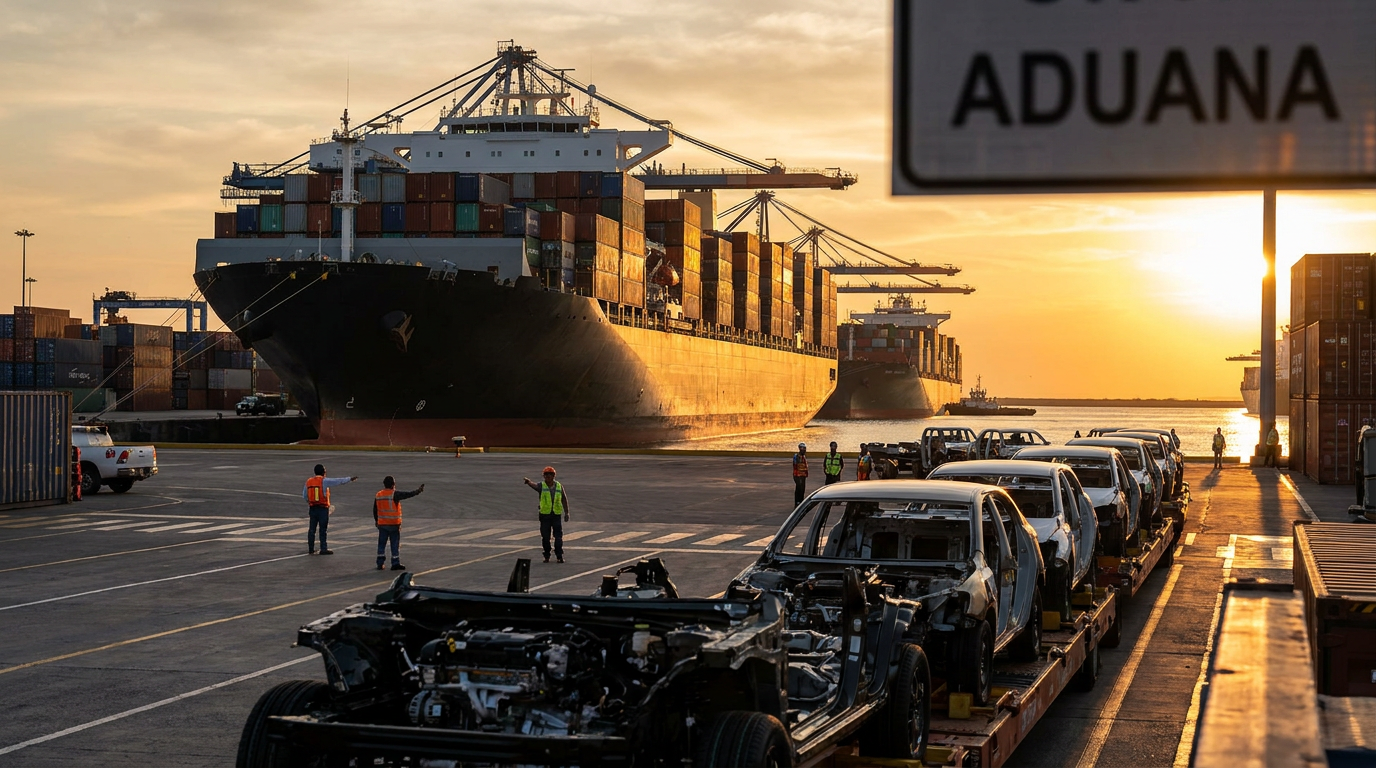
Amid a reconfiguration of automotive global value chains, Mexico is moving forward with a new scheme to promote foreign direct investment through the temporary reduction of tariffs on auto parts imported from any international origin for assembly in national territory. Mexico's Official Gazette of the Federation of Mexico published on October 13, 2026 a resolution that reduces to zero the import tariff on a set of auto parts destined for automotive assembly plants installed or to be installed in Mexican territory. The measure, adopted within the framework of the industrial policy of Claudia Sheinbaum's government, constitutes an instrument for attracting foreign direct investment (FDI) aimed at capitalizing on the wave of nearshoring that has been repositioning Mexico as an industrial platform for the North American market since the deepening of the trade conflict between the United States and China.
The decision, published in the Official Gazette of the Federation on October 13, 2026, affects tariff line 9803.00.01: relating to "Parts and components for the assembly of automobiles in the case of companies of the automotive assembly industry that hold bonded warehouse authorization for the assembly and manufacture of vehicles under the Customs Law, provided they comply with the guidelines established by the Ministry of Economy", which is currently subject to an ad valorem import tariff of 10%, a situation that may constitute an obstacle to attracting new light vehicle production and assembly lines to national territory. The measure targets those projects that contemplate the gradual establishment of productive operations through vehicle assembly schemes of the Semi Knocked Down (SKD) or Completely Knocked Down (CKD) type, which constitute an initial stage in the establishment of more complex manufacturing processes with growing integration of domestic suppliers
The stated rationale is to reduce the costs of setting up new assembly plants for the production and assembly of automobiles, enabling a competitiveness scheme for the inputs that companies cannot manufacture locally at scale, and thereby strengthening the regional integration of value chains.
This measure is adopted within Mexico's National Development Plan 2025-2030, one of whose objectives is to achieve the reindustrialization of the country.
The USMCA as a strategy in automobile production
The USMCA; the Agreement between Mexico, the United States and Canada, in force since July 2020, establishes rules of origin that require percentages of regional content in the value of a finished vehicle in order to access the intra-regional zero tariff. This creates an incentive for automotive assembly plants to anchor their production in the countries of the agreement. But if components imported from third countries, mainly from China and Southeast Asia, are subject to high tariffs, the cost of setting up new plants rises and Mexico's attractiveness declines compared with alternatives such as India, Vietnam, Brazil or even Argentina. The tariff reduction seeks to resolve precisely that tension. By making the inputs imported during the installation and production start-up phase cheaper, the Mexican government lowers the barrier to entry for assembly plants and improves the cost-benefit equation of automotive nearshoring.
Sources
Director of Pulso Internacional
Lawyer specializing in international trade and productive investment, with more than 25 years of experience in international trade negotiations as an adviser to governments and to companies going international. At Pulso Internacional we analyze foreign trade, bringing clarity and international context so that your company can export and invest more.
Related analysis

European Assessment of the EU-Mercosur Agreement: In 4 Months, European Exports Grow 9%
November 5, 2026 · 2 min
Why Has the US Increased Its Investment in Germany?
November 3, 2026 · 5 min