Operation Economic Outcast: US Targets Companies Linked to Iran in 2026
Translated from the Spanish original. Read the original

Director of Pulso Internacional
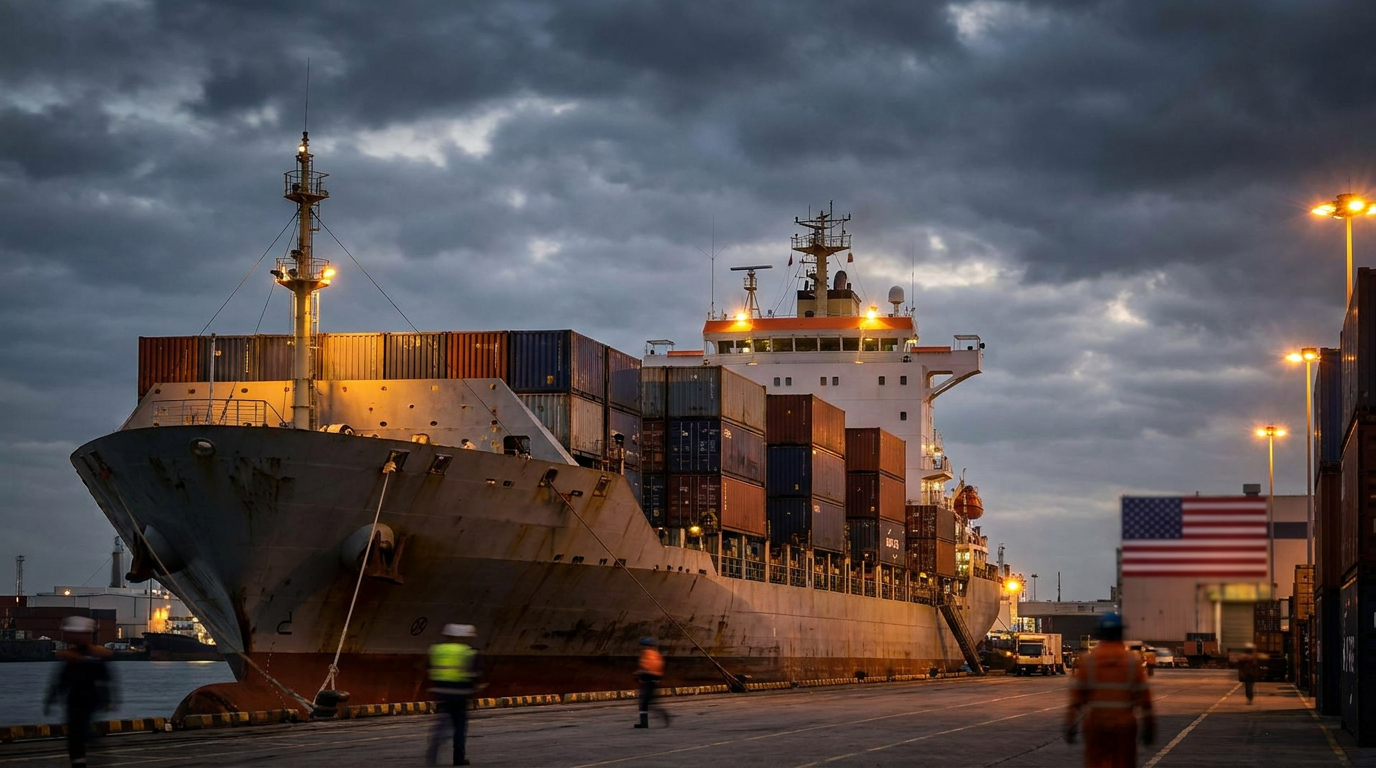
On October 30, 2026, the US Department of the Treasury expanded the scope of its 2026 sanctions on Iran under the so-called Operation Economic Outcast with a new round of sanctions targeting entities that facilitate Iranian maritime oil trade. The central objective is to dismantle the last financing channels available to the Tehran regime, with particular emphasis on networks operating from jurisdictions with high international financial connectivity.
The Department of the Treasury sanctioned the law firm Karnakis and Karnakis, based simultaneously in Panama and Greece, together with its partners and a network of shipping companies based in Panama, Singapore and the United Arab Emirates. In addition, nine vessels were added to the blocked property list of OFAC (Office of Foreign Assets Control). The measure is carried out under Executive Order 13902, which authorizes the US Executive to sanction Iran's oil sector and other strategic sectors of its economy.
The mechanism: how a sophisticated evasion network operates
According to the Treasury's official documentation, the law firm Karnakis and Karnakis allegedly acted as corporate manager of special-purpose entities that, under the guise of legitimate shipping companies, transported and marketed millions of barrels of Iranian oil. The ultimate beneficial owners identified by Washington are two: the Islamic Revolutionary Guard Corps Quds Force (IRGC-QF) and the Houthi movement of Yemen. Both appear on lists of terrorist organizations designated by the US government.
This practice, known in the field of international compliance as beneficial ownership concealment, is precisely the vector that institutions such as the FATF (Financial Action Task Force) have identified as a priority in their most recent mutual evaluations.
The political signal: "with us or against us"
Treasury Secretary Scott Bessent was explicit:
"Those who support Iran must choose: either you are with us or you are against us. We know who they are, we know what they do, and we will continue to take action."
This formulation, which rhetorically evokes the post-9/11 language of the Bush era, is no accident. In the context of the maximum pressure strategy relaunched by the Trump administration in its second term, Operation Economic Outcast functions as an instrument of extraterritorial coercion. It targets not only Iranian entities but the entire ecosystem of service providers (legal, financial, shipping) that allows Tehran's oil to reach international markets.
The regulatory framework: Executive Order 13902 as an instrument of sectoral pressure
The administrative sanctions announced are implemented under Executive Order 13902, originally signed in January 2020 and reactivated in Trump's second term. This instrument authorizes the Secretary of the Treasury to block assets and prohibit transactions with persons, natural or legal, operating in Iran's construction, manufacturing, textile and mining sectors and, crucially, its energy sector. Its scope does not require proof of malicious intent: mere participation in the designated sectors may be enough to trigger the measures. The case of the Treasury's previous actions under this same operation shows that Washington has been systematically escalating the perimeter of sanctions, moving from operating entities toward second- and third-tier service providers. The logic is the same as that of the supply chain due diligence that the European Union requires under its critical minerals regulation; responsibility no longer ends with the direct counterparty. The traceability of operations in international trade is becoming increasingly relevant, and issues that go beyond the transaction itself are intertwined and influence the foreign policy of countries.
Sources
- US Department of the Treasury — Press Release sb0664: Sanctions under Operation Economic Outcast
- US Department of State — Unmasking the service providers that facilitate the operations of Iran's clandestine fleet
- US Department of the Treasury — Press Release sb0613: Previous actions under Operation Economic Outcast
Director of Pulso Internacional
Lawyer specializing in international trade and productive investment, with more than 25 years of experience in international trade negotiations as an adviser to governments and to companies going international. At Pulso Internacional we analyze foreign trade, bringing clarity and international context so that your company can export and invest more.
Related analysis
European Assessment of the EU-Mercosur Agreement: In 4 Months, European Exports Grow 9%
November 5, 2026 · 2 min
Why Has the US Increased Its Investment in Germany?
November 3, 2026 · 5 min