It Is Possible to Compete with China in Brazil
Translated from the Spanish original. Read the original

Director of Pulso Internacional

I. Unequal competition
The concerns about unfair competition raised by the US regarding China are fully applicable to Mercosur, since the displacement of Argentine industrial products in the Brazilian market by Chinese products, in many cases subsidized, has proven to be a constant despite the tariff preferences our products enjoy under Mercosur.
Twenty years ago, in 2004, Brazil's industrial imports from Argentina exceeded those originating in China. This situation changed substantially: Chinese imports went from representing 7% of the Brazilian market in 2004 to capturing 20% in 2017, while Argentine products were unable to keep pace with the growth in Brazilian imports and saw their overall share decline. (1)
China is today the main source of Brazil's total imports, with a 23.3% share in 2023, followed by the United States with 15.5%, while Argentina ranked fourth with 4.9%, according to the FGV (Getulio Vargas Foundation) and the MRECIC (Argentine Ministry of Foreign Affairs, International Trade and Worship). (2) (3)
II. The Brazilian state that is the exception proving the rule
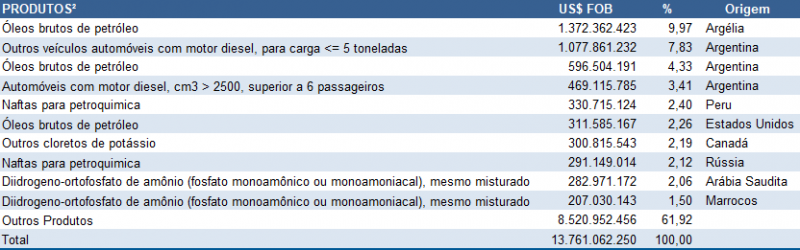
In 2023 the exception to the picture described above was the Brazilian state of Rio Grande do Sul, where Argentine exports reached 20.7% of the total, followed by China with 13.0%, the United States with 10.9%, and Algeria with 10.5%. The chart below shows that the main Argentine products imported were automobiles. (4)
III. Commercialization as a way to offset the lack of productive competitiveness
As a consequence of the pandemic, by early 2021 international ocean freight rates from China to South America had risen by 443% , which improved the competitiveness of Argentine products in Brazil, but only for a short time. Fluctuations in freight rates do not provide a long-term strategy for meeting international competition in the Brazilian market. (5)
The competitive advantage of Argentine products in the Brazilian market may stem, in addition to the zero tariff they enjoy as goods of Mercosur origin, from their quality, prompt delivery, the smaller volumes required, and Brazilian importers' interest in diversifying the origin of their suppliers so as not to be vulnerable to extraordinary situations such as the pandemic or the war in Ukraine. There is also an issue that cuts across most sectors in Brazil: not all distributors of industrial products are importers. This creates an opportunity for Argentine companies interested in the Brazilian market, but it requires a physical presence in Brazil and the customs clearance of goods by the exporter itself, which facilitates domestic commercialization and can be a differentiator against Chinese competition.
References:
(1) ECLAC 2022 “Argentina's economic relations with China and their impact on a long-term productive strategy” Bekerman, Marta Dulcich, Federico Gaite, Pedro. Op. cit. p. 33 repositorio.cepal.org
(2) FGV - Foreign Trade Indicator No. 87, July 17, 2024. p. 7 portalibre.fgv.br
(3) Country Economic Profile (Brazil). MRECIC. Updated: May 2024.
(4) “Main products imported by Rio Grande do Sul, by value and country of origin (2023)”. atlassocioeconomico.rs.gov.br
(5) “ Shipping during COVID-19: why container freight rates have surged” 23-4-2021 unctad.org
Director of Pulso Internacional
Lawyer specializing in international trade and productive investment, with more than 25 years of experience in international trade negotiations as an adviser to governments and to companies going international. At Pulso Internacional we analyze foreign trade, bringing clarity and international context so that your company can export and invest more.
Related analysis

European Assessment of the EU-Mercosur Agreement: In 4 Months, European Exports Grow 9%
November 5, 2026 · 2 min
Why Has the US Increased Its Investment in Germany?
November 3, 2026 · 5 min