Argentina's Sports Footwear Sector and Its Competitive Adaptation
Translated from the Spanish original. Read the original

Director of Pulso Internacional
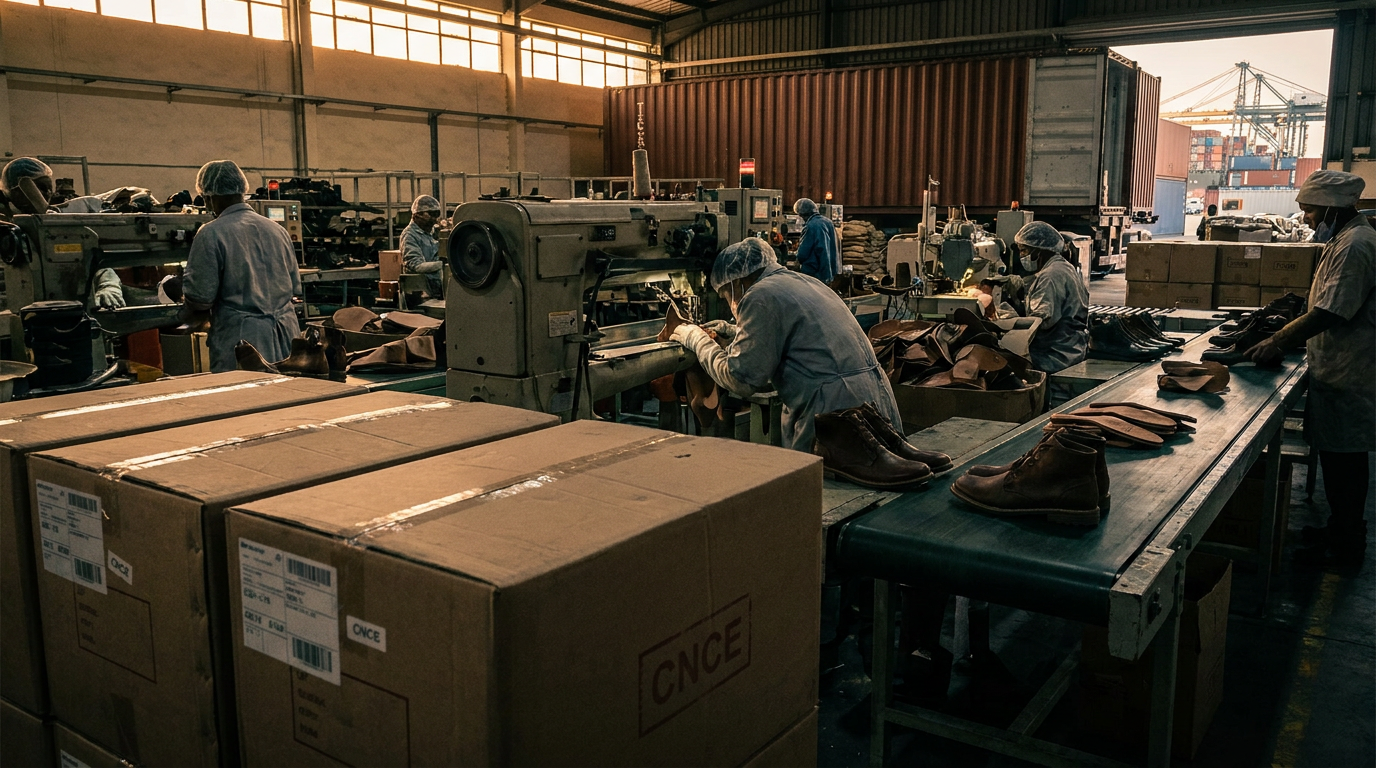
The liberalization of the Argentine economy poses new challenges for industrial companies that must contend with the inflow of imported products. Moving away from local integration of production and taking advantage of global supply chains is something that not all companies are in a position to do, owing to their structure, size and production habits.
However, it now presents itself as an alternative worth considering in order to adapt to new times. In this regard, the national government, through the National Foreign Trade Commission (CNCE), sent a signal with Resolution 531/2026, which eliminates antidumping measures on imports of unassembled sports footwear from China. This decision, published on April 21, 2026, accelerates the readjustment toward an industrial model based on local assembly of imported components.
Regulatory framework and scope of the measure
This measure replaces the tariff protection for unassembled sports footwear, which applied a minimum FOB value of USD 15.70 per pair, as with finished footwear, originally established in Resolution 915/2021 for 5 years. The dilemma arises in the tariff classification of the product and lies in determining whether unassembled sports footwear can be considered an input or an essential part that makes it indistinguishable from finished sports footwear.
The regulatory change results from an ex officio changed-circumstances review initiated in 2025, in which the CNCE determined that the market conditions that justified the original measure had changed substantially. In its Board Minutes No. 2622 of March 25, 2026, the Commission argued that the sector had evolved toward high-performance products with technological innovations that domestic production did not cover, given the gap in sports manufacturing processes. The resolution specifically excludes from the antidumping regime "sports footwear presented unassembled or unmounted, with soles and/or uppers other than natural leather" of Chinese origin, while maintaining antidumping duties on finished products
Request by local industry with ties abroad
This is a decision that challenges traditional paradigms, since the elimination of the antidumping measure was requested by local companies, though some of them have parent companies and ties abroad;
- Topper Argentina S.A. (formerly Alpargatas SAIC) is owned by Brazilian businessman Carlos Wizard Martins,
- Puma Sports Argentina S.A. has been owned, since January 2026, by Anta Sports, which became the main shareholder of Puma SE, the parent company of Puma Sports Argentina S.A.,
- Distrinando S.A., an Argentine family business located in Saladillo, Buenos Aires province
- Vicbor S.R.L. is an Argentine company with a factory in Avellaneda, Buenos Aires province
These companies have adopted models based on assembling imported kits as a strategy to remain competitive in the sports segment against imported products. The business request reflects a readjustment toward integration into international value chains, where local value added is concentrated in assembly processes that make it possible to sustain some employment and improve productivity per worker.
Impact on Argentine foreign trade
Import data show the relevance of this segment. According to the CNCE, since the 2010s these imports have gained greater relevance, rising from an average of 28% of total imports of unassembled footwear in the 2015-2019 period to 59% in 2021-2023. Nevertheless, this trend reversed over the last year and a half, during the period in which the antidumping measure was in force, when their average share fell to 24%, showing the growing dependence on this production model.
Industrial policy objectives
The CNCE based the measure on multiple objectives: reducing production costs, lowering final prices, modernizing the technological offering and promoting production schemes that generate local value added. The resolution states that the measure "promotes competition, expands supply, improves quality and generates local value added, without displacing domestic production". This strategy recognizes that competitiveness in the sports segment requires access to advanced technologies and materials that exceed current local production capabilities. In this regard, the measure favors integration into global value chains over the protection and growth of domestic production capabilities. This model enables Argentine manufacturers to be present in a segment that would otherwise depend almost exclusively on imports of finished products.
Outlook for the industrial ecosystem
Eliminating antidumping duties on sports kits, while maintaining them on finished footwear, creates a system of incentives that favors local assembly. However, it does not encourage the local development of technologies and production processes that would allow the sector to evolve toward international production standards, nor does it set specific requirements for companies to reduce the prices of final products to benefit local consumers, which was one of the grounds for the measure.
It is clear that the elimination of antidumping duties on unassembled sports footwear represents a paradigm shift in Argentina's industrial strategy in this sector. The success of this measure will depend on the ability of local companies to use the easier access to advanced components as a platform to develop competitive production, design, marketing and sales capabilities that are sustainable in the long term.
Sources
- Official Gazette (Boletín Oficial) — Resolution 531/2026 (April 21, 2026)
- Official Gazette — Details of the antidumping measure (April 21, 2026)
- Primera Edición — Antidumping duty on sports footwear parts imported from China eliminated
- CATARA — News details
- Infobae — At the request of local factories, the government eased imports of kits to assemble sneakers from China (April 22, 2026)
Director of Pulso Internacional
Lawyer specializing in international trade and productive investment, with more than 25 years of experience in international trade negotiations as an adviser to governments and to companies going international. At Pulso Internacional we analyze foreign trade, bringing clarity and international context so that your company can export and invest more.
Related analysis
European Assessment of the EU-Mercosur Agreement: In 4 Months, European Exports Grow 9%
November 5, 2026 · 2 min
Why Has the US Increased Its Investment in Germany?
November 3, 2026 · 5 min