How to Improve the RIGI
Translated from the Spanish original. Read the original

Director of Pulso Internacional

In Argentina, the Large Investment Incentive Regime (Régimen de Incentivo para Grandes Inversiones, RIGI), established by Law No. 27,742 and its Decree 749/2024, sets up one of the most attractive frameworks in Latin America for attracting foreign direct investment (FDI) in strategic sectors, owing to the advantages it grants to investors. However, when we look at the standards that the Organisation for Economic Co-operation and Development (OECD) recommends for foreign direct investment in critical infrastructure, it becomes evident that the Argentine regime has significant gaps in risk management, in contrast with the practices of the very countries from which the investments originate.
Indeed, while the United States, the European Union and other members of the OECD have developed increasingly restrictive frameworks for assessing foreign investment in sensitive infrastructure, Argentina offers a regime that prioritizes the attraction of capital without incorporating the national security, economic resilience and tax efficiency forecasting screens that characterize international best practices.
The RIGI regulatory framework and its competitive advantages
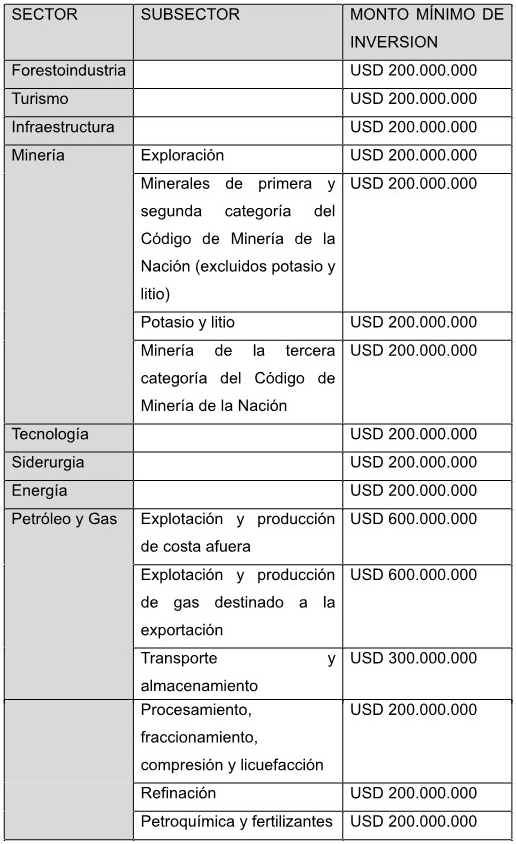
The RIGI establishes extraordinary tax incentives for investment projects above US$200 million, including tax stability for 30 years, a differential exchange rate for the payment of taxes, and the possibility of crediting up to 100% of the withholdings suffered as a payment on account of income tax.
The regime's sectoral breadth covers mining, energy, infrastructure, technology, steel, petrochemicals, forestry and tourism, sectors that in many cases coincide with those the OECD classifies as critical infrastructure and that are key to present and future development. This shows the importance of incorporating international risk assessment standards that go beyond the purely fiscal dimension of the incentive.
OECD standards for investment in critical infrastructure.
Argentina formally applied for OECD accession on July 8, 2024 and declared it to be of national interest, which evidences how important the process of joining this multilateral organization is for the country.
The OECD's recommendations on investment in critical infrastructure stress the need for regulatory frameworks that combine facilities for investment with strong risk assessment mechanisms. These standards include the identification of critical assets, the assessment of the impact on national security, and the implementation of disclosure requirements for foreign investors in sensitive sectors. The experience of several countries shows that it is possible to maintain an attractive environment for investment while preserving national security considerations. These frameworks do not prevent investment; rather, they establish due diligence processes that strengthen the legitimacy and long-term sustainability of projects.
Canada and the need for equivalence in investment scrutiny
Canada, besides being an OECD member, is a country with mining investments in Argentina and several projects submitted, either approved or under review, for the RIGI, such as Los Azules (McEwen Copper) for US$2,672 million, Taca Taca (First Quantum Minerals) for US$5,250 million, Altar (Aldebaran Resources) and lithium projects in the provinces of Salta and Jujuy.
In line with the concerns expressed in international bodies such as the OECD, Canada intensified its scrutiny of investments in critical minerals (such as lithium) beginning in 2024, basing its policy on the statement of July 4, 2024:
"Foreign capital will continue to play an important role in our industry. However, Canadians cannot ignore that we live in a world of geopolitical competition, where critical minerals are fundamental to the most advanced industrial and defense policies. Canada welcomes foreign investment and recognizes its importance, especially for small Canadian companies, to drive the exploration and development of deposits. In this regard, the Government must strike a balance between protecting Canada's strategic interests and supporting the development of its resources. We have already recognized this need in relation to the national security considerations set out in the recent update to the Canadian Critical Minerals Strategy."
This policy, which the countries of origin of the investments themselves implement in their own territories, and the security grounds that inspire it, are valid for both the investment-sending country and the recipient country. Hence, they should have no objections if the same standards are applied.
RIGI gaps in strategic risk management and the application of OECD principles
An analysis of the RIGI regulatory framework reveals significant gaps in areas that the OECD considers fundamental for the responsible management of foreign investment in critical infrastructure. These gaps include the lack of mechanisms to assess the impact on critical supply chains, the absence of beneficial ownership disclosure requirements for foreign investors, and the lack of inter-institutional consultation processes involving defense and national security agencies. The OECD's practical recommendations would help ensure that the RIGI not only accelerates projects but also incorporates the criteria that investor countries use to assess strategic risk, national security and the resilience of critical supply chains. This does not require dismantling the existing incentives, but complementing them with assessment processes that strengthen the institutional quality of the regime.
Risks of the current implementation and opportunities for improvement
Implementing the RIGI without the OECD standards for strategic risk assessment creates vulnerabilities that could compromise both national security and the political sustainability of the regime itself. Critical infrastructure projects developed without an adequate assessment of the risks they entail can create strategic dependencies that limit the autonomy of public policy in the medium and long term. At the same time, this situation represents an opportunity for Argentina to shape an investment framework that combines fiscal competitiveness with institutional strength, positioning itself as a preferred destination for investors who value regulatory predictability and responsible risk management. Incorporating OECD standards could even facilitate access to multilateral financing and improve country risk ratings.
Sources
- OECD — FDI in Critical Infrastructure
- Decree 591/2024 - "The process of accession of the ARGENTINE REPUBLIC to the ORGANISATION FOR ECONOMIC CO-OPERATION AND DEVELOPMENT (OECD) is declared a matter of National Interest" boletinoficial.gob.ar
- RIGI. Decree 749/2024 - Approval of the Regulations of Title VII - Large Investment Incentive Regime (RIGI) - Law No. 27,742. boletinoficial.gob.ar
Director of Pulso Internacional
Lawyer specializing in international trade and productive investment, with more than 25 years of experience in international trade negotiations as an adviser to governments and to companies going international. At Pulso Internacional we analyze foreign trade, bringing clarity and international context so that your company can export and invest more.
Related analysis

European Assessment of the EU-Mercosur Agreement: In 4 Months, European Exports Grow 9%
November 5, 2026 · 2 min
Why Has the US Increased Its Investment in Germany?
November 3, 2026 · 5 min