SMEs for War
Translated from the Spanish original. Read the original

Director of Pulso Internacional
The industrial crisis reorients jobs and SMEs toward war
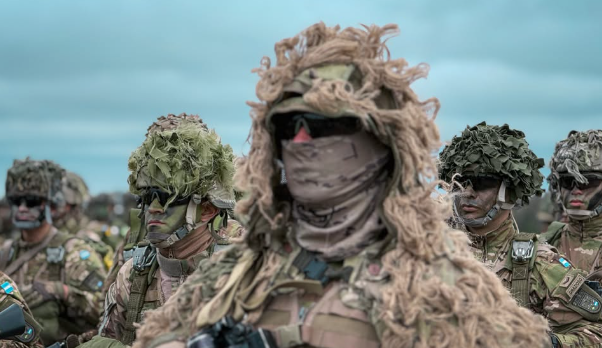
After World War II, armies were always supplied by large companies and conglomerates manufacturing weapons, tanks, ships, missiles and submarines. It was a field closed to SMEs for obvious reasons of national security. That, however, has changed. The lack of competitiveness of the Western powers' industrial products in the face of China's advance is leading them to reorient their capacities toward the sector that has historically served them well: the defense industry.
Pope Leo XIV's warning
In the Encyclical MAGNIFICA HUMANITAS of His Holiness Pope Leo XIV, on the protection of the human person in the age of artificial intelligence, he clearly points to what he calls "Unlimited power":
"193. The growth of the military-industrial complex has become a distinctive feature of today's political landscape and a key sector of the economy of various countries. The close relationship between economic interests, the military apparatus and political decisions gives rise to an «armed nation», in which war is presented as a natural extension of politics and the arms market becomes an autonomous driving force of military decisions. Nor can we ignore the enormous economic interests that underlie war. The arms industry and the countries that supply weapons benefit from a market that thrives precisely because of conflicts. In this regard, there are also financial interests that help exacerbate tensions in various regions of the world."
In this sense, we see how developed countries use the arms market as a driving force for their economic development:
Germany - Tanks instead of cars
The German company Audi is trying to weather the crisis unleashed by Chinese competition, and while it moves ahead with cutting 7,500 jobs, it is lending employees to the defense industry for two years. This is an “Arbeitnehmerüberlassung”, a temporary assignment of workers between companies.
United Kingdom - Exports on the rise
The United Kingdom had already anticipated this in its 2025 Industrial Strategy ( The UK s modern industrial strategy), showing a clear interest in having SMEs take part in developing tools, drones and other equipment for war. The document highlights:
" Support UK-based companies—with particular attention to SMEs and non-traditional suppliers—and build a dynamic and competitive British defence sector." (p. 129) and to that end:
" Increase Ministry of Defence (MOD) spending with SMEs by £2.5 billion by May 2028—a 50% increase over the 2023/24 financial year baseline—ensuring they receive at least £7.5 billion of total MOD spending." (p. 131)
This has been reaffirmed under the defence industrial strategy's slogan: "Making Defence an engine for Growth".
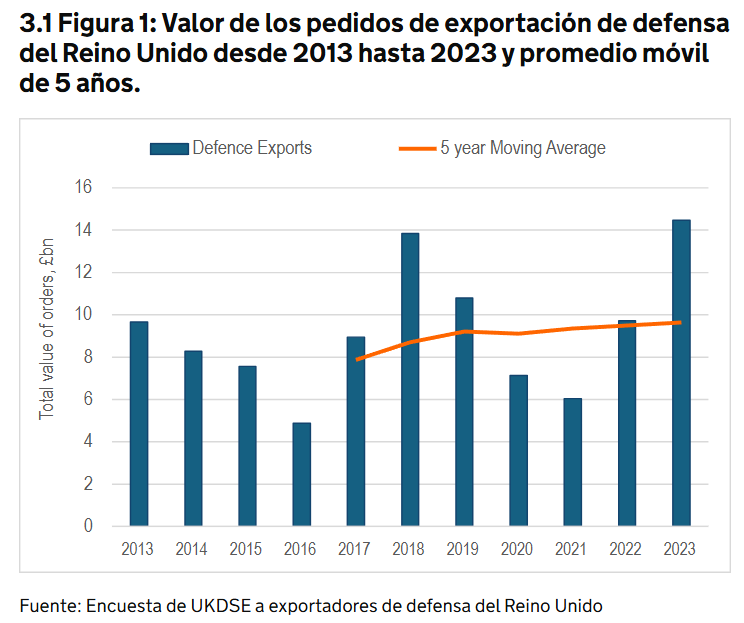
Sustaining wars such as the one in Ukraine can be big business for foreign trade. Indeed, according to British government information, the total value of UK export orders in 2023 was £14.5 billion, an increase of £4.8 billion in nominal terms over 2022 and the highest value of export orders since 2013. This 2023 increase is mainly due to new contracts in Europe.
United States - "The era of offshoring is over"
"The era of offshoring is over" Kelly Loeffler (SBA Administrator)
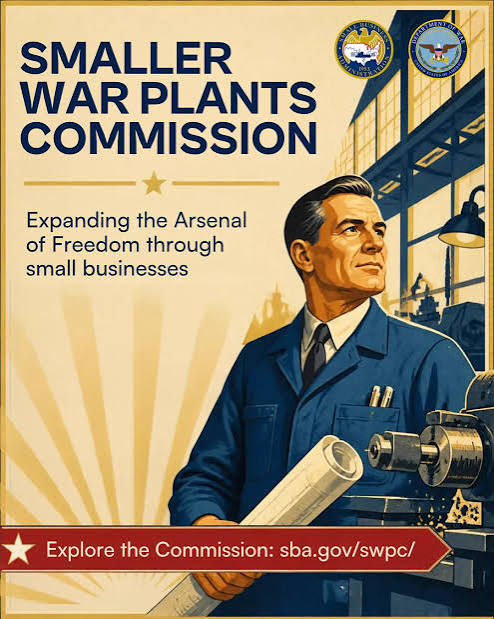
In August 2026, the US created the Smaller War Plants Commission, a joint initiative of the US Small Business Administration (SBA) and the US Department of War (DoW) aimed at encouraging SMEs to enter the defense industry. The goal is to increase capacity in critical areas such as munitions and their components, drones and one-way attack systems, microelectronics, strategic and critical minerals, components for shipbuilding and ship repair, sensors, batteries, castings and forgings, and textiles.

“The Smaller War Plants Commission represents a historic commitment by this Administration to fully back the federal government with the small businesses that power America's Arsenal of Freedom. We are reclaiming the industrial dominance that made the United States the decisive force of the 20th century and applying it to the threats of this century. By mobilizing capital, private investment and contracting opportunities for the companies that build the ships, munitions, electronics, components and capabilities our warfighters depend on, we will strengthen the industrial might that underpins our military advantage.” US Secretary of War, Pete Hegseth
All these initiatives demonstrate the West's industrial reorientation toward the defense industry. Encouraging SMEs to enter it entails risks that need to be assessed, since access to potentially dangerous instruments and weapons without rigorous control can lead to their use by terrorists and organized crime, destabilizing countries and regions.
It is essential that world trade between China and the rest of the countries be balanced in order to discourage the escalation of the global arms industry.
Director of Pulso Internacional
Lawyer specializing in international trade and productive investment, with more than 25 years of experience in international trade negotiations as an adviser to governments and to companies going international. At Pulso Internacional we analyze foreign trade, bringing clarity and international context so that your company can export and invest more.
Related analysis

European Assessment of the EU-Mercosur Agreement: In 4 Months, European Exports Grow 9%
November 5, 2026 · 2 min
Why Has the US Increased Its Investment in Germany?
November 3, 2026 · 5 min