Turkey as the Commercial Heir to the Ottoman Empire
Translated from the Spanish original. Read the original

Director of Pulso Internacional
Source: Embassy of Türkiye in Buenos Aires on X
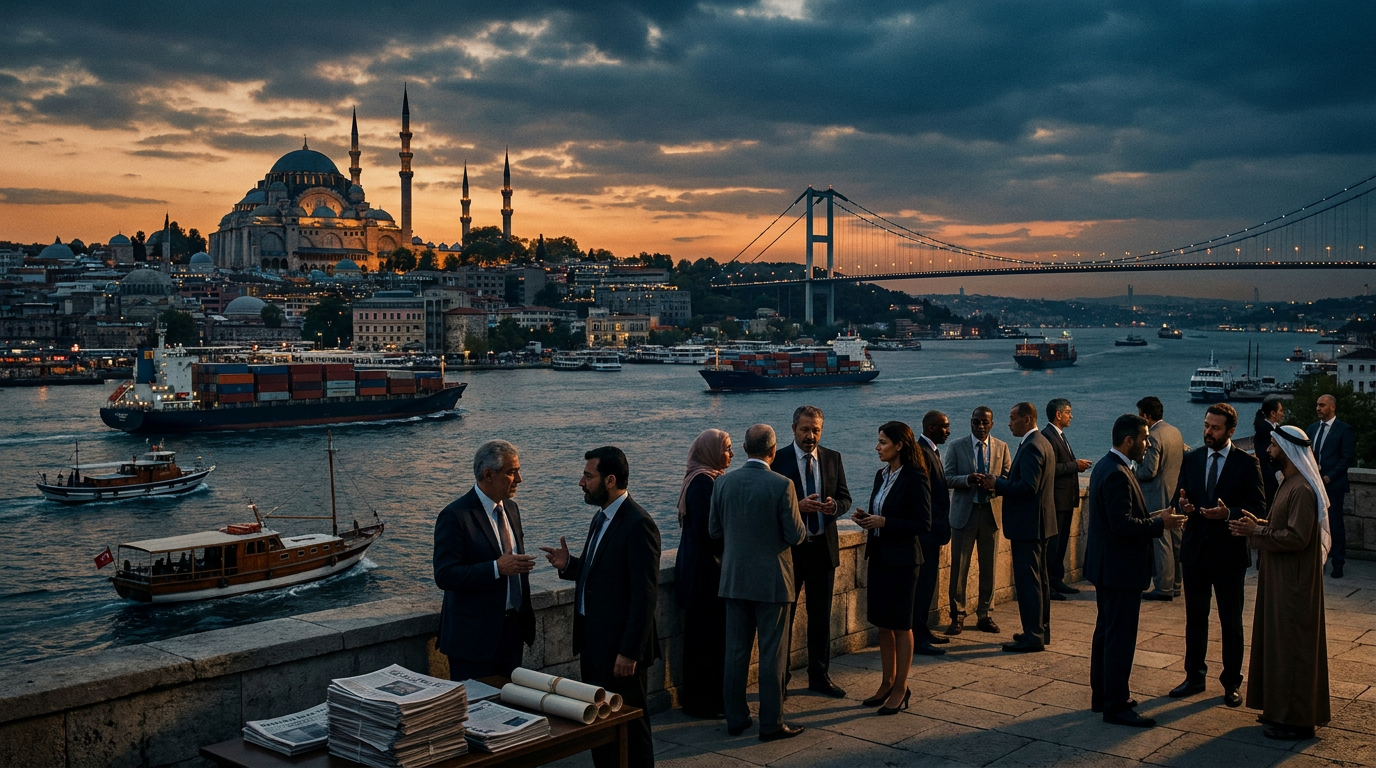
The most enduring empires were not those that conquered territories, but those that dominated trade routes, and the Ottoman Empire, which for more than six centuries structured exchange between East and West, is perhaps the clearest example. Understanding its commercial architecture is not an exercise in historicist erudition; rather, it serves to interpret the reconfiguration of global value chains now being contested among Washington, Beijing and Brussels.
Geography as an instrument of power: Ottoman control of the routes
When the Ottoman armies took Constantinople in 1453, they did not merely carry out a military conquest; they seized the central node of the medieval trade network. The city was the point of convergence of the overland Silk Road and the maritime routes of the Eastern Mediterranean. Controlling it meant, in practice, administering the traffic in spices, silk, precious metals and grains between Central Asia, the Middle East and European markets. The Ottoman Empire was quick to understand that this geographic position was a strategic asset superior to any natural resource of its own. What followed was, in modern terms, a policy of imperial trade compliance: the system of capitulations (ahdname), through which the "Sublime Porte" (the term used to refer to the government of the Ottoman Empire, particularly in the diplomatic context) granted differentiated trade privileges to various European powers such as Venice, Genoa, France and, later, England, or Spain in exchange for diplomatic concessions and the recognition of sovereignty. It is evident that this mechanism prefigures, in a sophisticated way, modern bilateral trade agreements and bilateral investment treaties, as well as tariff differentiation by counterpart, most-favored-nation clauses avant la lettre, and extraterritoriality in the resolution of trade disputes.
The historian Simon Sebag Montefiore, in a conversation about his work on the great empires of history, notes that Ottoman power lay less in its own productive capacity than in its ability to mediate, tax and regulate the trade flows of others. The Empire was, fundamentally, a geopolitical market maker, not a hegemonic producer. That difference explains both its longevity and its vulnerability, which became evident when the Atlantic maritime routes shifted the axis of global trade westward.
The disruption of the routes
The opening of the route to India by the Portuguese Vasco da Gama via the Cape of Good Hope, Africa, in 1497, set a precedent of logistical disruption. What happened next, between 1497 and 1557 (when the Ottoman Empire lost the Battle of Lepanto against the Holy League, a grouping of Catholic states led by Spain), was the gestation of the change that in the long run would weaken the empire's trade model. It was not simply the displacement of one commercial actor by another, but the progressive obsolescence of an intermediation model that had been profitable for generations. The Ottoman Empire lost not because its products were inferior, but because the routes it controlled ceased to be the most relevant.
The institutional legacy: bureaucracy, stability and predictability as competitiveness factors
One of the least studied aspects of the Ottoman Empire in relation to its trade policy is its administrative system. The Sublime Porte developed a bureaucracy specialized in managing exchanges: the system of berats (letters containing the monarch's orders), the Gümrük Defterleri (registers of the imperial customs), and the codification of transit taxes, which generated precisely what investors and traders of any era prioritize: predictability. The rules were known, applied with relative uniformity and modified with enough advance notice for private actors to adapt.
"The power of an empire is not measured by the extent of its territory, but by its capacity to make others want to trade within its rules. That is the most enduring form of sovereignty."
Simon Sebag Montefiore, historian, in conversation about the great empires of history
Türkiye as a partial heir of the Ottoman Empire in the 21st century
Türkiye, the partial geographic and institutional heir of the Ottoman space, remains an actor that has benefited from its intermediary position between East and West. We saw this with the case of flour, a product it exports at twice the volume of the wheat it produces, and which turned it into a mediator between Russia and Ukraine.
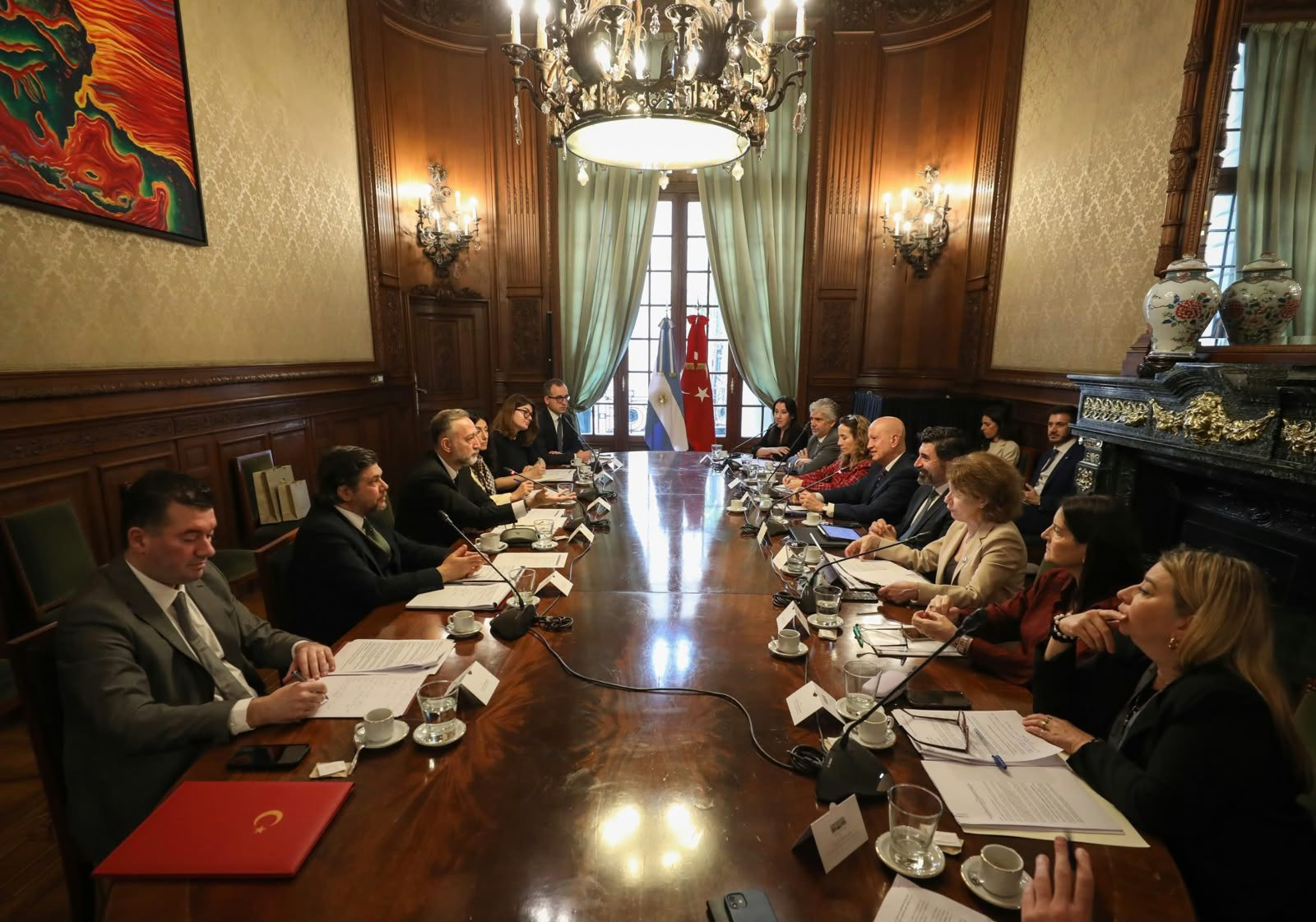
On October 24, the Deputy Foreign Minister of the Republic of Türkiye, Ambassador Levent Gümrükçü, met with Mr. Juan Navarro, Undersecretary of Foreign Policy at Argentina's Ministry of Foreign Affairs, to commemorate 100 years since the establishment of diplomatic relations between the two countries.
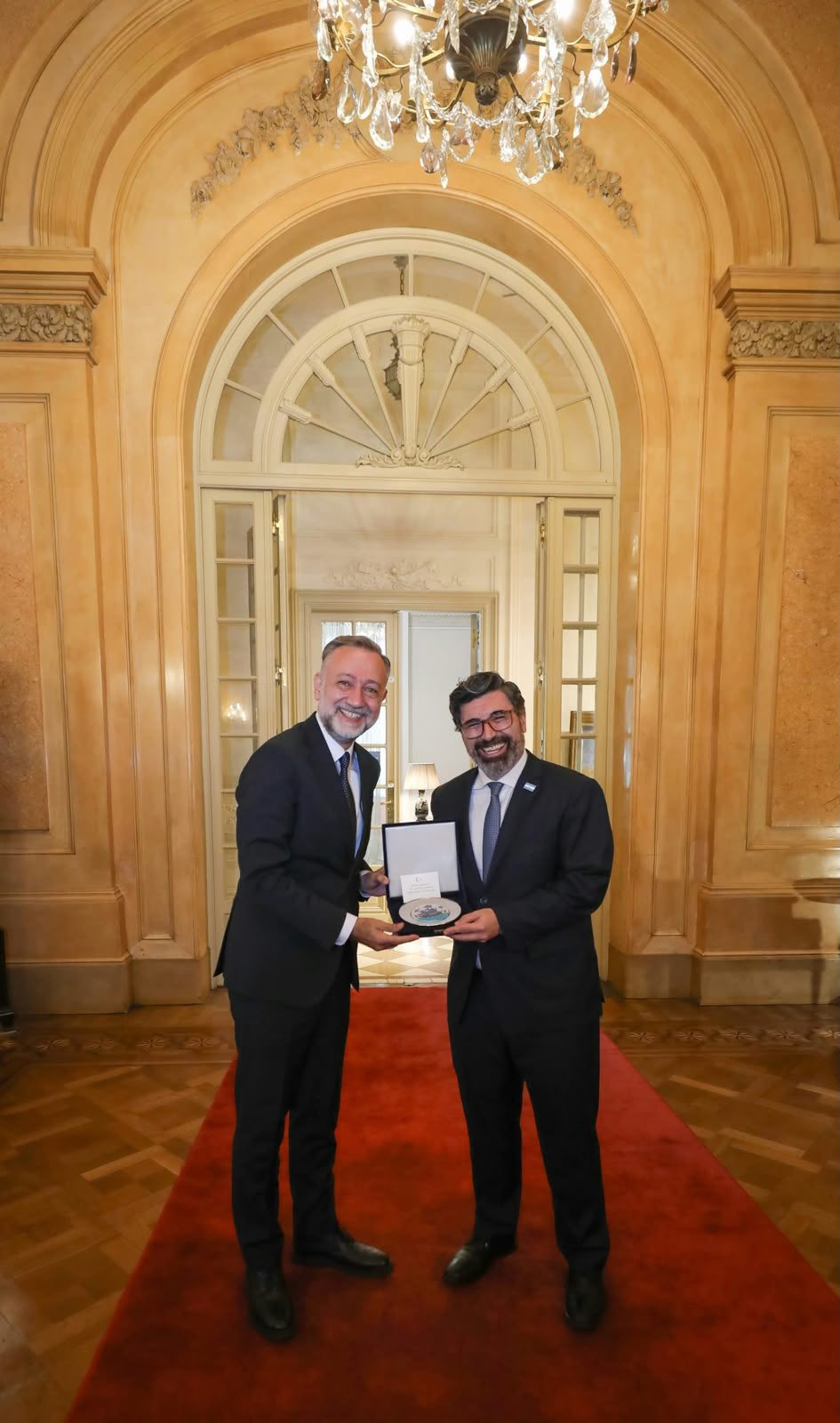
Source: Embassy of Turkey. Deputy Minister Ambassador Levent Gümrükçü and Juan Navarro, Undersecretary of Foreign Policy, MRECIC
Argentine exports were concentrated in oilseeds, cereals and pharmaceutical products.
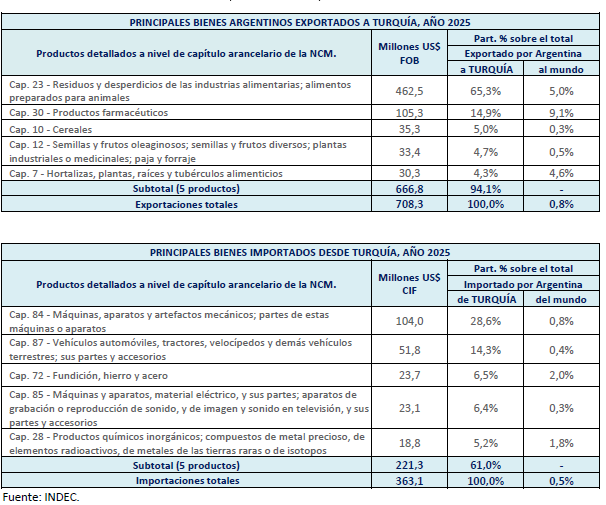
Argentina Trade Net
The history of the Ottoman Empire is not a story about the past. Control of routes, such as the Bosphorus strait or the Strait of Hormuz, diversification of trading partners, institutional stability and the capacity to adapt when the axis of global trade shifts are the dimensions that define successful international integration in any era. Argentina's Ministry of Foreign Affairs, Prom Argentina, business chambers and those responsible for industrial policy face an agenda that history has already set out.
Sources
Director of Pulso Internacional
Lawyer specializing in international trade and productive investment, with more than 25 years of experience in international trade negotiations as an adviser to governments and to companies going international. At Pulso Internacional we analyze foreign trade, bringing clarity and international context so that your company can export and invest more.
Related analysis
European Assessment of the EU-Mercosur Agreement: In 4 Months, European Exports Grow 9%
November 5, 2026 · 2 min
Why Has the US Increased Its Investment in Germany?
November 3, 2026 · 5 min