Unbalanced Agricultural Trade
Translated from the Spanish original. Read the original

Director of Pulso Internacional

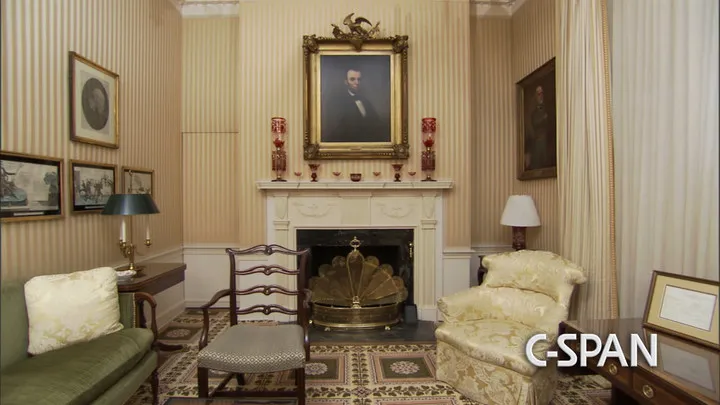
1. It All Began at Blair House
In November 1992, the US and the European Communities, within the framework of the GATT Uruguay Round negotiations, negotiated a bilateral agreement known as the "Blair House Agreement", which served as the main precursor to the Agreement on Agriculture currently in force at the WTO. Although it made it possible to conclude the Uruguay Round, which had been under negotiation for 7 years, it was done behind the backs of the largest agricultural producers, such as Argentina and Brazil. The Blair House Agreement partially limited agricultural subsidies but at the same time entrenched their existence, deepening the distortion and protectionism of agricultural trade.
2. Unbalanced Agricultural Trade
While Argentine farmers question the national government's high export duties, which harm them directly, there are equal or greater distortions in international trade that make their production less competitive abroad, hinder their market access, and also erode their profitability. The total domestic support granted by WTO Members is estimated at USD 610,000 million per year. And this figure is partial, since it does not take into account numerous types of support that are not covered by the Agreement on Agriculture. If we add to this the increasingly "creative" non-tariff barriers (animal welfare, various certifications, eco-labelling, food safety, the environment, "deforestation-free" products, climate change, etc.) implemented by the European Union, it becomes evident that more forceful measures need to be adopted. The US, although it also takes advantage of the benefits of the Agreement on Agriculture, appears to have taken note and is now pressuring the EU to remove the trade barriers on its products, under the threat of tariff increases of up to 50%.
3. The Trade War and the Paths to Avoid It
We must remember that, within the World Trade Organization, the agricultural sector has a regime that differs from that of other industrial products, which are governed by the General Agreement on Tariffs and Trade (GATT). It was not integrated into it, as was the case with another sensitive sector, textiles, which had a transitional agreement, the Agreement on Textiles and Clothing (ATC); instead, the Agreement on Agriculture perpetuated the differences and the lack of trade fairness, which persist to this day and continue to grow scandalously, and which are today the tip of the iceberg of a possible trade war. There is a notable disproportion in tariffs between agricultural products and industrial goods. The average level of import duties (tariffs) applied by WTO countries in agriculture is 14.8%, while the duty applied to non-agricultural goods is 8%. It is important to reconsider the need to adopt measures that counteract and rebalance a multilateralism in agriculture that, 30 years after the creation of the WTO, has not provided sufficient answers to efficient producers such as Argentina's or to consumers around the world. The full integration of the agricultural sector into GATT rules, the reduction of trade-distorting agricultural subsidies and the avoidance of technical barriers to trade could be a first step toward easing trade and political tensions, as well as toward starting down a path to truly fair international trade. It is important to reconsider the need to adopt measures that counteract and rebalance a multilateralism in agriculture that, 30 years after the creation of the WTO, has not provided sufficient answers to efficient producers such as Argentina's or to consumers around the world.
References
(1) blairhouse.org
Blair House is a complex of several residences with 120 rooms, three dining rooms and two working rooms, located on Pennsylvania Avenue in Washington D.C. This place, where heads of state and monarchs stay during their official visits to Washington, is also of great historical significance for Argentine agricultural production, since it was there that the foundations were laid for perpetuating an unequal international trading system.
(2) On June 29, 2023, the EU adopted the European Union regulation on deforestation-free products. The regulation's requirements regarding timber traceability and "due diligence" mean that small producers may end up excluded from international value chains not because they deforest their land, but because they lack the capacity needed to demonstrate compliance with the regulation's stringent requirements.
Director of Pulso Internacional
Lawyer specializing in international trade and productive investment, with more than 25 years of experience in international trade negotiations as an adviser to governments and to companies going international. At Pulso Internacional we analyze foreign trade, bringing clarity and international context so that your company can export and invest more.
Related analysis
European Assessment of the EU-Mercosur Agreement: In 4 Months, European Exports Grow 9%
November 5, 2026 · 2 min
Why Has the US Increased Its Investment in Germany?
November 3, 2026 · 5 min