The WTO Public Forum 2026
Translated from the Spanish original. Read the original

Director of Pulso Internacional
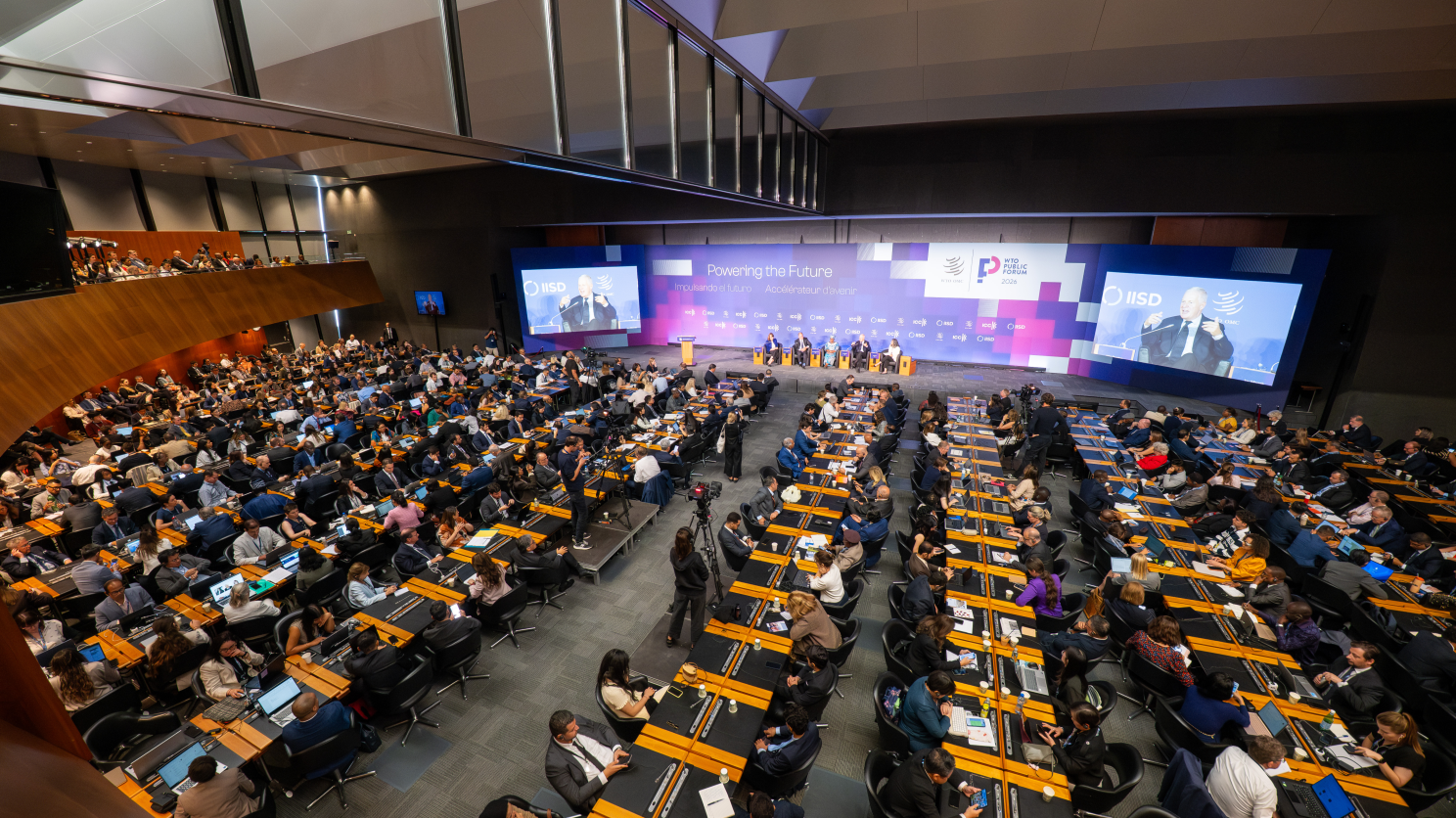
On September 15, 2026, Geneva once again became the epicenter of the debate on the future of multilateral trade. The WTO Public Forum 2026 brought together government delegations, private sector representatives, academics and civil society organizations under one premise: the need for creativity in the face of growing fragmentation, renewed protectionism and geopolitical tensions that are eroding decades of institution-building. The tariff war between the United States and China, the proliferation of carbon border adjustment mechanisms driven by Brussels, and the reconfiguration of global value chains under the logic of friend-shoring and reshoring shape a trade landscape that challenges the very foundations of the Marrakesh Agreement (which established the World Trade Organization). In that context, the question that ran through the Forum's sessions was not whether multilateralism is desirable, but whether countries are genuinely willing to sustain it when their immediate interests point in the opposite direction.
Fragmentation of world trade
One of the most relevant sessions of the Forum addressed the link between geopolitical tensions and the architecture of global trade. The debate on economic fragmentation made it clear that the bifurcation of trade flows is not a transitory phenomenon but a structural trend that forces companies and governments to rethink their strategies for international integration.
The World Trade Report 2026, presented at the event, sets out three possible future scenarios for global trade:
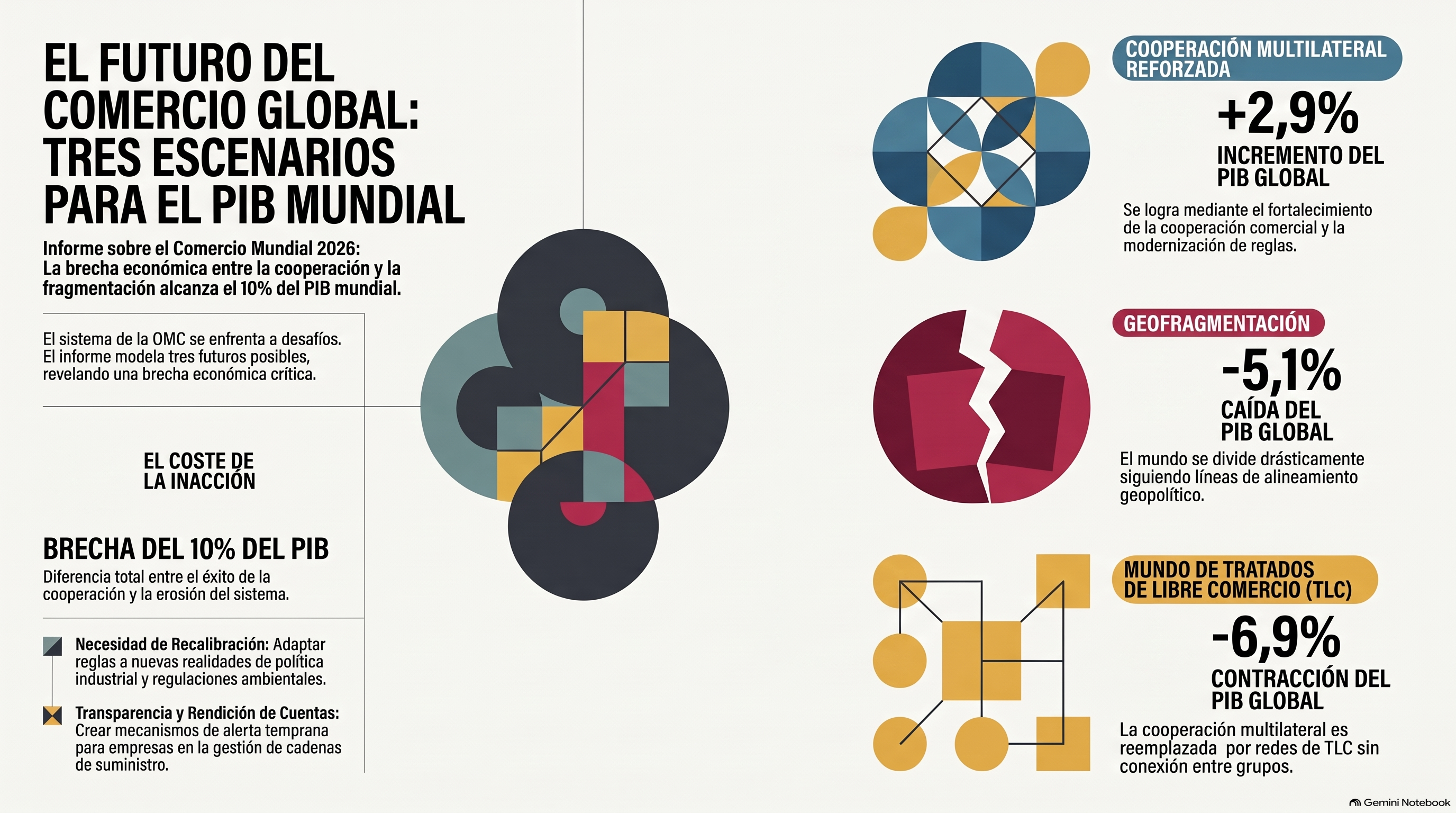
According to IMF estimates, a deep fragmentation of global trade could reduce world GDP by up to 7% in the long term, with disproportionate impacts on emerging economies that export commodities and medium-technology manufactures.
Multilateralism as an architecture under pressure
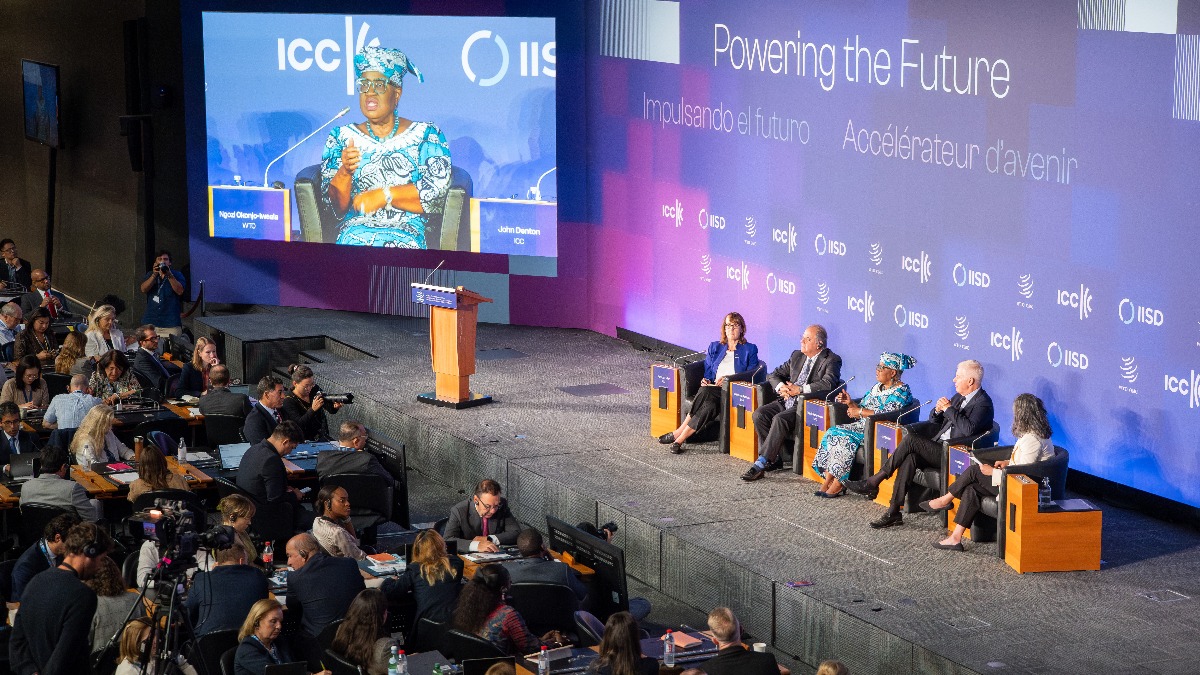
Another session of the Forum focused its analysis on something more specific: the WTO's capacity to respond to the challenges of digital trade, economic security and new forms of protectionism that are no longer articulated through classic tariffs but through technical regulations, sustainability standards and traceability requirements that, in practice, function as highly sophisticated non-tariff barriers. The European Union's Carbon Border Adjustment Mechanism (CBAM), whose full implementation is moving forward from 2026, is a clear example: it is an instrument presented as environmental policy that has direct trade effects on exporters of steel, aluminum, fertilizers and electricity from the Southern Hemisphere.
It should be noted that the debate in Geneva did not sidestep the central political tension: the WTO currently lacks a fully operational appeals mechanism, given the persistent blocking of appointments to the Appellate Body. This structural dysfunction is not a minor bureaucratic detail; it means that countries do not have a binding review body for the most complex trade disputes, which erodes the legal predictability that constitutes the multilateral system's main asset for companies operating in global markets.
Institutional creativity: the response the system needs
The third dimension the Forum put on the table was perhaps the most constructive. The session devoted to innovative solutions for trade and development explored how governments and private actors can build resilience within —and sometimes around— existing multilateral structures. Plurilateral Agreements —such as the recent progress on e-commerce—, the strategic use of the reformed Generalized System of Preferences, and partial scope agreements within the framework of ALADI (Latin American Integration Association) are emerging as complementary instruments in the face of the paralysis of broad multilateral negotiations.
The Latin American position: between rhetoric and action
Latin America arrived in Geneva without a coordinated bloc position, which is in itself a symptom of the problem. Brazil, as Tatiana Prazeres pointed out, is pressing ahead with its stance of supposed impartiality between the US and China, which it underpins with agreements such as Mercosur-EU, Mercosur-Singapore and Mercosur-EFTA; Argentina is going through a process of trade repositioning that has not yet crystallized into a clear and sustained doctrine of international integration; Chile and Colombia maintain active bilateral agendas that are nonetheless disconnected from a shared South American strategy. This internal fragmentation weakens the region's capacity to influence the rules of the multilateral game precisely when that game is being redesigned.
The 2026 WTO Public Forum did not resolve the tensions that brought it together, nor was that its role. But it confirmed something more valuable: that there is still a space for genuine deliberation where the rules can be debated, reformed and eventually strengthened.
Sources
Director of Pulso Internacional
Lawyer specializing in international trade and productive investment, with more than 25 years of experience in international trade negotiations as an adviser to governments and to companies going international. At Pulso Internacional we analyze foreign trade, bringing clarity and international context so that your company can export and invest more.
Related analysis
European Assessment of the EU-Mercosur Agreement: In 4 Months, European Exports Grow 9%
November 5, 2026 · 2 min
Why Has the US Increased Its Investment in Germany?
November 3, 2026 · 5 min