Argentina in the Artificial Intelligence Value Chain
Translated from the Spanish original. Read the original

Director of Pulso Internacional
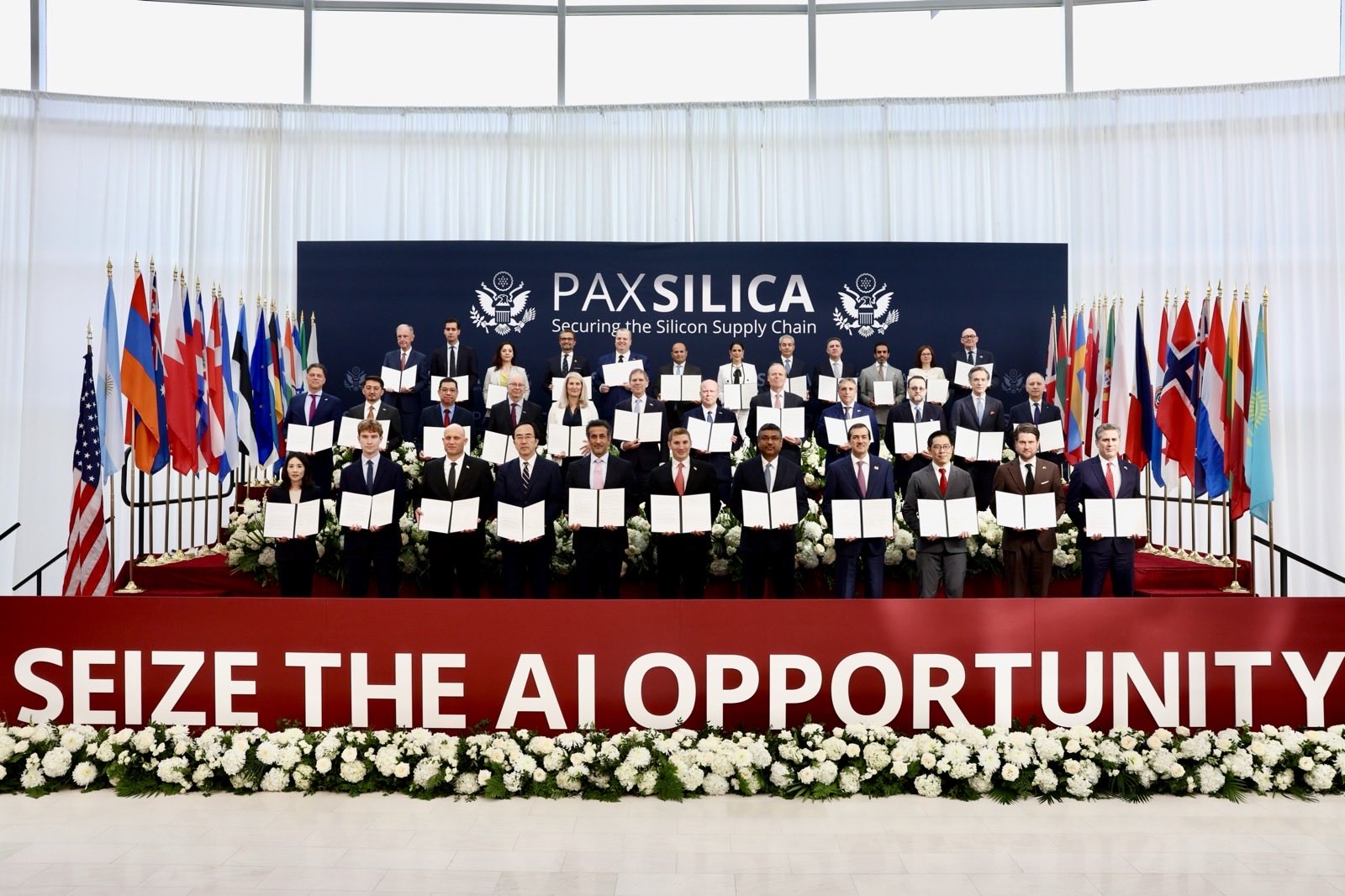
Pax Silica and Argentina's Integration into the Artificial Intelligence Value Chain
On June 26, Argentina, Chile, Costa Rica, El Salvador and Panama joined the initiative known as Pax Silica, a coalition of 35 countries led by the United States aimed at securing the global supply of critical minerals for the US digital economy. The accession included the Joint Statement on AI Opportunity Partnership Joint Statement on AI Opportunity Partnership among the Pax Silica signatories that same day.
What Pax Silica Is and Why Argentina Matters
Strictly speaking, Pax Silica is neither a classic trade agreement with tariff reduction nor a WTO instrument. It is a platform for geopolitical and economic security coordination that seeks to diversify global value chains in critical minerals (lithium, copper, rare earths, uranium) in the face of the West's growing dependence on China for the processing and supply of these strategic inputs. Argentina's accession does not represent a new, standalone trade agreement, but rather the implementation of the Agreement Framework Agreement for Strengthening Supply in Critical Minerals Mining and Processing signed between Argentina and the United States in February 2026, which strengthens the supply and processing of resources such as lithium, copper and uranium. The underlying logic is clearly re-shoring and friend-shoring , that is, the reconfiguration of supply chains toward countries allied or aligned with Washington's economic security objectives. Within that framework, Argentina is positioned as a reliable regional partner capable of offering a viable supply alternative, replacing players in the region whose foreign policy is not aligned with the White House. The geopolitical momentum is clear: the Trump administration has prioritized technological autonomy and economic security over multilateral considerations, and Pax Silica is a direct expression of that doctrine.
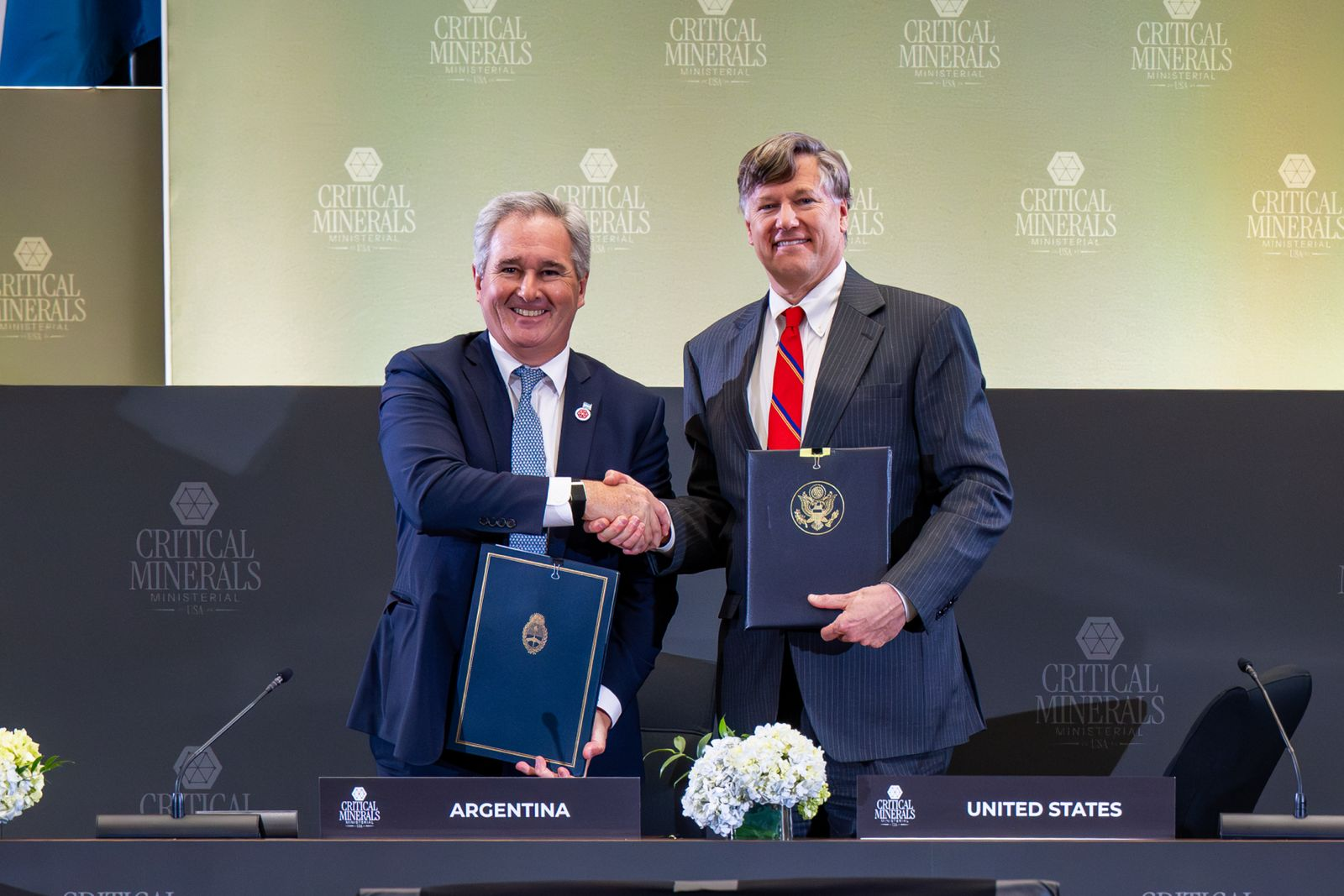
Photo: Argentina's Foreign Minister Quirno and US Deputy Secretary of State Christopher Landau signed a critical minerals agreement in February 2026 - Source: MRECIC
Argentina's Resources: Lithium, Copper, Uranium and Energy
The inventory of resources that justifies Argentina's participation is not abstract. The country holds lithium reserves in the so-called Lithium Triangle (shared with Bolivia and Chile), copper deposits of significant scale, and uranium reserves in Chubut that are regaining centrality amid a global nuclear resurgence. Added to this is the energy potential of Vaca Muerta, which can supply the power needed for artificial intelligence data centers, an input as critical as the minerals themselves. It is worth noting that global demand for lithium for electric vehicle batteries and energy storage systems has been growing at double-digit rates, while the expansion of data centers driven by generative artificial intelligence is raising copper consumption for connectivity infrastructure exponentially. In this context, Argentina is not a peripheral supplier: it is a player with real potential for scale.
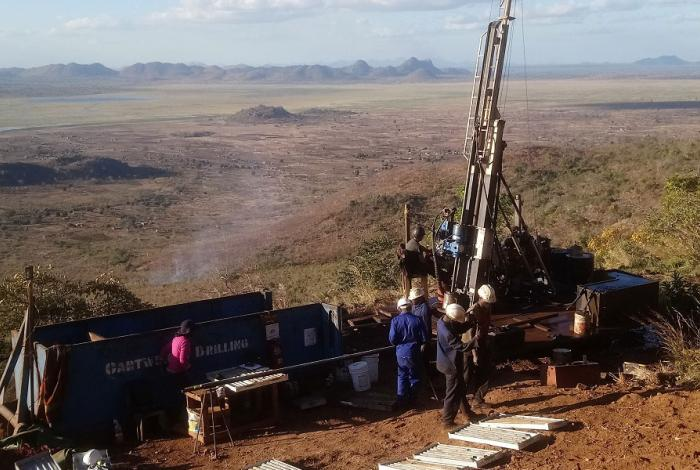
Photo: DFC - Investment in critical minerals in Malawi
The institutional framework: DFC, Super RIGI and reference prices
Joining Pax Silica activates a set of concrete instruments that go beyond the diplomatic declaration. First, it facilitates access to financing tools from the US International Development Finance Corporation (DFC) , a US public investment agency with the capacity to mobilize private capital toward projects in allied countries. It currently manages a portfolio of committed investments exceeding US$48 billion globally and has increasingly oriented its mandate toward Latin America as a strategic counterweight to Chinese influence in the region. Such is the case of the Carina Project, an ionic clay mining development project located in the Brazilian state of Goiás, driven by Aclara Resources together with Japan, which has obtained US$5 million in financing for its development. It is a semi-industrial pilot plant in Goiânia that is refining the quality of the mixed rare earth carbonate to support the subsequent separation process planned at Aclara's facilities in the United States; the Carina Project aims to begin operations in mid-2028. In the 2024-2025 biennium, the DFC deployed more than 22% of its new commitments to infrastructure, critical energy and telecommunications projects in countries of the Western Hemisphere. Second, coordination is envisaged with Argentina's Super RIGI scheme to attract massive outlays in mining infrastructure and data centers, a vehicle of tax and regulatory incentives designed precisely for long-term, large-scale investments. A highly relevant third element is the discussion around minimum reference prices that would sustain the profitability of investments and prevent the volatility caused by Chinese manipulation of the critical minerals market. This point is central: without price stability, FDI in mining is structurally fragile. The possibility that Pax Silica could establish price support mechanisms, analogous to tariff-rate quotas or safeguards in trade in goods, would represent a regulatory innovation of the first order for producing countries.
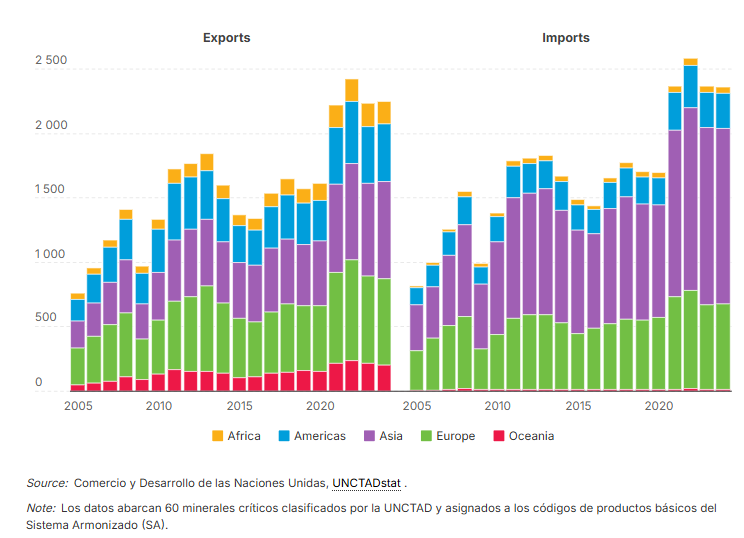
Critical minerals trade by region, in billions of dollars
The geopolitical dimension: the Chinese flank
According to UNCTAD, global critical minerals exports reached approximately US$2.25 trillion in 2024, remaining practically stable compared with 2023. Asia accounted for the largest share of global exports (US$757 billion), followed by Europe (US$667 billion) and the Americas (US$450 billion). Africa exported critical minerals worth US$176 billion, while Oceania accounted for US$203 billion. Argentina's accession to Pax Silica cannot be analyzed without considering the Chinese flank. China currently controls the processing of a majority share of global critical minerals, which gives it a quasi-monopolistic position in the semiconductor and AI value chain. Washington's strategy seeks to break that dependence through friend-shoring: building a network of alternative, politically aligned suppliers that guarantee continuity of supply in a scenario of geopolitical escalation. The window opened by Pax Silica remains open, but it requires industrial policy decisions, investment in local processing and federal coordination that brook no delay. Companies in the mining sector, the Ministry of Foreign Affairs and the producing provinces must act in concert: the opportunity is systemic, and the response must be as well.
Sources
Director of Pulso Internacional
Lawyer specializing in international trade and productive investment, with more than 25 years of experience in international trade negotiations as an adviser to governments and to companies going international. At Pulso Internacional we analyze foreign trade, bringing clarity and international context so that your company can export and invest more.
Related analysis
European Assessment of the EU-Mercosur Agreement: In 4 Months, European Exports Grow 9%
November 5, 2026 · 2 min
Why Has the US Increased Its Investment in Germany?
November 3, 2026 · 5 min