Argentina in Norway's Mirror
Translated from the Spanish original. Read the original

Director of Pulso Internacional
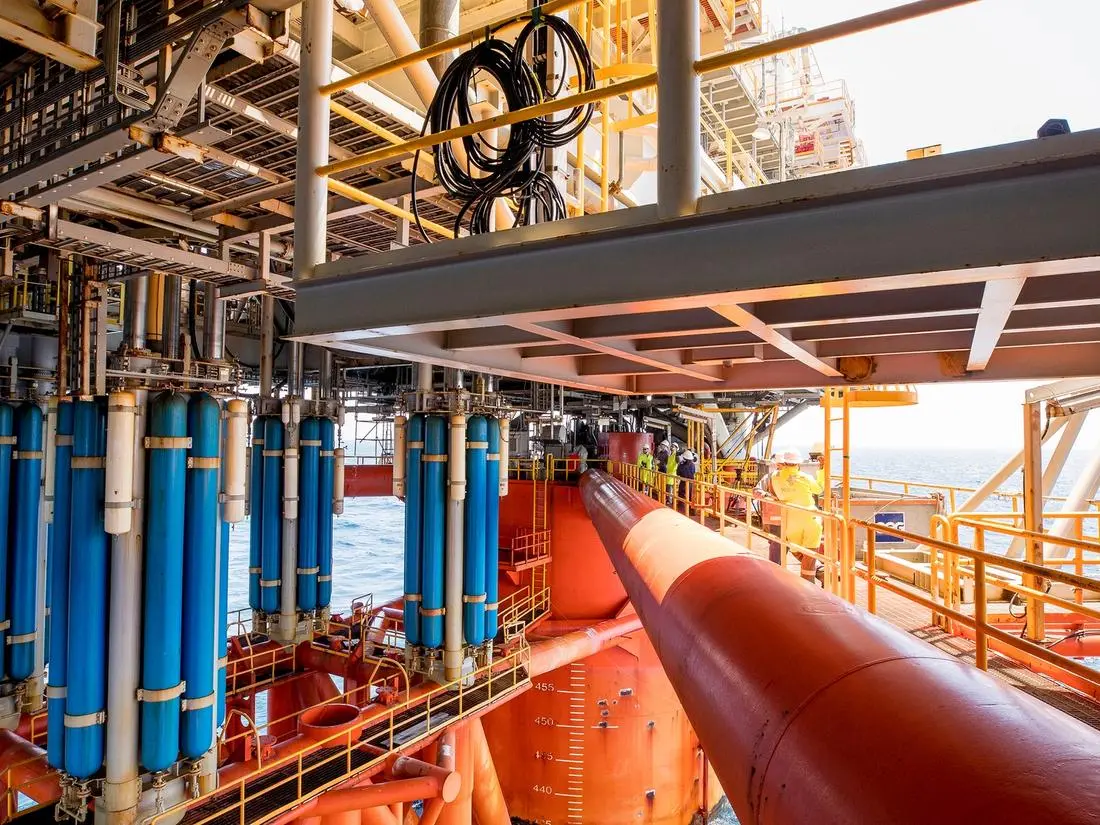
The increase in oil and gas production in Argentina and its export leads us to compare this new reality with the one experienced by Norway. From the late nineteenth century until the 1970s, Norway mainly ran trade deficits, and its exports were concentrated in fish products, timber and minerals and in manufacturing output based on its cheap hydroelectric and geothermal energy. Since the 1970s, trade surpluses have been more common, especially after the rise in oil exports. In 2025, oil accounted for 28% and gas for 33% of the value of Norway's goods exports. The share of gas was therefore larger than that of oil, and together both energy products accounted for 61%, which translates into more than 20% of the country's gross domestic product (GDP). The Norwegian State holds a majority stake (67 %) in the conglomerate Equinor, the main operator on the Norwegian continental shelf, founded in 1972 (formerly Statoil), and the State also participates as a direct investor in oil and gas sector activities (for example, extraction fields, oil and gas pipelines and onshore facilities). Parliament decides on the opening of new areas for petroleum activities, and in those already open to such activities, the new areas announced in successive licensing rounds are based mainly on those nominated by the holders of current licenses.
The State allocates most of its oil revenues to the sovereign wealth fund, created to shield the economy from swings in oil revenues and so that both current and future generations benefit from the country's oil wealth. Norway's Sovereign Wealth Fund was created in 1990 under the name "Petroleum Fund" with the aim of managing the surpluses from oil activity. 64% of the fund is controlled by the government of Norway. At the end of 2025, this fund held assets with an estimated value of USD 1.9 trillion, the equivalent of savings of USD 350,000 per citizen, and owns shares in more than 7,000 companies in 40 countries.
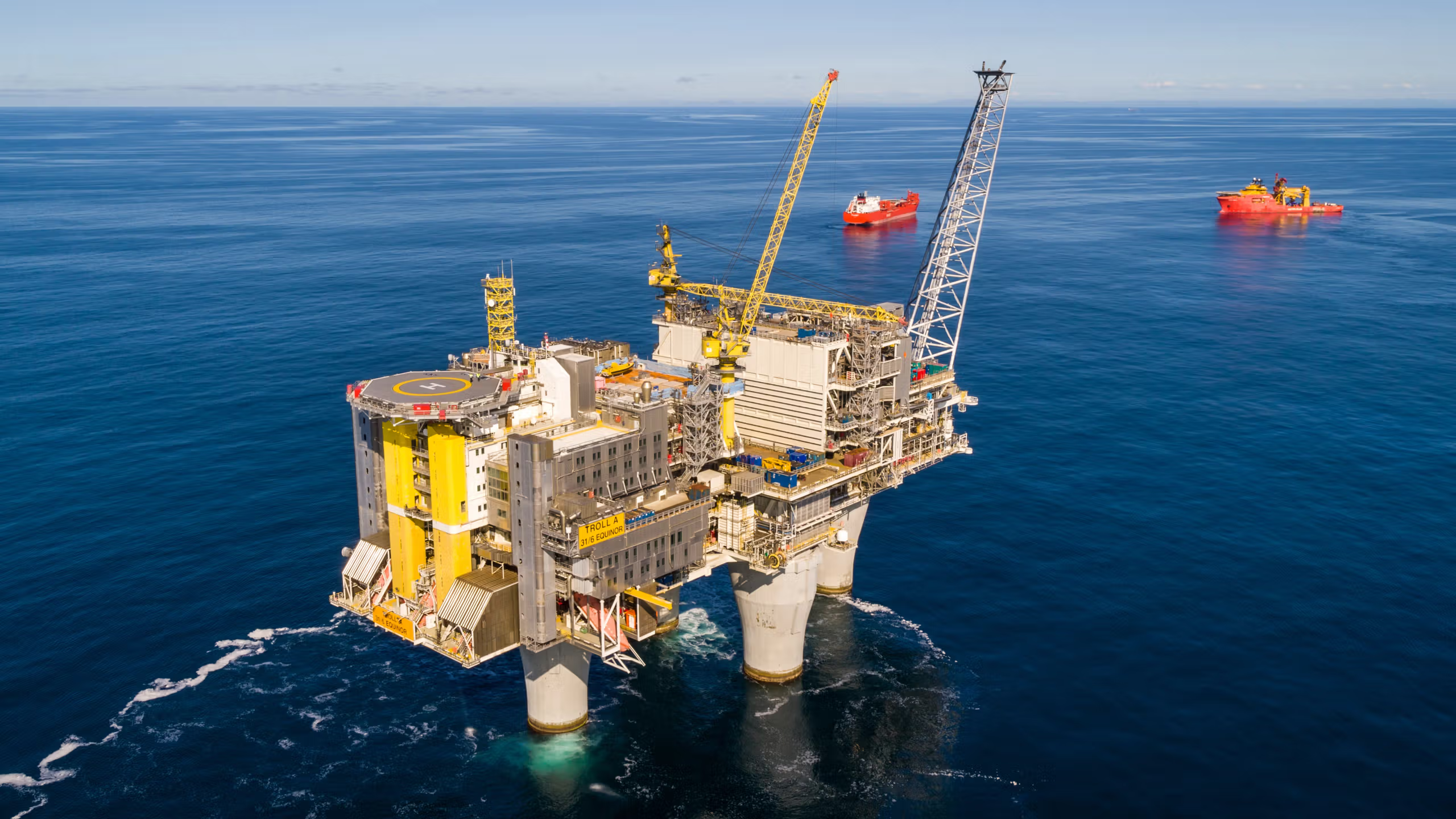
When Norway's manufacturing GDP fell from 12.6 % in 1995 to 5.7 % in 2022, however, Norwegian industry did not collapse; it was simply dwarfed by the extraordinary growth of the energy rent around it and became concentrated in a few export-oriented sectors. This distinction is decisive for understanding what is happening today in Argentina with the RIGI and where that trajectory leads if industrial policy decisions are not adopted with urgency.
Two manufacturing declines, two different causes
The Norwegian energy sector did not destroy its manufacturing industry; it displaced it in relative terms by expanding the denominator of the ratio. Norway's GDP per capita—underpinned by the Government Pension Fund, the world's largest sovereign wealth fund, with assets exceeding USD 1.9 trillion—ensured that this relative displacement was accompanied by rising prosperity, full employment and preserved technological capabilities.
In addition, Norway has a strategy to increase Business Investment in Research and Development: the Government aims to raise R&D investment to 3% of GDP, and these contributions to companies are granted through various support programs run by different institutions, including Innovation Norway, the Research Council of Norway, Siva and the "SkatteFUNN" tax deductions.
Argentina, by contrast, is undergoing a process of a radically different nature. Its manufacturing decline is not the by-product of a successful energy boom, but the result of recurring institutional crises, indiscriminate opening, sustained disinvestment, and the defunding of the science and technology system, which will represent 0.14% of GDP in 2026.
The RIGI as a strategic bet: simultaneous opportunity and risk
The Argentine government has designed the RIGI, regulated in 2024 and with provincial adherences being consolidated throughout 2025 and 2026, as an instrument for attracting foreign direct investment geared, in practice, toward the energy, mining and agro-industrial export sectors. The underlying logic is not different, in broad strokes, from the one that guided Norwegian policy in the 1970s and 1980s: to concentrate the capture of natural resource rents in order to finance a productive transition. The institutional difference, however, is very significant. Norway built that bet on substantial regulation of the hydrocarbon sector through Equinor (formerly Statoil), systematic reinvestment of the rents in the sovereign wealth fund, and the preservation of industrial capabilities in high-technology sectors linked to the energy sector itself , subsea engineering, specialized shipbuilding, offshore technology. Argentina, by contrast, is implementing the RIGI in a context of weak fiscal institutions, with no sovereign wealth fund in place, with a small-scale base of local suppliers, and in the midst of a process of accelerated trade liberalization that reduces the incentives to develop domestic suppliers in the promoted sectors.
The Mercosur–EFTA agreement: Norway as a trading counterpart
The most immediate geopolitical dimension of this comparison materializes in the Mercosur–EFTA agreement, which eliminates 97% of tariffs between the two blocs. Norway is not a member of the European Union. It is a member of EFTA —together with Switzerland, Iceland and Liechtenstein— and participates in the European single market through the Agreement on the European Economic Area (EEA), without being part of the customs union or the eurozone.
Norwegian investment in Argentina
There are around 15 Norwegian companies in Argentina, mainly in the maritime sector (including supply and equipment), renewable energy, the aluminum industry, fishing, fertilizer production, quality control and consulting. Among the Norwegian investments, present in Argentina since 2017, is the company Equinor, which holds exploration rights in eight blocks spread across the northern and southern basins, six as operator and two as partner.

As reported by Ambassador Claudio Giacomino "SAR, a Norwegian company that provides high-tech environmental solutions, will invest US$25 million in a plant for the treatment of oil industry waste in Vaca Muerta, Neuquén Province. SAR will be responsible for arranging the financing of the entire project, which will then be amortized by the contracting oil companies. Demand for labor and better environmental conditions for the province. "
For 25 years, the Norwegian-origin company Hydro, engaged in aluminum extrusion, has been present in Argentina. According to the Norwegian embassy, in 2022 bilateral trade between Norway and Argentina amounted to 1,646,357,956 Norwegian kroner (approx. US$171.1 million). Norwegian exports to Argentina totaled NOK 1,197,777,593 (approx. US$124.5 million). Norway imported Argentine products worth NOK 448,580,363 (approx. US$46.62 million).
Furthermore, there is great potential for the development of Norwegian investment in geothermal energy projects at the “Maitena” and “Maria Victoria” Mines, located in the geothermal area of the Domuyo volcano, Minas Department, Neuquén Province, which could draw on Norwegian expertise in geothermal energy .
Similarities that should not be confused
There are, certainly, legitimate points of comparison between the two economies. Argentina and Norway are significant exporters of natural resources; both face currency appreciation pressures during boom periods for their respective commodities; both have gone through debates over the distribution of extractive rents among the State, the provinces and private capital. Vaca Muerta and the North Sea share similar characteristics.
However, the population size and production structures of the two countries are radically different. Argentina has a diversified manufacturing base —automotive, food and beverages, chemicals, metalworking, textiles— that directly employs more than 12 million registered workers and links together domestic value chains of considerable complexity. Norway, for its part, consolidated decades ago a model in which the manufacturing sector is small and its relative decline reflects the growth of energy rents, not industrial collapse. Confusing the two trajectories, or worse still, presenting the second as a desirable model for the first, would mean ignoring that Norway reached that point with a GDP per capita among the highest in the world.
The importance of advancing industrialization and not allowing it to disappear
The question that the national and provincial governments should be asking is not whether the country resembles Norway, but whether the push for the energy and mining sector promoted by the RIGI will be accompanied by policies that preserve and expand the manufacturing capabilities of the rest of the economy, or whether, on the contrary, the concentration of investment in extractive sectors will simply be an excuse for industricide.
Director of Pulso Internacional
Lawyer specializing in international trade and productive investment, with more than 25 years of experience in international trade negotiations as an adviser to governments and to companies going international. At Pulso Internacional we analyze foreign trade, bringing clarity and international context so that your company can export and invest more.
Related analysis

European Assessment of the EU-Mercosur Agreement: In 4 Months, European Exports Grow 9%
November 5, 2026 · 2 min
Why Has the US Increased Its Investment in Germany?
November 3, 2026 · 5 min