Asian Steel Now Covers 43% of Consumption in Latin America
Translated from the Spanish original. Read the original

Director of Pulso Internacional
Alacero Summit 2026 Laid Bare the Reality of Steel in Latin America
Mexico City was, on November 10 and 11, 2026, the stage where the Latin American steel industry looked at itself in the mirror without filters. The Alacero Summit 2026 brought together the main players in the region's steel supply chain around a business agenda, but with a backdrop that dominated practically every panel: between January and August 2026, imports covered 43.5% of the apparent consumption of finished steel in Latin America, the highest share in the historical series kept by the association. Four out of every ten tons of steel consumed in the region are not produced in it. The figure is not cyclical: it is structural. As we have been noting in our articles, China's industrial overcapacity, and the exports derived from it, has become a global problem.
Between 2019 and 2025, total steel imports, direct and indirect, in the six main steel-producing economies of Latin America (LAC6) rose 47%, from 37.6 to 55.4 million metric tons, of which indirect imports accounted for around 40%. China is the main source, with combined direct and indirect imports that more than doubled over this period, while ASEAN has also gained importance.
The paradox that the Summit displayed with discomfort: while in the main auditorium representatives of Brazil, Argentina, Colombia, Chile and Mexico debated how to curb so-called "Chinese overcapacity," a sizable delegation of Asian steelmakers explored cooperation deals in the hallways of the same building. "We came to do business. We believe we are competitive, and that is why businesspeople came to hear us", said a representative of a Chinese company who asked not to be identified, according to a report by the Colombian newspaper El Espectador.
The Gap Between Installed Capacity and Actual Production
The underlying diagnosis comes from data presented by the OECD during the summit. Argentina, Brazil, Chile, Colombia, Mexico and Peru have installed capacity to produce 92 million tons of crude steel a year, but in 2025 they produced 54 million, operating at about 60% of their effective capacity. Demand in those six markets reached 76 million tons; the remaining 30 million were supplied by imports. And the steel does not come only from China but also from other countries that serve as channels to indirectly route steel into Latin America.
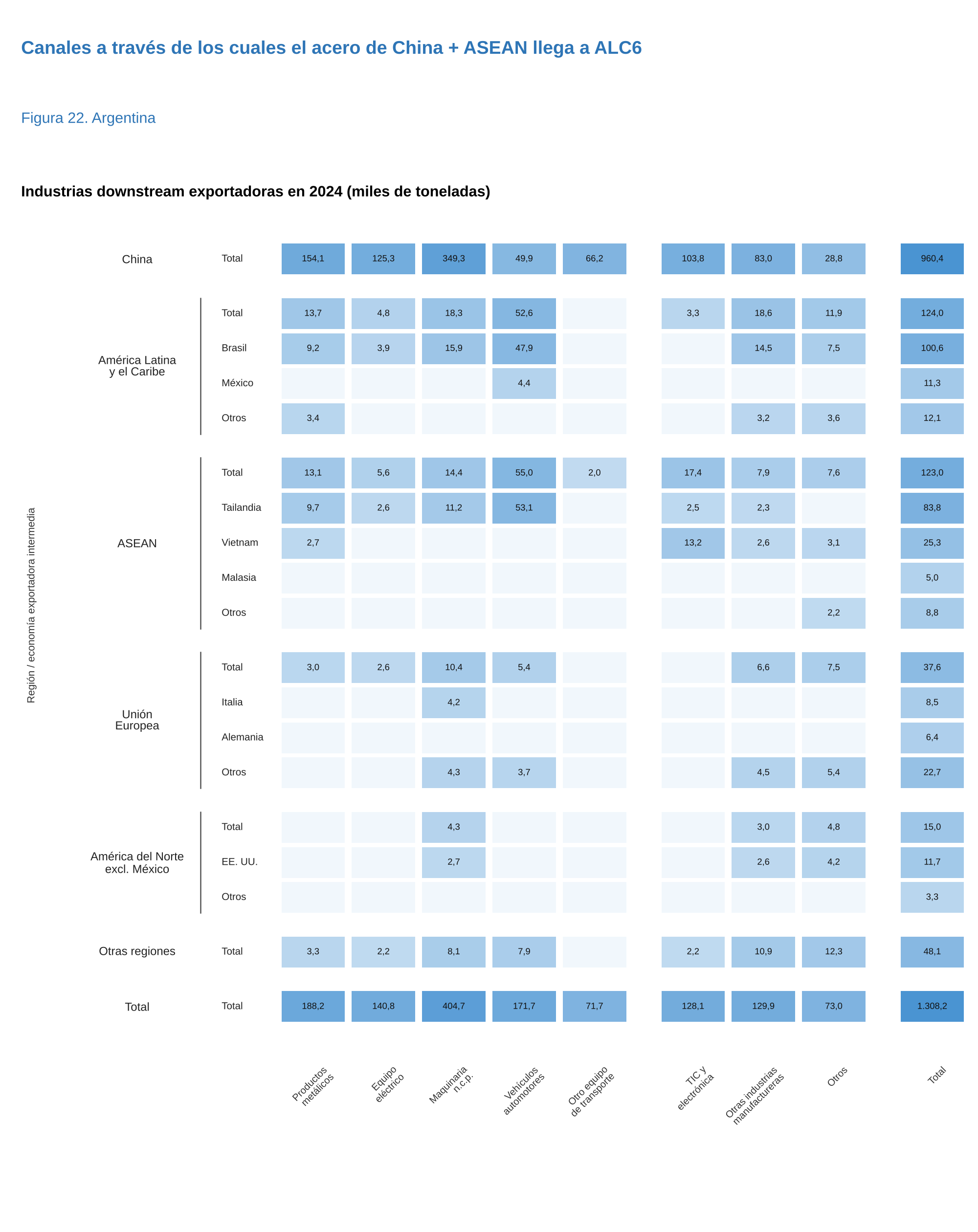
Source: OECD 2026
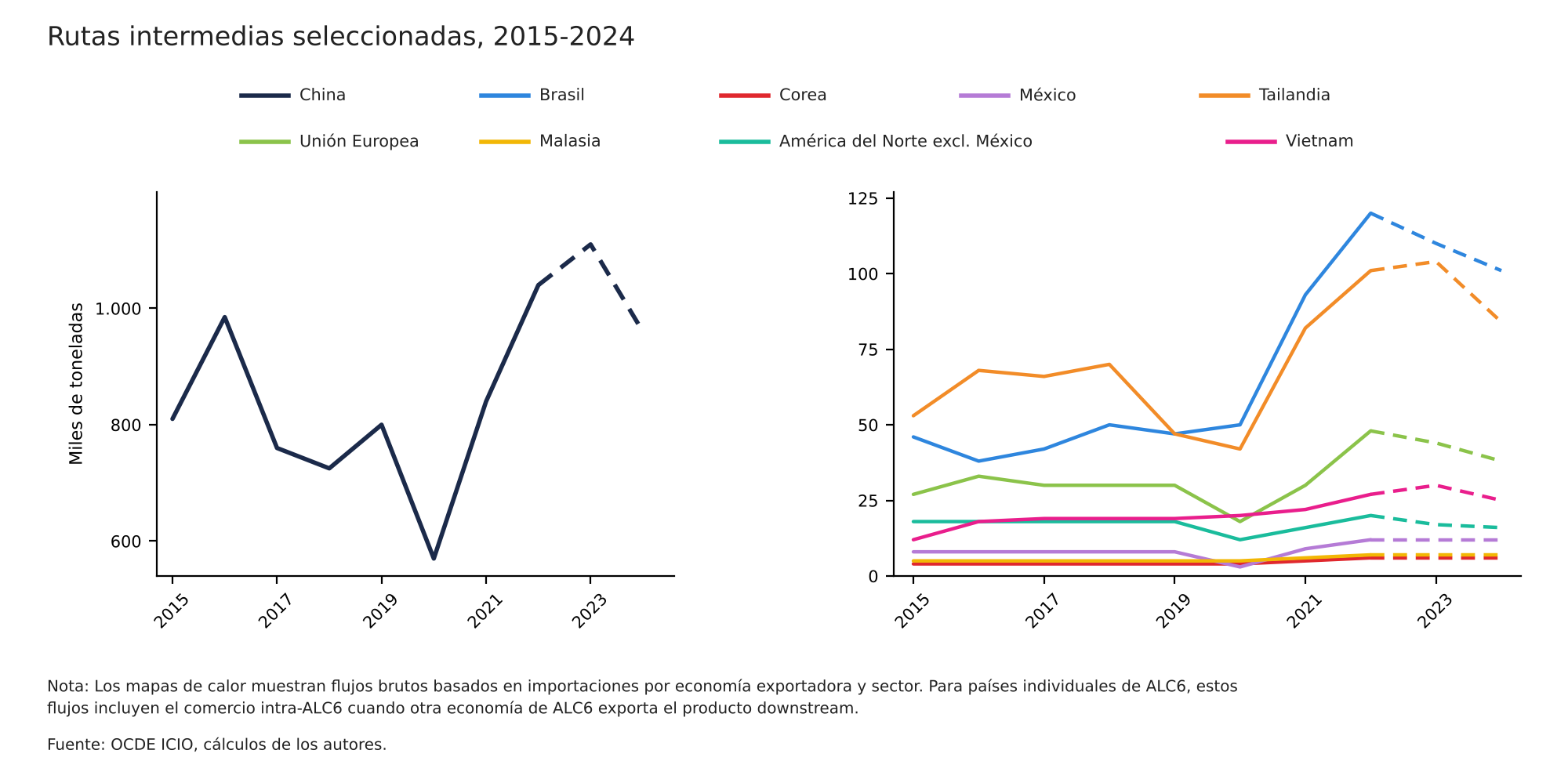
Source: OECD 2026
The historical perspective worsens the diagnosis. Alacero (Latin American Steel Association) estimates that in 2026 the region will produce 57.7 million tons of crude steel, a slight improvement over 2025 that nevertheless leaves production well below the 67.6 million recorded in 2011. In fifteen years, Latin America not only failed to grow in steelmaking capacity; it went backward. The silent deindustrialization that this publication has pointed out in sectors such as textiles and footwear finds its costliest version in steel, in terms of employment and productive linkages.
As the OECD reports, the steel sector depends on a wide range of critical minerals, such as graphite, nickel, fluorspar, magnesia, zinc, tin, titanium and tungsten, many of which are characterized by concentrated supply chains, geopolitical vulnerabilities and growing trade restrictions. Leveraging the presence of these critical minerals in the region could strengthen negotiations to attract foreign investment.
Argentina: The Steepest Decline and Its Chains of Impact
On the regional map, the Argentine case deserves separate attention. Argentine production fell more than 20% year on year, the sharpest contraction among the large regional producers. The impact does not end at the steel plants: the steel industry is a critical intermediate link for construction, the manufacture of agricultural machinery, with declines of 31% year on year in the province of Córdoba, the automotive industry and the production of household appliances, where factory closures, such as that of Electrolux in the city of Rosario, are multiplying. A contraction of that magnitude in primary production propagates forward along the supply chain with multiplier effects that sectoral statistics take time to capture in full.
The response of Brazil, which accounts for more than half of regional manufacturing, offers an instructive contrast: the government in Brasília maintains emergency tariffs of 25% to stop the closure of furnaces. The measure is defensive and limited in scope, but it signals a willingness to use the trade policy tools available under the WTO, specifically the safeguards of the Agreement on Safeguards and Article XIX of the GATT. Unfortunately, Argentina has not replicated it with the same consistency. This difference reveals a lack of political will that directly affects the speed of the sector's response.
The social drama behind the figures is not abstract. Around one and a half million workers and their families across the continent depend directly or indirectly on the regional steel industry. The definitive closure, in September 2024, of the Huachipato plant in Chile's Biobío region, after 74 years of operation, left a social aftermath that persists: more than 20,000 direct and indirect workers affected and entire communities forced to convert their economic base. It is the most visible precedent of what could happen in other industrial hubs if import pressure does not meet a coordinated response.
The Chinese Argument and the Debate over Subsidies
The official position of China is well known and was presented at the Summit.
"Invoking protectionism will only serve to disrupt global economic and trade order and undermine the security and stability of global industrial and supply chains and the sound and orderly development of industrial cooperation, which spell long-term risks for world economic growth." MOFCOM July 2026
The Ministry of Commerce and the State Council maintain that the leadership of an industry that produces more than 1 billion tons a year and accounts for more than half of world output is the result of technological innovation and economies of scale, not state distortions. The argument collides with the evidence on state support mechanisms documented by the OECD and challenged by the North American industry. The OECD report of November 2026 on Latin America's absorption of global overcapacity provides the most recent analytical framework for how that overcapacity is redistributed geographically when markets in the global north raise their barriers: Latin America absorbs the surplus that the United States and the European Union no longer admit.
The Regional Response: Investment, Tariffs and the Opportunity for the Bloc
Faced with this scenario, the regional private sector has outlined a response that combines investment in modernization with pressure for greater coordinated tariff protection. Latin American manufacturers project investments of US$13 billion over the next five years, aimed at modernizing plants, reducing the carbon footprint and producing green steel, a competitive differentiator that the European market, with its CBAM operational, will increasingly value in the second half of the decade.
But this alone is not enough. Holding critical minerals such as lithium can be a bargaining tool to secure new investment in sectors such as steel and to mitigate the anti-competitive entry of steel into the country. The national government must act quickly to mitigate the consequences of the indiscriminate entry of steel and by-products that channel Chinese steel exports, and act in coordination with the countries of the region to avoid trade diversion through the urgent adoption of anti-dumping measures and tariff safeguards, among others.
Sources
- El Espectador — Can One Compete with Chinese Steel? What Latin America's Industry Is Asking For (November 2026)
- SBS en Español — Latin America: Asian Steel Imports Put Latin American Steelmakers in Difficulty (November 2026)
- OECD — The Drivers and Impacts of Subsidies to Steel Firms
- OECD — Latin America's Absorption of Global Steel Excess Capacity (November 2026)
- China’s Position on the So-called Excess Capacity Issue (July 2026) english.mofcom.gov.cn
- worldsteel.org
Director of Pulso Internacional
Lawyer specializing in international trade and productive investment, with more than 25 years of experience in international trade negotiations as an adviser to governments and to companies going international. At Pulso Internacional we analyze foreign trade, bringing clarity and international context so that your company can export and invest more.
Related analysis
Argentina Climbs to Fifth Place Among Peru's Suppliers, Overtaking Mexico
November 22, 2026 · 11 min
Indonesia Signs Trade Agreement with the EU and Competes with Mercosur in That Market in 2027
November 22, 2026 · 4 min