Concern Over the Rise in Subsidized Chinese Imports
Translated from the Spanish original. Read the original

Director of Pulso Internacional
1. Concern among Argentine companies over rising imports
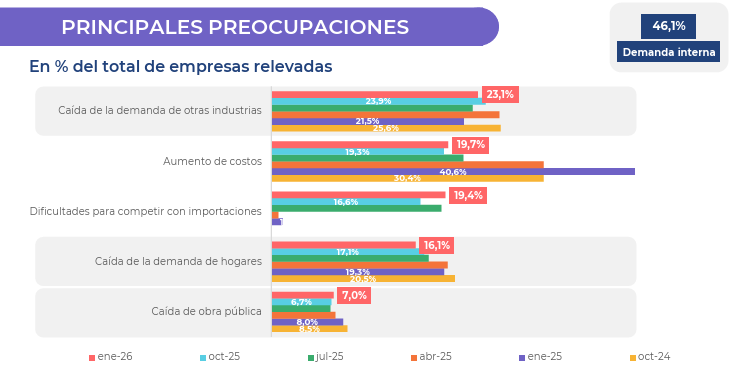
According to a recent survey by the Argentine Industrial Union (UIA) from March 2026, Argentine companies reported difficulty competing with imported goods. That concern went from no mentions in October 2024 to 19.4% in January 2026, in a context of greater trade openness and currency appreciation that intensified pressure on local production.
The international competitiveness of Argentine companies is affected not only by currency appreciation, high taxes and the difficulty of accessing cheap credit, but also by a centrally planned and aggressive export policy, leveraged by the subsidies available to companies that export their products to our country, the most evident being those of Chinese origin. Chinese imports into Argentina grew 54% in 2025 compared with 2024, for a total of US$17.940 billion.
Main Chinese products imported into Argentina in 2025
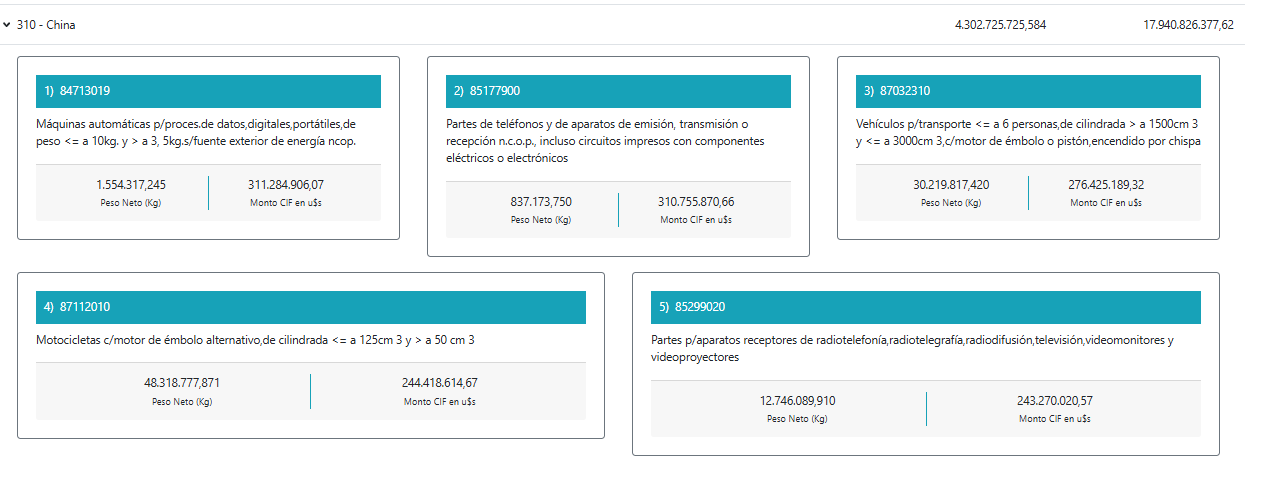
Source: INDEC
Another clear example is the direct competition that Argentine products face in third markets such as Brazil, where they were displaced by Chinese products. 22 years ago, in 2004, industrial imports into Brazil from Argentina exceeded those from China. Chinese imports then rose from 7% in 2004 to 20% in 2017. China is today the main origin of Brazil's total imports, and Argentina has been relegated to a place behind the United States.
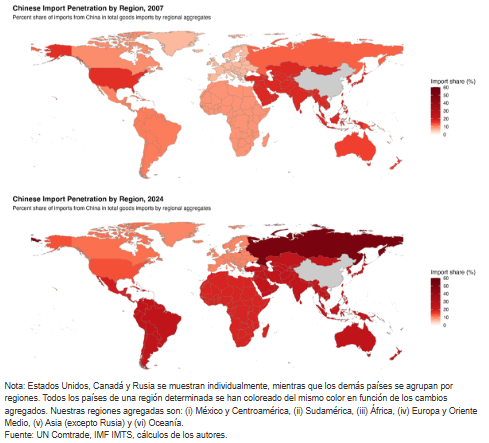
According to a US Federal Reserve report, in 2007 the penetration of Chinese imports was already significant in a subset of economies, particularly in East Asia, Russia and the United States, while in Europe, as well as in Latin America and Africa, exposure remained relatively modest. By 2024, however, China's share of total imports had increased dramatically in virtually every region, with especially significant increases in Africa, South America, Russia and much of developing Asia.
2. The conscious deindustrialization of the West
Concern over the rise in Asian imports is felt throughout the West.
Today China has achieved industrial self-sufficiency and stands as a purely export-oriented industrial power, and developed countries have reacted to the increase in Chinese exports with a range of measures: higher tariffs, sanctions or restrictions based on national security grounds, safeguards and anti-dumping measures, increased domestic subsidies for local companies, or policies of reshoring the investments of their companies that had been based in China. It is paradoxical that the advance of subsidized Chinese production was also encouraged by most industrialized countries, producing what US Secretary of State Marco Rubio called "a conscious deindustrialization", since the industrialized countries themselves gladly joined in promoting Chinese industrialization because of the great benefits it brought their companies almost without effort.
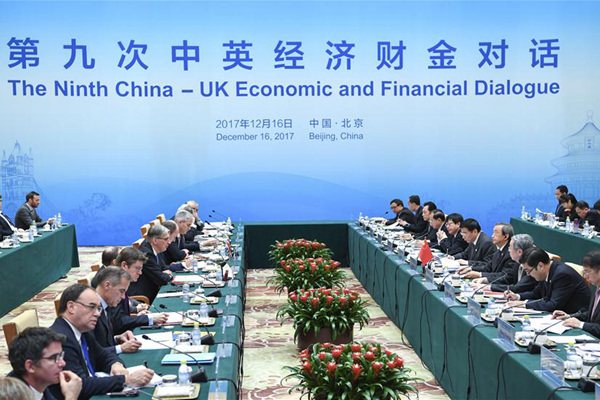
Such is the case of the United Kingdom, whose representative at the Embassy in Beijing stated in 2015: "In all 10 of the key sectors that China has identified (for the Made in China 2025 program), the UK is a world leader with the expertise to help China achieve its objectives." (2)
China and Great Britain agreed in 2017 to enrich the "Golden Era" of bilateral relations.
After the honeymoon, some developed countries have reacted to the increase in Chinese imports with a range of measures: higher tariffs, sanctions or restrictions based on national security grounds, safeguards and anti-dumping measures, and increased domestic subsidies for their own companies.
3. Industrial subsidies and transparency
In principle, subsidies (grants) for production are not illegal. However, one of the factors that distorts international trade is the subsidies provided by countries to promote exports or to increase protectionism without having to adopt international trade protection measures (such as safeguards or anti-dumping measures). In some cases these are granted specifically, and in others indirectly.
The low prices of imported products often do not necessarily reflect efficiency in their manufacture but are the result of state incentives that sustain them in order to meet objectives that go beyond trade.
The transparency of trade policies is essential to the proper functioning of the multilateral trading system and for countries to be able to learn from one another.
Under Article 25 of the World Trade Organization (WTO) Agreement on Subsidies and Countervailing Measures, countries are required to submit notifications describing the essential characteristics of all specific subsidies to exports of industrial products, and amid the turbulence in foreign trade very few WTO member countries have submitted their notifications on the subsidies they grant within their territories. According to the United Kingdom, as of March 2026 the WTO's 2025 reports show that (113) members had still not sent their mandatory notifications for that year, and another (80) have been in arrears since 2023 and (81) since 2021. (3) Many notifications are submitted late and incomplete, and, as with the interpretations of what must be notified, they are the subject of debate in the WTO Committee on Subsidies and Countervailing Measures, but with little practical effect. Countries are also required to report all other subsidies that operate directly or indirectly to increase exports of any product (including agricultural products) or that they maintain to reduce imports of any product into their territory (Article XVI:1 of the General Agreement on Tariffs and Trade (GATT) of 1947 (now 1994)).
4. Chinese Subsidies as Part of Its Industrial Policy
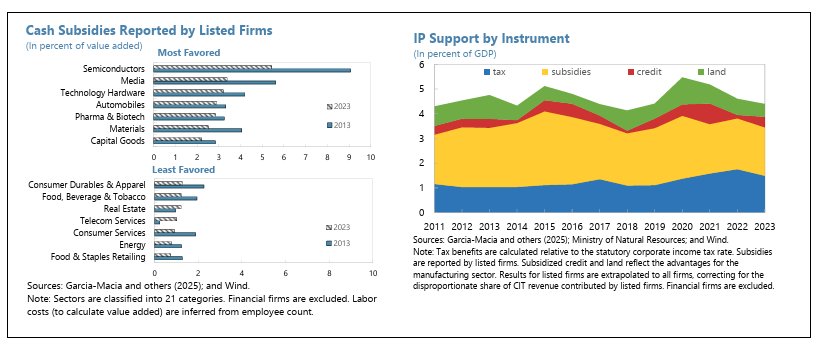
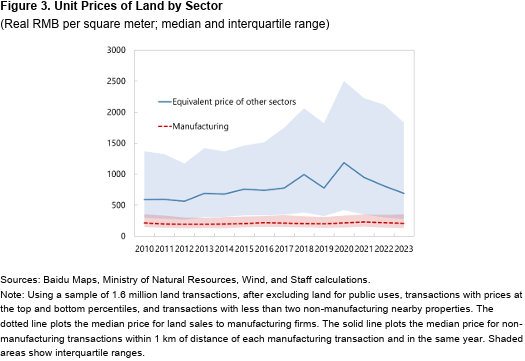
The IMF stated in its report published on February 18, 2026, titled "Staff Report for the 2024 Article IV Consultation with the People's Republic of China — Concluding Statement," that China is estimated to grant annually subsidies equivalent to approximately 4% of GDP to companies in key industrial sectors. By comparison, the European Union grants its companies subsidies of 1.5%. China also grants significant subsidies for land purchases to its industries.
Source: IMF
IP: Industrial Policy
Land prices in China by sector
Source: IMF - Daniel Garcia-Macia, Siddharth Kothari, and Yifan Tao
Chinese trade policy is complex and, to a certain extent, opaque given the high degree of discretion in the relationship between the government, the Communist Party and companies. Prominent among its features are subsidies of all kinds granted by the central government, the provinces and the Chinese municipalities, which favor exports of their products to the entire world under the export promotion program "Made in China 2025," launched 10 years ago by Premier Li Keqiang.
The Chinese central government grants systemic tax benefits (such as reduced income tax rates, VAT refunds and research and development deductions) and creates national funds for agriculture, energy and regional development, while the provincial and municipal governments provide direct financial allocations (non-reimbursable grants or bonuses) aimed at certain local companies favored by the Chinese Communist Party that meet certain criteria of innovation, investment or environmental protection in their jurisdiction. Subsidies are, moreover, both direct and indirect, that is, they reach the supply chain and the inputs used in the production of exporting companies.
Also, according to the OECD, China-based companies continued in 2023 to benefit relatively more from loans at below-market rates. While the automatic causal relationship between the amount of a subsidy and its trade-distorting effects may not be clearly visible, given the quantity and cross-cutting nature of the subsidies it is evident that billions of dollars in significant support have direct consequences, above all if we consider the exponential jump in China's share of world exports, which rose from 3.5% in 1998 to 14.6% in 2022.
Below are only those subsidies of the Chinese central government that have been notified to the WTO:
1 PREFERENTIAL TAX POLICIES FOR COMPANIES ESTABLISHED IN THE SPECIAL ECONOMIC ZONES AND IN THE PUDONG NEW AREA OF SHANGHAI
2 PREFERENTIAL TAX POLICIES FOR THE WESTERN REGIONS
3 PREFERENTIAL TAX POLICIES FOR HIGH-TECHNOLOGY COMPANIES
4 PREFERENTIAL TAX TREATMENT FOR THE ADDITIONAL CALCULATION AND DEDUCTION OF RESEARCH AND DEVELOPMENT EXPENSES
5 PREFERENTIAL TAX POLICIES FOR COMPANIES THAT TRANSFER TECHNOLOGY
6 PREFERENTIAL TAX POLICIES FOR HIGH-TECHNOLOGY BUSINESS INCUBATORS, UNIVERSITY SCIENCE AND TECHNOLOGY PARKS AND SPACES FOR INNOVATIVE ACTIVITIES
7 PREFERENTIAL TAX POLICIES FOR ADVANCED TECHNOLOGY SERVICE COMPANIES
8 PREFERENTIAL TAX TREATMENT FOR PUBLIC INFRASTRUCTURE PROJECTS THAT ARE A STATE PRIORITY
9 PREFERENTIAL TAX TREATMENT FOR PROJECTS AIMED AT ENVIRONMENTAL PROTECTION AND WATER AND ENERGY CONSERVATION
10 PREFERENTIAL TAX TREATMENT FOR COMPANIES WITH COMPREHENSIVE USE OF RESOURCES
11 PREFERENTIAL VAT TREATMENT FOR THE INTEGRATED USE OF RESOURCES
12 PREFERENTIAL VAT TREATMENT FOR NEW TYPES OF WALL MATERIALS
13 PREFERENTIAL CONSUMPTION TAX RATE APPLICABLE TO PETROLEUM PRODUCTS USED AND PRODUCED IN A GENERAL MANNER
14 PREFERENTIAL TAX TREATMENT FOR LOW-ENERGY-CONSUMPTION VEHICLES AND VESSELS AND THOSE USING ALTERNATIVE ENERGY
15 PREFERENTIAL TAX TREATMENT FOR PUBLIC BUSES AND TROLLEYBUSES PURCHASED BY URBAN PUBLIC TRANSPORT COMPANIES
16 PREFERENTIAL TAX POLICIES FOR THE CLEAN DEVELOPMENT MECHANISM
17 TAX RELIEF FOR MICRO AND SMALL ENTERPRISES
18 PREFERENTIAL VAT POLICIES FOR COMPANIES THAT EMPLOY PERSONS WITH DISABILITIES
19 PREFERENTIAL INCOME TAX POLICIES FOR ENTERPRISES THAT EMPLOY PERSONS WITH DISABILITIES
20 PREFERENTIAL TAX TREATMENT FOR ENTERPRISES THAT MANUFACTURE PRODUCTS FOR THE EXCLUSIVE USE OF PERSONS WITH DISABILITIES
21 PREFERENTIAL TAX TREATMENT FOR MEDICINES FOR THE TREATMENT OF HIV/AIDS
22 PREFERENTIAL TAX POLICIES FOR AGRICULTURE, FORESTRY, LIVESTOCK AND FISHING PROJECTS
23 PREFERENTIAL TAX TREATMENT GRANTED TO TEA SOLD IN BORDER AREAS
24 PREFERENTIAL TAX TREATMENT FOR PRODUCTS IMPORTED FOR THE PURPOSE OF REPLACING PLANTATIONS
25 PREFERENTIAL TAX POLICIES FOR IMPORTS OF SEEDS AND SPECIES
26 PREFERENTIAL TAX POLICIES FOR RESOURCES EXTRACTED THROUGH BACKFILLING AND THOSE EXTRACTED FROM DEPLETED MINES
27 PREFERENTIAL TAX TREATMENT FOR THE IMPORT OF EQUIPMENT
28 POLICIES ON THE USE OF URBAN LAND BY OIL AND GAS PRODUCTION ENTERPRISES
29 PREFERENTIAL TAX TREATMENT FOR DUTIABLE OILS USED IN THE PRODUCTION OF ETHYLENE AROMATICS
30 PREFERENTIAL TAX POLICIES FOR THE INTEGRATED CIRCUITS SECTOR
31 PREFERENTIAL VAT RATE FOR LARGE PASSENGER AIRCRAFT AND NEW REGIONAL TRANSPORT AIRCRAFT
32 TAX POLICIES FOR CIVIL AIRCRAFT ENGINES AND CIVIL AIRCRAFT
33 PROMOTION OF ENTREPRENEURSHIP AND EMPLOYMENT AMONG KEY GROUPS
34 ACCELERATED DEPRECIATION OF FIXED ASSETS
35 PREFERENTIAL VEHICLE PURCHASE TAX RATE APPLIED TO TRAILERS
36 AGRICULTURAL DEVELOPMENT FUND
37 WATER RESOURCES CONSERVATION FUND
38 FUND FOR THE PREVENTION AND MITIGATION OF AGRICULTURAL DISASTERS AND FOR FLOOD AND DROUGHT RELIEF
39 SUBSIDY FUND FOR THE PROTECTION OF AGRICULTURAL RESOURCES AND THE ENVIRONMENT
40 SUBSIDY FUND FOR A NEW SERIES OF INITIATIVES TO CONVERT CROPLAND INTO FORESTS AND GRASSLANDS (INCLUDING A GRANT FOR OUTREACH ACTIVITIES)
41 SUBSIDY FUND FOR ENERGY CONSERVATION AND EMISSIONS REDUCTION
42 AIR POLLUTION CONTROL FUND
43 SPECIAL FUND FOR THE DEVELOPMENT OF THE INTERNATIONAL ECONOMY AND TRADE
44 SPECIAL FUND FOR THE DEVELOPMENT OF CLEAN ENERGY
45 ADDITIONAL SUBSIDY FOR RENEWABLE ENERGY TARIFFS
46 PREMIUMS AND SUBSIDIES FOR THE REDUCTION OF FEES RELATED TO FINANCIAL GUARANTEES GRANTED TO SMALL ENTERPRISES AND MICROENTERPRISES
47 REDUCTION OF THE RESOURCE TAX APPLICABLE TO SHALE GAS
48 PREFERENTIAL TAX TREATMENT FOR ENVIRONMENTAL PROTECTION APPLICABLE TO AGRICULTURAL PRODUCTION (EXCLUDING LARGE-SCALE AGRICULTURE)
49 PREFERENTIAL TAX TREATMENT FOR ENVIRONMENTAL PROTECTION APPLICABLE TO CERTAIN MOBILE SOURCES OF POLLUTION
50 PREFERENTIAL TAX TREATMENT FOR ENVIRONMENTAL PROTECTION APPLICABLE TO CENTRALIZED URBAN AND RURAL WASTEWATER TREATMENT PLANTS AND NATIONAL WASTE TREATMENT PLANTS
51 PREFERENTIAL TAX TREATMENT FOR ENVIRONMENTAL PROTECTION APPLICABLE TO THE COMPREHENSIVE UTILIZATION OF SOLID WASTE
52 PREFERENTIAL ENVIRONMENTAL PROTECTION TAX RATE APPLICABLE TO ENTERPRISES WHOSE POLLUTANT EMISSIONS ARE BELOW THE LIMITS SET BY THE CENTRAL GOVERNMENT AND LOCAL GOVERNMENTS
53 PREFERENTIAL TAX TREATMENT IN FAVOR OF FINANCING
54 VAT APPLICABLE TO ANTINEOPLASTIC DRUGS
55 PREFERENTIAL TAX TREATMENT FOR RELOCATION FROM INHOSPITABLE AREAS FOR POVERTY REDUCTION
56 PREFERENTIAL TAX TREATMENT FOR THIRD-PARTY ENTERPRISES PARTICIPATING IN POLLUTION PREVENTION AND CONTROL
57 FUND FOR THE CREATION AND USE OF CROPLAND
58 VAT APPLICABLE TO ORPHAN DRUGS
59 PREFERENTIAL CORPORATE INCOME TAX TREATMENT FOR BASIC RESEARCH ENTERPRISES
60 CENTRAL FISCAL SUBSIDY FUND ASSISTANCE TO PROMOTE RURAL REVITALIZATION
61 PREFERENTIAL TREATMENT POLICY FOR CERTAIN PASSENGER VEHICLES
62 OTHER GENERAL-PURPOSE TRANSFER PAYMENTS FOR THE FISHERIES SECTOR
63 TAX POLICIES FOR TRANSFORMED CULTURAL ENTERPRISES
64 VAT EXEMPTION POLICY FOR TAXPAYERS ENGAGED IN THE PRODUCTION, SALE, AND WHOLESALE AND RETAIL OF DRIP IRRIGATION TAPES AND PIPES
65 VAT EXEMPTION POLICY FOR TAXPAYERS ENGAGED IN THE PRODUCTION, SALE, AND WHOLESALE AND RETAIL OF ORGANIC FERTILIZER PRODUCTS
66 POLICY ON REFUNDS OF THE VAT TAX CREDIT ON INPUTS
67 CONSUMPTION TAX EXEMPTION FOR ETHANOL AND GASOLINE FUEL PRODUCED WITH GASOLINE ON WHICH TAXES HAVE BEEN PAID AND ACQUIRED OR PROCESSED ON A CONSIGNMENT BASIS
68 CONSUMPTION TAX EXEMPTION POLICY FOR ELIGIBLE BATTERIES AND COATINGS
69 PREFERENTIAL TAX TREATMENT FOR NATIONAL COMMODITY RESERVES
70 PREFERENTIAL POLICIES ON THE REAL ESTATE TAX AND THE URBAN LAND USE TAX FOR AGRICULTURAL PRODUCE WHOLESALE MARKETS AND FARMERS' MARKETS
71 SUPPORT FOR THE DEVELOPMENT OF FREE TRADE ZONES
72 FUND TO SUPPORT GRAIN AND OIL PRODUCTION
73 FUND FOR IMPROVING THE CAPACITY OF AGRICULTURAL COMMERCIAL ENTITIES
4. Subsidies granted by the Argentine government
To give an idea, the production subsidies notified by the Argentine government in 2025 were only those related to the following activities:
- MINING
- FORESTRY
- FREE TRADE ZONES
- CAPITAL GOODS, INFORMATICS AND TELECOMMUNICATIONS REGIME
This notable difference between the production subsidies granted by the two countries shows that the playing field is not level, and consequently alternatives must be considered to level it.
For Argentine companies, however, it can be an opportunity to acquire capital goods (machinery, molds, dies) or inputs at competitive prices that allow them to become more competitive.
References:
- UIA Report on Industrial Indicators and Expectations March 2026.
- IMF, February 18, 2026 - Asia and Pacific Department. "People's Republic of China: 2025 Article IV Consultation - Press Release; and Statement by the Executive Director for the People's Republic of China," IMF Country Reports 2026, 044 (2026) - p. 31 - No. 54 imf.org
- Daniel Garcia-Macia, Siddharth Kothari and Yifan Tao. "Industrial Policy in China: Quantification and Impact on Misallocation," IMF Working Papers 2025, 155 (2025), doi.org - p. 9.
- Dr Mark Wareing, Director Advanced Manufacturing & Transport, UKTI China, British Embassy, Beijing. theasiadialogue.com
"China and Britain agree to enrich the 'Golden Era' of bilateral relations." english.www.gov.cn
- UNITED KINGDOM on WTO reforms WT/GC/W/993 docs.wto.org
- "Made in China 2025" plan issued, May 2015. The main sectors are electric vehicles and other new-energy vehicles, information technology (IT) and next-generation telecommunications, and advanced robotics and artificial intelligence. The other important sectors include agricultural technology; aerospace engineering; new synthetic materials; advanced electrical equipment; emerging biomedicine; high-end railway infrastructure; and high-tech maritime engineering.
- lanacion.com.ar
- US Federal Reserve, 5-29-2026. "China Shock 2.0: How China's Ongoing Export Surge Differs from the Early 2000s." François de Soyres, Ece Fisgin, Ana María Santacreu, Eva Van Leemput and Kevin Vega.
- silkroadfund.com.cn
- federalreserve.gov
Director of Pulso Internacional
Lawyer specializing in international trade and productive investment, with more than 25 years of experience in international trade negotiations as an adviser to governments and to companies going international. At Pulso Internacional we analyze foreign trade, bringing clarity and international context so that your company can export and invest more.
Related analysis
Argentina Climbs to Fifth Place Among Peru's Suppliers, Overtaking Mexico
November 22, 2026 · 11 min
Indonesia Signs Trade Agreement with the EU and Competes with Mercosur in That Market in 2027
November 22, 2026 · 4 min