Imminent Barriers to Argentine Honey Exports to the European Union
Translated from the Spanish original. Read the original

Director of Pulso Internacional
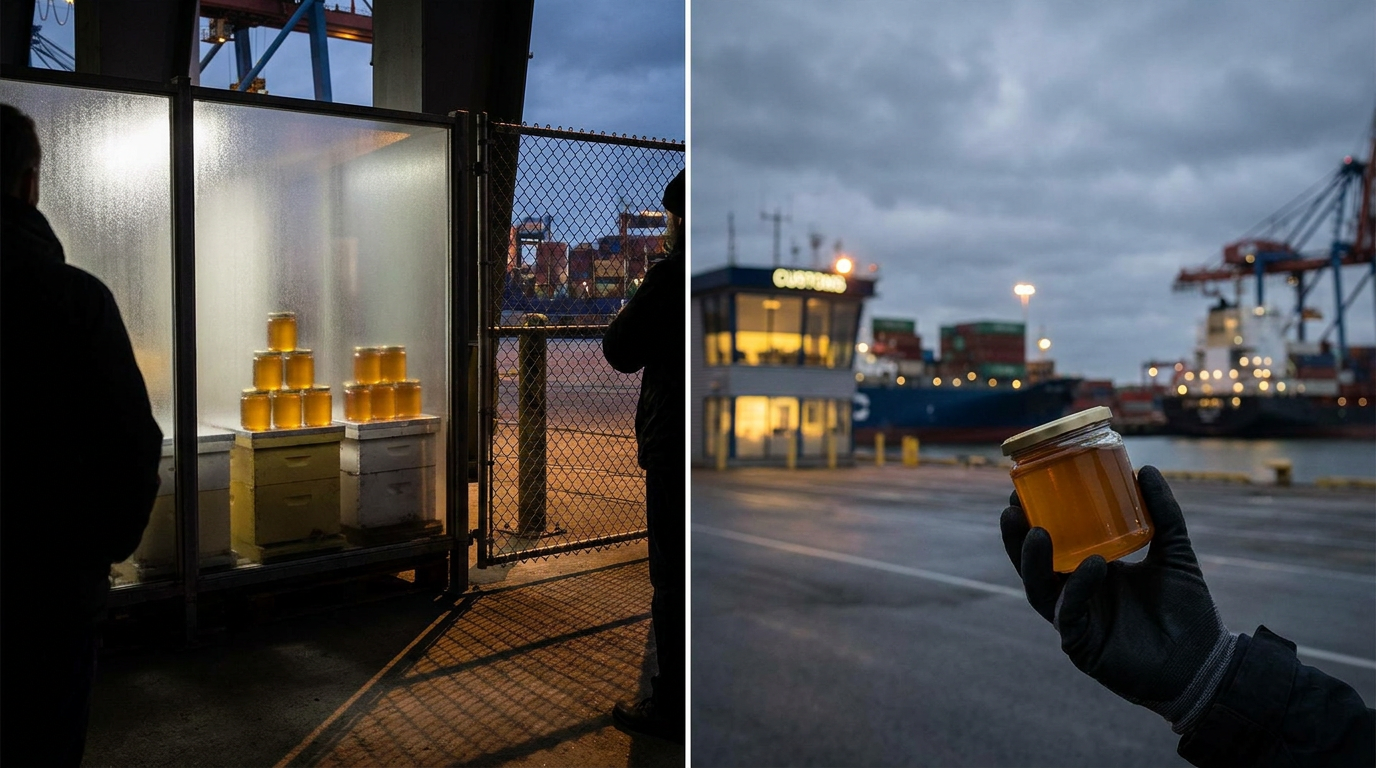
We had anticipated a promising start and high potential for exports of honey from Argentina to the EU under the Mercosur-EU Agreement. However, the road is long, difficulties are already emerging, and they must be resolved. Indeed, Regulation (EU) 2024/3190 bans bisphenol A (BPA) in food contact packaging - including honey packaging - and will enter into force in July 2026. This constitutes a significant non-tariff barrier for Argentine exports of honey and other packaged products to Europe because current Argentine regulations, set out in Joint Resolution 5/2017 of SENASA and ANMAT, allow the use of BPA in epoxy coatings with migration limits of 0.6 mg/kg for honey packaging, twelve times higher than the new European standard.
Scientific grounds for the ban
Bisphenol A (BPA) is a chemical substance used to manufacture certain food contact materials, such as epoxy resins for coatings in metal packaging and in food and beverage cans, and durable plastics such as reusable bottles; in polycarbonate plastic, which is used to make water dispensers, food storage containers and reusable beverage bottles; and in equipment used in food processing and transport. According to the European Commission, it has the potential to affect the immune system at exposure levels much lower than previously believed, in addition to its endocrine-disrupting properties, and it was the subject of a process carried out by the European Food Safety Authority.
Potential impact of the measure on Argentine exports
This European decision directly affects Argentina, which is the leading honey exporter in Mercosur, with a 68% share of the bloc's total shipments to Europe. The ban on BPA in the epoxy coatings of metal drums, the standard packaging system for bulk honey exports, requires an immediate technological conversion across the entire export chain. The regulation, in force from July 20, 2026, directly threatens 30% of Argentine shipments to the EU, equivalent to USD 70 million in 2025.
Regulatory framework and scope of the European measure
Regulation (EU) 2024/3190 sets specific migration limits of 0.05 mg/kg for bisphenol A in plastic materials and articles intended to come into contact with food. This regulation complements earlier restrictions contained in Regulation (EU) 2018/213, extending the ban to the internal coatings of metal packaging used in the international trade of food commodities.
Agencies in other countries, such as the US FDA, maintain more permissive criteria, creating regulatory disparities that call into question the scientific evidence underpinning the European regulation.
Sector impact on Argentine exports
The Argentine beekeeping industry faces a major challenge, considering that Europe is its second-largest export destination after the United States. According to INDEC data, exports of natural honey reached USD 233 million in 2025, with the EU accounting for approximately 30% of that volume.
The cost of conversion
Converting to BPA-free packaging entails additional costs estimated at 15-20% over the value of traditional packaging. This cost difference is particularly burdensome for small and medium-sized exporters that lack the economies of scale to absorb increases in their cost structure. But above all, the challenge is the speed of the conversion.
Argentina's regulatory response and technological alternatives
SENASA began a process this year to update the national regulatory framework in order to align Argentine standards with European requirements, but there is still no regulation addressing honey packaging.
Among the available technological alternatives are coatings based on polyamides and polyolefins, as well as stainless steel packaging systems that eliminate the use of epoxy compounds entirely. Argentine companies such as Resin s.a are already developing packaging solutions adapted to the new regulatory requirements, although implementing them requires significant investment in industrial conversion. INTI is working with regional producers on the certification of new packaging materials and the development of testing protocols that ensure compliance with international standards. This technical assistance is essential for small exporters that lack in-house research and development capabilities.
How the Mercosur-European Union Agreement works to resolve sanitary or phytosanitary barriers
The Chapter on Sanitary and Phytosanitary Measures (MSF in Spanish, or SPS in English) of the Mercosur-EU Agreement takes WTO rules into account and goes further to facilitate interregional trade in agricultural products. To that end, it promotes principles such as the use of scientific evidence, transparency and predictability in the adoption of sanitary and phytosanitary measures, and the parties also agreed to create a mechanism in the form of a Subcommittee for bilateral consultations (Art. 9.9 and 14.18) to resolve regulatory problems related to SPS measures.
The experience with the BPA ban foreshadows future European non-tariff barriers that will demand greater regulatory agility and capacity for technological adaptation from Mercosur exporters.
The Argentine Ministry of Foreign Affairs, together with the other Mercosur members, should negotiate with the EU an extension of the deadline for the regulation's entry into force, so that production can be adapted to the new packaging requirements.
It is essential that industry support services such as SENASA and INTI be fully operational to assist producers with the new requirements of foreign markets; otherwise, international trade agreements cannot be taken advantage of and will amount to nothing more than a blind and foolish opening of our domestic market.
Sources
- European Commission — EU ban on the use and trade of bisphenol A from January 20, 2025
- Bichos de Campo — Argentine honey exports to Europe in serious danger due to the ban on the use of a chemical
- Official Gazette (Boletín Oficial) — Joint Resolution 5/2017 (April 26, 2017)
- CIATI — Research Analysis: Regulation (EU) 2024/3190 (BPA) and Impact on Honey Exports
- Sudoeste BA — Beekeeping: Europe bans a chemical in drums and puts Argentine honey exports in check (May 6, 2026)
Director of Pulso Internacional
Lawyer specializing in international trade and productive investment, with more than 25 years of experience in international trade negotiations as an adviser to governments and to companies going international. At Pulso Internacional we analyze foreign trade, bringing clarity and international context so that your company can export and invest more.
Related analysis

European Assessment of the EU-Mercosur Agreement: In 4 Months, European Exports Grow 9%
November 5, 2026 · 2 min
Why Has the US Increased Its Investment in Germany?
November 3, 2026 · 5 min