Industrial export duties to be phased down starting in July
Translated from the Spanish original. Read the original

Director of Pulso Internacional
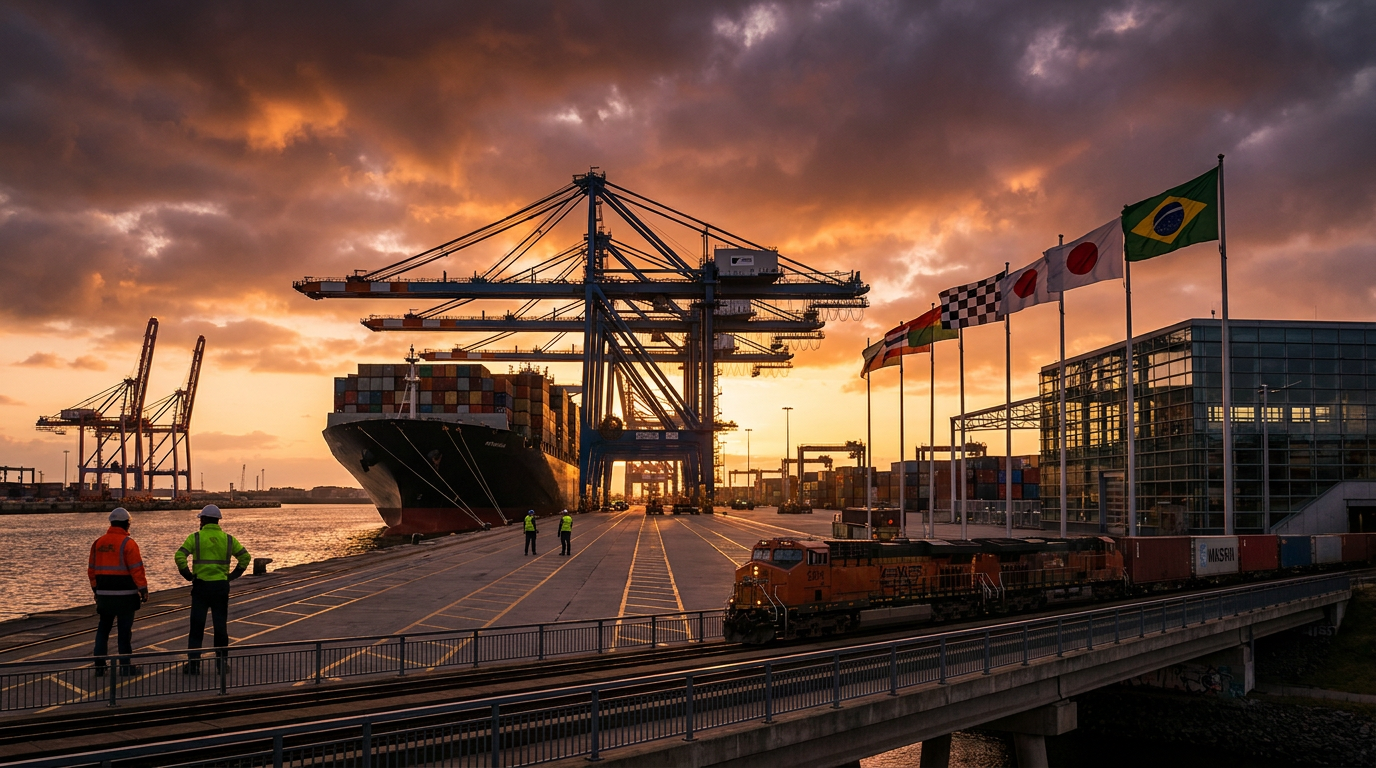
The Argentine government announced the elimination of export duties (export duties) for certain Argentine industrial products starting in July 2026, which improves the price competitiveness of domestic exporters. The elimination of export duties will be gradual and progressive, at 0.375% per month starting in July 2026, from a current rate of 4.5%, until full elimination is reached in June of next year. The reduction in export duties will apply to sectors such as the automotive sector, which is the second-largest industrial export complex for high value-added goods and generates 48% of total exports of Manufactures of Industrial Origin (MOI), as well as petrochemicals, chemicals, rubber and machinery, and it represents a strategic window to consolidate Argentina's presence in international markets, especially in the context of the entry into force of the Mercosur-EU agreement.
Legal framework of export duties
Export duties are not prohibited by the legal instruments of the World Trade Organization (WTO), and in Argentina they are governed by Article 755 of the Customs Code, which empowers the Executive to apply and modify them, with the following objectives: a) to promote value added; b) to implement monetary, exchange rate or foreign trade policy; c) to promote, protect or conserve domestic production of goods or services, natural resources or animal or plant species; d) to stabilize domestic prices at appropriate levels or maintain an adequate volume of supply to meet the needs of the domestic market; and e) to meet the needs of public finances. Export duties are an essential instrument of Argentina's economic policy, and the rates applied have changed on several occasions as circumstances have required. (1)
Sectoral impact and immediate competitive advantages
The new regulatory scheme sets a precedent that particularly benefits industrial exports with greater technological content and local value added, which improves operating margins and favors international competitiveness. In sectors such as petrochemicals and automotive, where regional supply chains demand competitive prices and reliable deliveries, the elimination of export duties makes it possible to take advantage of idle productive capacity by directing it toward foreign markets. In the automotive sector, the actual impact on the final price of the vehicle is around 2.5%, which represented for automakers a transfer of more than USD 100 million per year. Regarding the measure, Rodrigo Pérez Graziano, president of the Association of Automobile Manufacturers (Asociación de Fabricantes de Automotores, ADEFA), highlighted that the Government has defined “a clear and predictable path that will extend until mid-2027 ”. (2) For his part, the Secretary of Production Coordination, Pablo Lavigne, said that for the economic team it is “very relevant to keep removing taxes on exports so that sectors can compete on equal terms”. The implementation of this trade policy requires exporters to reconsider strategies related to export pricing and the planning of the volumes of products to be exported, since the elimination of export duties may determine the commercial viability of medium-term contracts. However, it is important to consider that the fiscal benefit does not resolve structural limitations such as high logistics costs, restricted access to financing, exchange rate uncertainty and regulatory barriers in destination markets, but it is a significant step forward.
References:
(1) Sections 1 and 3 of Article 755 of Law No. 22,415 (Customs Code) and its amendments.
Decree No. 2,752/1991, Official Gazette 13/1/1992, delegates to the Ministry of Economy, Public Works and Services (currently the Ministry of Economy) the powers conferred by Article 755 of the Customs Code.
(2) "ADEFA celebrates the national tax cut and calls on provinces and municipalities to also move forward in reducing the tax burden" A rodar Post
Director of Pulso Internacional
Lawyer specializing in international trade and productive investment, with more than 25 years of experience in international trade negotiations as an adviser to governments and to companies going international. At Pulso Internacional we analyze foreign trade, bringing clarity and international context so that your company can export and invest more.
Related analysis
European Assessment of the EU-Mercosur Agreement: In 4 Months, European Exports Grow 9%
November 5, 2026 · 2 min
Why Has the US Increased Its Investment in Germany?
November 3, 2026 · 5 min