Mercosur Faces Polish Disinformation Campaign Over Brazilian Coffee
Translated from the Spanish original. Read the original

Director of Pulso Internacional
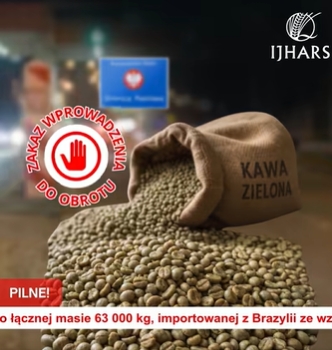
Poland filed an action for annulment ( C-460/26 R - Poland/Council) before the Court of Justice of the EU against the EU-Mercosur interim trade agreement on May 10, 2026, and now Member of the European Parliament (MEP) Ewa Zajaczkowska-Henik, who represents conservative Polish sectors of the Conservative Liberal party, has joined a communications campaign against the EU-Mercosur Agreement. These actions reveal the political, commercial and press strategies aimed at sabotaging the final ratification of the treaty by instrumentalizing health narratives that have nothing to do with the Agreement. The MEP posted on Twitter on May 23, 2026:
63 tons of damaged green coffee beans infested with live insects have just arrived in Poland from Brazil! This must be made public. This is what this pathological agreement with Mercosur looks like in practice: poisoning people in the name of German economic interests. Fortunately, this shipment was intercepted in time in Poznań by an inspection of the IJHARS (Inspection of Agricultural and Food Quality / Harvest and Processing Inspection), and the contaminated goods did not reach Polish markets. But do we have any guarantee that this will happen with every defective shipment and that the effectiveness will be 100%? This places a significant burden on the Polish inspection services, which now face a new challenge. All these cases show that every shipment coming from Mercosur must be inspected, just like what comes from Ukraine. This agreement is one of the biggest scandals in the history of the EU, directly affecting everyone's health!
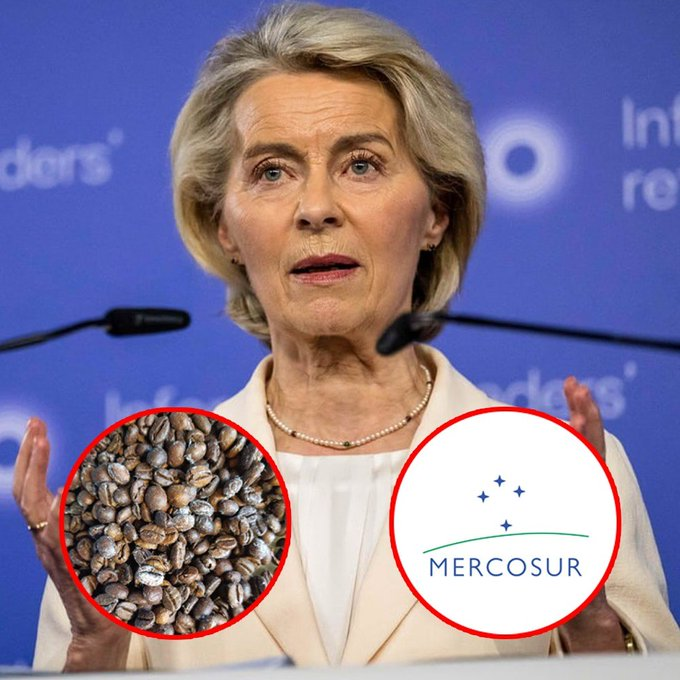
The specific case of the supposed Brazilian coffee "with worms" that allegedly entered Europe blames the Agreement and constitutes the first documented example of these tactics, setting a precedent that directly threatens the consolidation of the most significant trade pact between the two blocs. As Euronews reports, the technical analysis shows that the shipment blocked in Poland was intercepted by ordinary health controls and is not linked to the EU-Mercosur agreement. There is clearly a fundamental disconnect between the incident and the treaty's regulatory framework. It is also important to bear in mind that Brazilian green coffee already entered Poland tariff-free before the provisional application of the agreement. In 2024 Brazil exported to Poland nearly US$60 million worth, some 15,101,100 kg, according to the World Bank's WITS. This pre-existing condition shows that the tariff reductions established in the treaty did not substantially alter the trade flow of green coffee. The precedent is an early warning of the strategies that European protectionist sectors could deploy against exports of beef, soybeans, honey and other agricultural products covered by the agreement's tariff reductions, and it will require external trade promotion strategies from Mercosur, particularly in the context of the agreement's provisional application, through a system for monitoring and responding to commercial disinformation.
The need to adopt communication strategies as a bloc to defend Mercosur's production
The evolution of the debate in Poland and France, the main countries questioning the Mercosur-EU Agreement, over the coming months could influence the agreement's political viability. If disinformation narratives manage to take hold in European public opinion, parliamentary ratification will face growing obstacles that could lead to significant changes to the negotiated text (as European parliamentarians are doing with the Turnberry Agreement with the US) or, in the worst-case scenario, in the definitive blocking of the treaty. For Argentine companies with expansion plans in European markets, it is essential to develop their own capabilities for monitoring commercial narratives and for strategic responses to disinformation campaigns. The Polish experience shows that attacks on the agreement will not be limited to specific sectors but will seek to erode general confidence in South American products.
The spread of ordinary health incidents, such as the Brazilian coffee intercepted in Poland, as a pretext represents only the first chapter of a broader strategy of political and commercial sabotage against the EU-Mercosur agreement. The South American bloc's ability to anticipate, monitor and counter these false narratives will determine not only the ratification of the treaty, but also the preservation of the region's export competitiveness in one of its most strategic markets. Mercosur's coordinated response to this first disinformation campaign will set fundamental precedents for confronting future waves of European protectionist resistance.
Sources
1) "The Cube: Does the EU-Mercosur agreement allow Brazilian coffee with worms to be imported into Europe?"
Euronews — Does the EU-Mercosur agreement allow Brazilian coffee with worms to be imported into Europe May 28, 2026
2) "Imminent barriers to Argentine honey exports to the European Union" - May 9, 2026 - Ricardo Beltramino - Pulso Internacional
Director of Pulso Internacional
Lawyer specializing in international trade and productive investment, with more than 25 years of experience in international trade negotiations as an adviser to governments and to companies going international. At Pulso Internacional we analyze foreign trade, bringing clarity and international context so that your company can export and invest more.
Related analysis
European Assessment of the EU-Mercosur Agreement: In 4 Months, European Exports Grow 9%
November 5, 2026 · 2 min
Why Has the US Increased Its Investment in Germany?
November 3, 2026 · 5 min