The New US Tariffs and the Balance-of-Payments Exception
Translated from the Spanish original. Read the original

Director of Pulso Internacional
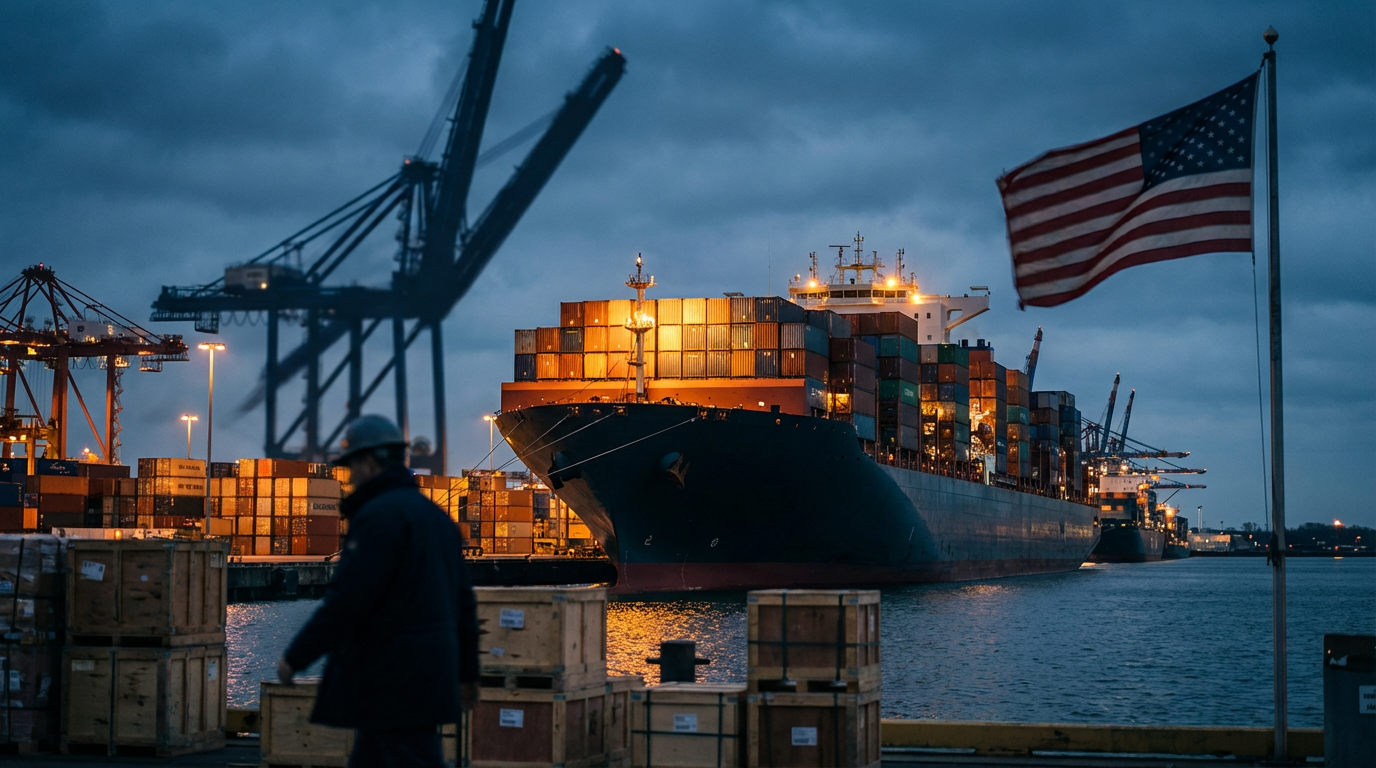
The balance-of-payments imbalance drew different responses from the United States and Argentina
When we look at the new US tariffs, we can understand the importance of GATT tools for preserving the domestic market. The "reciprocal tariffs" adopted by the Trump administration were based on the International Emergency Economic Powers Act (IEEPA), a general emergency powers law, and in February 2026 the Supreme Court questioned the legality of using the IEEPA to impose tariffs, characterizing those levies as unlawful.
For that reason, the US government turned to another statute, Section 122 of the Trade Act, to raise tariffs. As we will see, the United States did not hesitate to use the balance-of-payments exception in a context far less severe than that of Argentina in 2001, which shows how a trading power can use multilateral mechanisms to protect its interests, something that Argentina did not take advantage of during the 2001 crisis.
The new US tariffs
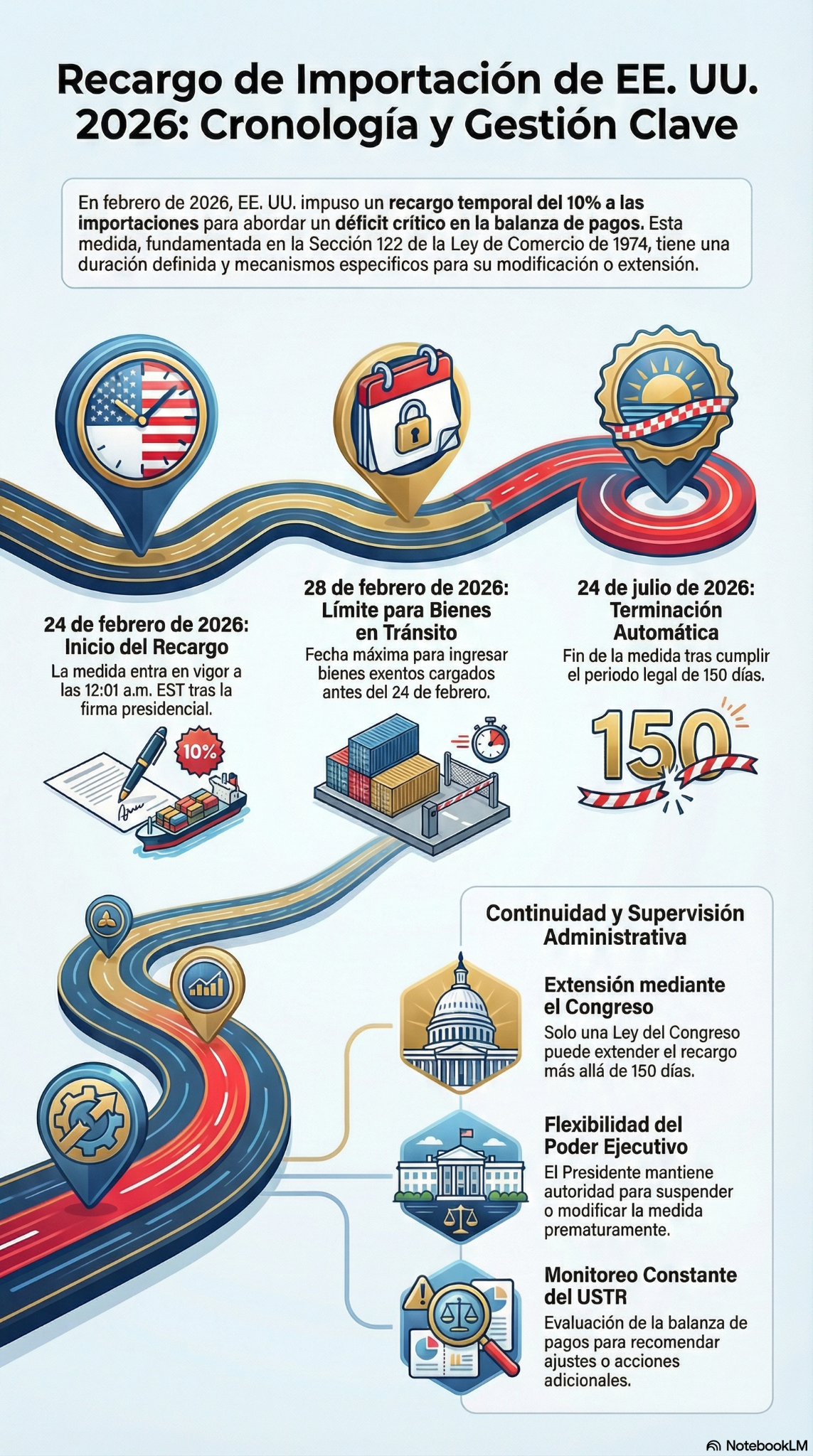
The new US tariff regime, implemented by the Trump administration through a Proclamation on February 20, 2026 , consists of a 10% global tariff on all non-exempt imports and was notified to the World Trade Organization (WTO) on March 20, 2026.(1) It was based on Section 122, a provision of the US Trade Act of 1974 that grants the president the authority to impose import tariffs on a temporary basis and can be used only to:
- Address large and serious balance-of-payments deficits of the United States
- .Prevent an imminent and significant depreciation of the dollar in foreign exchange markets
- .Cooperate with other nations to correct an international balance-of-payments imbalance
Example of how the new tariff regime under Section 122 applies
Tariffs "stack" (stacking); Most Favored Nation tariff (e.g., 2.5%).
+ The 10% ad valorem (Additional) Total: 12.5%
Duration: The measure imposing an additional 10% tariff took effect at 12:01 a.m. on February 24, 2026. It is scheduled to last 150 days, so it would end automatically on July 24, 2026, unless the US Congress extends that period.
Economic rationale: This decision was justified by the massive goods trade deficit, which reached US$1.2 trillion in 2024 and remained at that level in 2025. This deficit has grown by more than 40% in just five years. According to the Proclamation, between 1960 and 2023 the United States recorded a surplus in its annual primary income balance. That positive primary income balance served as a stabilizing factor for the US balance of payments, even in the face of high and persistent trade deficits. In 2024, however, the primary income balance turned negative and therefore ceased to serve as a counterweight to the trade deficit in the US current account.
Compatibility of this measure: The measure would be compatible with Article XII of the GATT (General Agreement on Tariffs and Trade), which allows balance-of-payments exceptions and enables countries to impose quantitative restrictions or temporary tariffs. (2) The US tariff increase is complemented by the forced labor investigation launched against 60 countries, including Argentina, based on Section 301 of the Trade Act, which will very likely end with the imposition of higher tariffs, as we discussed in the article on how Argentine exporters can respond.(3)
Argentina's missed opportunity in 2001
During Argentina's 2001 crisis, the country faced a similar collapse in its balance of payments: debt default, peso devaluation, falling reserves and a chronic external deficit. However, Argentina did not invoke the balance-of-payments exception to implement tariffs that would have allowed it a temporary defense, thereby missing a strategic opportunity to rebalance its trade.
Instead, the Argentine strategy centered on internal measures such as capital controls (the "corralito"), devaluation and a selective default, without using the tariff tools authorized by the GATT. This decision limited the country's multilateral options and later exposed it to disputes at the WTO and before ICSID over direct investments, arising from unilateral measures.
Defensive trade strategies
The United States' activation of the balance-of-payments exception sets a precedent that Argentina should study carefully.(4) In the face of economic crises (which we hope will not occur), the country has GATT/WTO tools that, used strategically, can offer greater flexibility than purely internal adjustments.
The lesson is clear: technical mastery of multilateral trade mechanisms is as important as macroeconomic stabilization for protecting national interests in crisis scenarios.
Sources
(1) Notification from the US to the General Council - WTO Committee on Balance-of-Payments Restrictions - of the decision to introduce an import restriction adopted for balance-of-payments purposes - United States. WT/BOP/N/85; WT/GC/282 20-3-2026
(2) GATT 1994 - wto.org - Understanding on the Balance-of-Payments Provisions of the General Agreement on Tariffs and Trade 1994
(3) USTR “Initiation of Section 301 Investigations of Acts, Policies, and Practices of Various Economies Related to the Failure to Impose and Effectively Enforce a Prohibition on the Importation of Goods Produced with Forced Labor “ ustr.gov
(4) Consultation procedure for WTO members invoking the balance-of-payments exception.
Director of Pulso Internacional
Lawyer specializing in international trade and productive investment, with more than 25 years of experience in international trade negotiations as an adviser to governments and to companies going international. At Pulso Internacional we analyze foreign trade, bringing clarity and international context so that your company can export and invest more.
Related analysis
European Assessment of the EU-Mercosur Agreement: In 4 Months, European Exports Grow 9%
November 5, 2026 · 2 min
Why Has the US Increased Its Investment in Germany?
November 3, 2026 · 5 min