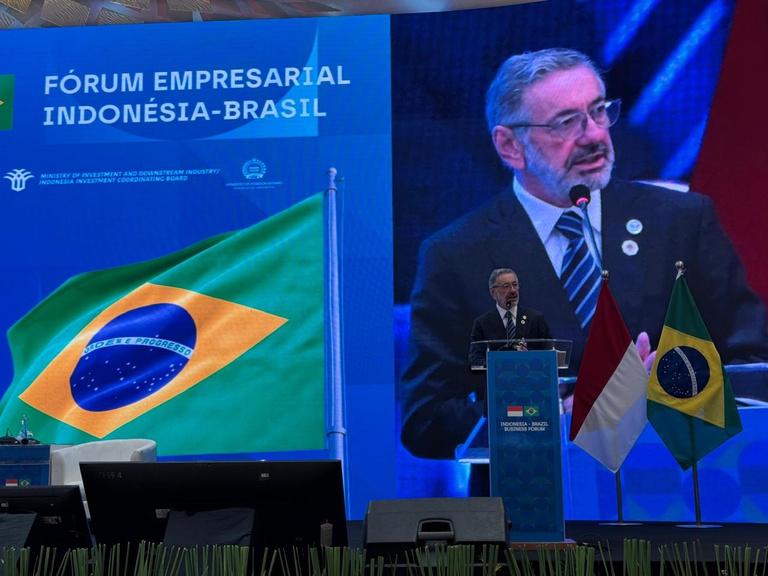
Argentina About to Finance the French Government's Access to Lithium
Translated from the Spanish original. Read the original
Director of Pulso Internacional
Eramet announces it will apply for RIGI incentives
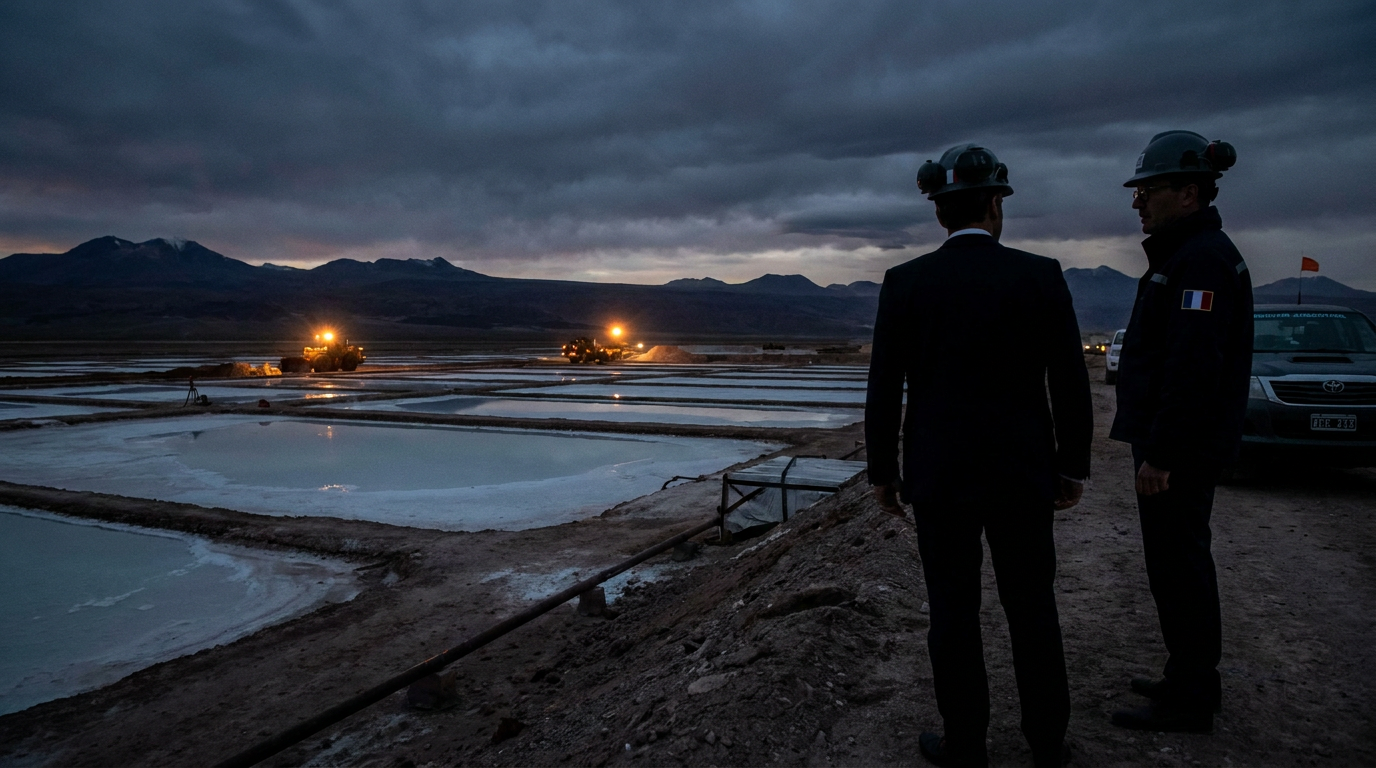
At the beginning of October this year, the French-owned company Eramet expressed its interest in applying for a RIGI (Incentive Regime for Large Investments) for US$350 million for the Centenario-Ratones project, its flagship project, located 300 kilometers west of the capital of Salta province.
Christel Bories, Chair and CEO of Eramet, said:
« Through today’s announcement, Eramet reaffirms its ambition to further develop a leading, sustainable and competitive lithium platform in Argentina, contributing to local value creation while supporting the global energy transition. The successful ramp-up of our CentenarioRatones plant provides a strong foundation for pursuing this ambition. Argentina has the resources and the industrial potential to become an increasingly important player in the global lithium industry. The greater visibility being created for long-term investors, notably through the RIGI, is an important factor in enabling companies such as Eramet to consider new investment and further development in Argentina. »
The French State becomes the largest shareholder in Eramet's capital.
But a few days later the French government announced that it was taking control of Eramet. Roland Lescure, Minister of the Economy, Finance and Industrial, Energy and Digital Sovereignty, stated :
"This operation demonstrates the Government's commitment to establishing France's independence in the field of critical minerals and metals. In a context marked by growing international competition and the need to secure the supply of critical metals, we are making an ambitious commitment by making the State the largest shareholder of the company ."
The French State has made the strategic decision to increase its stake in Eramet through an investment by the Agence des Participations de l’État (APE), fulfilling its objectives of investing capital in companies the State considers strategic, and thereby securing the supply of critical metals. In this context, and as part of the operation, the company's statement notes that the APE will subscribe for its pro rata share (27.1% of the share capital) and will acquire, based on the reference price of the operation, all or part of the preferential subscription rights (PSRs) of its partner Sorame-CEIR, so that the APE's effective voting rights at the General Meeting do not exceed 49%. Should the APE not acquire all of Sorame-CEIR's PSRs, the latter will subscribe for the remaining PSRs to which it is entitled; subsequently, Sorame-CEIR will have the right to exercise a put option, while the APE will have the right to exercise a call option on the new shares subscribed by Sorame-CEIR in the capital increase.
The company's press release elaborates with the following detail:
"Following this investment, the APE will become the Group's largest shareholder, confirming Eramet's strategic importance for French and European sovereignty in the field of critical metals. Sorame-CEIR will become the second-largest shareholder."
States finance their national companies to achieve resource independence
Growing state participation in strategic mineral companies is not an exclusively French phenomenon. The United States channels public capital toward investments by its companies abroad to secure critical minerals through the DFC (U.S. International Development Finance Corporation) and the Eximbank. Japan, through JOGMEC, finances exploration and stakes in lithium, cobalt and rare earth projects across multiple jurisdictions. The common denominator is the conviction that critical minerals are too strategic to be left exclusively in the hands of the market.
RIGI faces its first stress test in lithium
The Incentive Regime for Large Investments (RIGI) offers 30 years of fiscal stability, free availability of foreign currency, accelerated depreciation and protection against regulatory changes for projects that exceed the established investment threshold. The instrument was designed precisely to attract the kind of long-term capital required to develop a salt flat, with horizons of eight to twelve years between exploration and production. However, it does not distinguish between private foreign investment and investment by foreign states.
Will the Argentine government finance the French State?
This leads us to reflect on whether it is appropriate for a developing country like Argentina to hand out tax exemptions to a company controlled by the French government. RIGI would allow the French government, which will earn profits, to be financed while securing its critical materials strategy. It remains to be seen whether the company will file its application to join and pass the RIGI approval test; we will see the results soon.
Director of Pulso Internacional
Lawyer specializing in international trade and productive investment, with more than 25 years of experience in international trade negotiations as an adviser to governments and to companies going international. At Pulso Internacional we analyze foreign trade, bringing clarity and international context so that your company can export and invest more.
Related analysis
25 Years Since China's Accession to the WTO, the Lever of Its Dizzying Growth
November 11, 2026 · 5 min
Building Bridges: Pope Leo XIV's Visit to Argentina
November 8, 2026 · 6 min