The Trade Agreements Concluded Between the United Kingdom and the US in the Trump Era
Translated from the Spanish original. Read the original

Director of Pulso Internacional
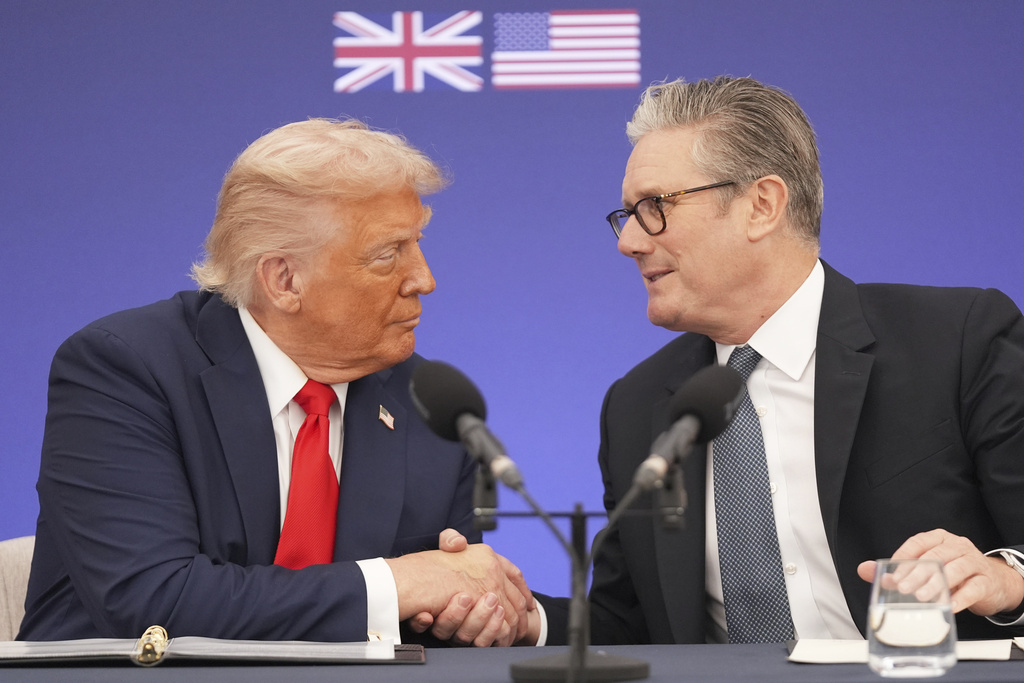
A transatlantic axis consolidating under pressure
On May 8, 2025, at an improvised press conference broadcast simultaneously from Washington and London, President Donald Trump and Prime Minister Keir Starmer announced the Economic Prosperity Deal (EPD), the first of a series of bilateral agreements that would reshape the Anglo-American trade relationship over the following eighteen months. This episode could be read as a strictly economic event between two historic partners, but this transatlantic axis has been going through ups and downs, ranging from a draft free trade agreement in 2020 to the current agreements, as well as direct geopolitical implications that must be assessed when analyzing the next steps in the sovereignty dispute over the Falkland Islands (Malvinas).
Thirteen years of failures and a hasty agreement: the architecture of the EPD
The trade relationship between the United States and the United Kingdom carries more than a decade of failed negotiations. After the collapse of the 2013-2016 talks within the framework of the Transatlantic Trade and Investment Partnership (TTIP) between the United States and the European Union, Brexit repositioned London as an autonomous negotiator, albeit without the collective trade weight of the continental bloc, and in the eight years since Brexit, the previous Government did not publish any trade strategy. This led, in 2018 (Trump's first administration), to plans for a free trade agreement with the US. An analysis of the available texts from the UK-USA free trade agreement negotiations confirms that it is among London's strategic objectives in its relationship with Washington. Indeed, on October 16, 2018, the United States announced its intention to negotiate a trade agreement with the United Kingdom. The United Kingdom published its negotiating objectives for a free trade agreement with the United States on March 2, 2020. On May 5, 2020, the US and UK governments began negotiating a US-UK Free Trade Agreement. The talks covered trade in goods and services, digital trade, investment and support for SMEs. Approximately 200 US and UK negotiators held the first round of a US-UK FTA between May 5 and 15, 2020. The attempts of Trump's first term (2020) were cut short, and the Biden administration dismissed free trade agreements as a priority foreign policy instrument. It was the tariff threat of Trump's second term —the so-called "Liberation Day" of April 2, 2025, which imposed a baseline reciprocal tariff of 10% on British imports, in addition to a specific 25% on the automotive sector— that led to the rush in the EPD negotiations. UK exports to the US are subject to a lower tariff of 10% for a quota of 100,000 vehicles. This is good news for iconic British luxury brands such as Aston Martin, Bentley and McLaren, but also for the largest vehicle manufacturer, Jaguar Land Rover.
The EPD also guarantees the elimination of the new tariffs the United States imposed on steel and aluminium in March, through tariff-free quotas. And sectoral negotiations were placed on the agenda for: the pharmaceutical industry, semiconductors, critical minerals, copper, timber and film production. According to an analysis by the Trade Justice Movement, the result was an agreement that, strikingly, the EPD text itself acknowledges as not legally binding; the preamble clause is explicit in stating that "Both the United States and the United Kingdom recognize that this document does not constitute a legally binding agreement", that is, "both parties recognize that this document does not constitute a legally binding agreement". This feature defines the real scope of the instrument: the EPD functioned as a political agreement of intent, designed to produce image effects rather than structural trade transformations. The Trade Justice Movement's analysis is damning in this regard: the United Kingdom today finds itself in a worse trade position vis-à-vis the United States than in March 2025, with little real influence in Washington.
The Tech Prosperity Deal, the pharmaceutical agreement and Trump's visit to the United Kingdom
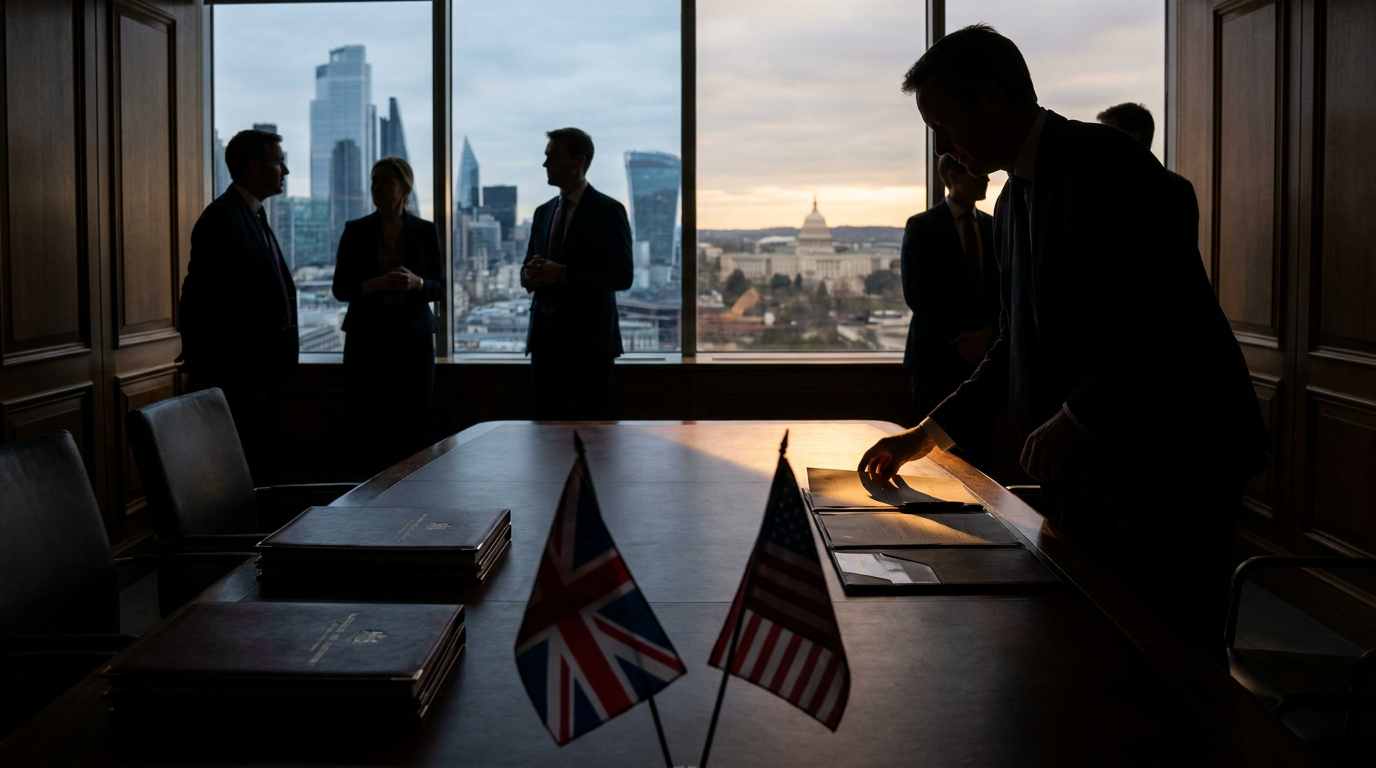
The EPD of May 2025 was followed, in September of that same year, by the Tech Prosperity Deal, negotiated during President Trump's state visit to the United Kingdom —an event of high symbolic value that Starmer had strategically prepared since his first visit to Washington in February 2025, when he extended the invitation for the meeting with the Royal Household. In December 2025, a third sectoral agreement was added, this time on pharmaceuticals.
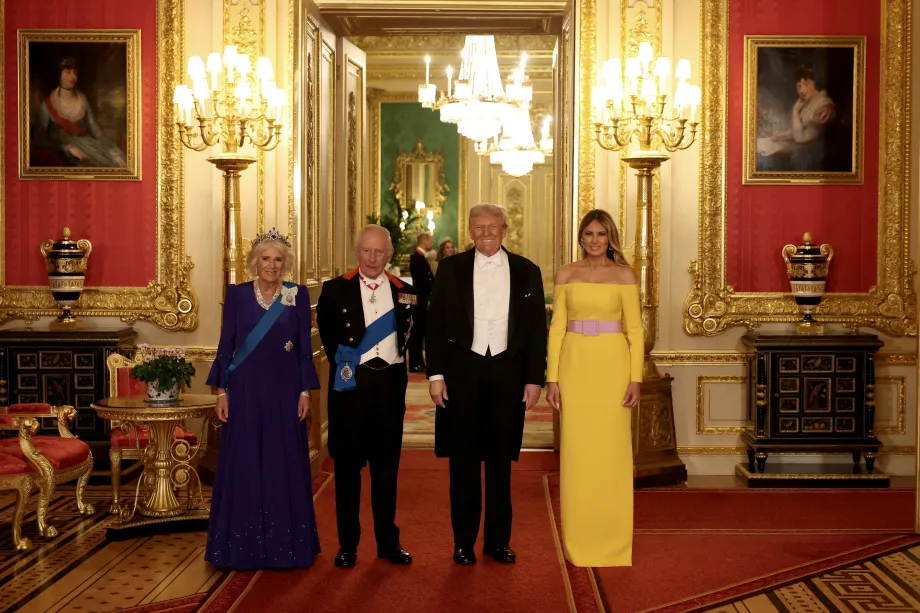
Wednesday, September 17, 2025
The state visit hosted by King Charles III took on a dimension that goes beyond protocol. The image of Trump at Windsor Castle reinforces the narrative of an alliance that combines the symbolic capital of the British monarchy with the transactional pragmatism of the Republican administration. Starmer deliberately bet on proximity to the Crown as a source of influence over Trump, a strategy that, for all its fragilities, helped keep the United Kingdom on the White House's radar at a time of high geopolitical volatility.
The Iranian threat and the underlying tensions in the special relationship
The negotiating process was not without turbulence. Amid the Trump administration's pressure on its allies to take tougher positions toward Iran, London resisted automatic alignment, generating frictions that threatened to derail the trade talks. Britain's more diplomatically cautious stance toward Tehran was read in Washington as a sign of strategic ambiguity, and Trump was quick to use tariff instruments as leverage. This episode clearly illustrates the asymmetric nature of the relationship: the United Kingdom, stripped of the collective umbrella of the European Union, negotiates from a position of structural weakness vis-à-vis a partner that uses trade as an instrument of foreign policy.
British Prime Minister Starmer, aware of that asymmetry, stated that "the immediate priority is to keep calm and fight for the best possible deal", a formulation that reveals both the domestic pressure and the limits of his real room for manoeuvre. In the parliamentary debates on the trade negotiations of May 8, 2025, several legislators questioned the lack of transparency in the process and the absence of published objectives, which reinforces the reading that the agreements were driven by political urgency rather than by a comprehensive trade strategy.
Implications for the Falklands/Malvinas question: the Washington-London-Buenos Aires triangle
The supposed neutrality of the United States in the sovereignty dispute over the Falkland Islands (Malvinas); formally maintained since 1982 on the argument that it urges both parties to resolve the dispute through diplomatic channels, has historically coexisted with a deep strategic alignment with London in military, intelligence and foreign policy matters.
“Anchored by the deep friendship between our people, this relationship which, with good reason, we and our predecessors have long called ‘special’, has made us safer and stronger through the generations.”
King Charles of England - Sept. 2025
To this situation we must add the geopolitical interest that straits hold for commercial shipping, as in the case of the Strait of Magellan, an importance that has led the US to regard the Strait of Hormuz as its own territory.
The three trade agreements between the United Kingdom and the United States, in line with the one that country concluded with Argentina, mark a trend in which the three countries share a certain degree of trade alignment. However, the bilateral agenda is strictly economic on its surface but deeply geopolitical in its substance, since the consolidation of the Washington-London relationship raises the implicit political cost of any stance by the US government that could be interpreted as a distancing from its British ally on the Falklands/Malvinas question. The framework for technological and pharmaceutical cooperation opened by the Tech Prosperity Deal and the December 2025 agreement creates chains of sectoral interdependence that encourage the stability of the bilateral relationship, but it is far from a free trade agreement such as the one envisaged in 2020.
The Argentine Ministry of Foreign Affairs will have to assess whether its strategy of multilateralizing the claim, based on CELAC, Mercosur and UN resolutions, is sufficient to counter the growing weight of this bilateral axis, or whether a more active diplomacy toward Washington is needed, one capable of taking advantage of a lower-intensity, transactional trade relationship that today dominates Anglo-American relations.
Sources
- The Guardian — Keir Starmer Trump visit relations (February 27, 2025)
- UK Government — US-UK Economic Prosperity Deal (EPD) (May 2025)
- Sky News — Sir Keir Starmer pledges to protect UK companies from Trump tariff storm (April 6, 2025)
- Trade Justice Movement — Trading with Trump: what three US trade deals mean for the UK (September 2026)
- UK Government — UK-US FTA Negotiations: Strategic Approach
- Hansard (House of Commons) — Trade Negotiations (May 8, 2025)
- US Embassy in the United Kingdom — The Tech Prosperity Deal (September 2025)
- pulsointernacional.com
- pulsointernacional.com
Director of Pulso Internacional
Lawyer specializing in international trade and productive investment, with more than 25 years of experience in international trade negotiations as an adviser to governments and to companies going international. At Pulso Internacional we analyze foreign trade, bringing clarity and international context so that your company can export and invest more.
Related analysis
European Assessment of the EU-Mercosur Agreement: In 4 Months, European Exports Grow 9%
November 5, 2026 · 2 min
Why Has the US Increased Its Investment in Germany?
November 3, 2026 · 5 min