What Does China Have to Do with Argentina's New Commitment Against Forced Labor?
Translated from the Spanish original. Read the original
Director of Pulso Internacional
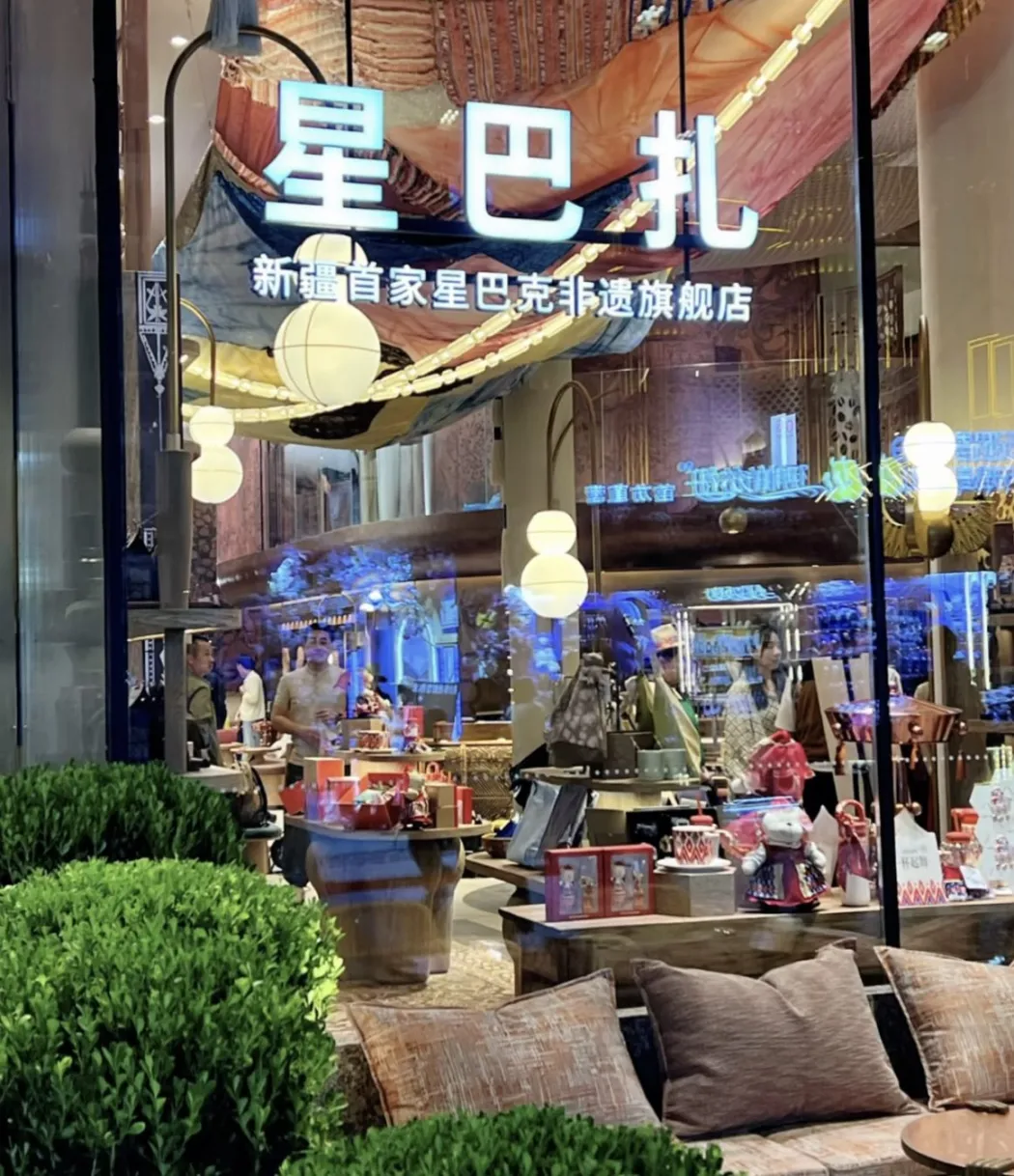
Starbucks, its investments in China and the difficult balance with international trade
Two events related to forced labor and international trade took place in the same week. The first was the new commitments assumed by Argentina at the G20 meeting in Milwaukee. The second was the rejection, this Saturday, by the Chinese Ministry of Foreign Affairs of the statements by US Congressman John Moolenaar, for "inventing accusations," after he called "morally reprehensible" on Tuesday the decision to open Starbucks stores in Urumqi, the capital of the Xinjiang region, and urged the company to close two coffee shops, opened only on September 29, over alleged human rights abuses against the Uyghur ethnic minority. According to Reuters, the lawmaker stated:
"There is no justifiable reason for an American company to do business in a region where the CCP (Chinese Communist Party) has detained more than a million Uyghurs and is stripping them of their faith, their language and their culture."
Starbucks operates around 8,000 stores in China and since April of this year has had Boyu Capital as a partner, holding a 60% majority stake, so this case makes plain the difficult balance between foreign trade and foreign direct investment.
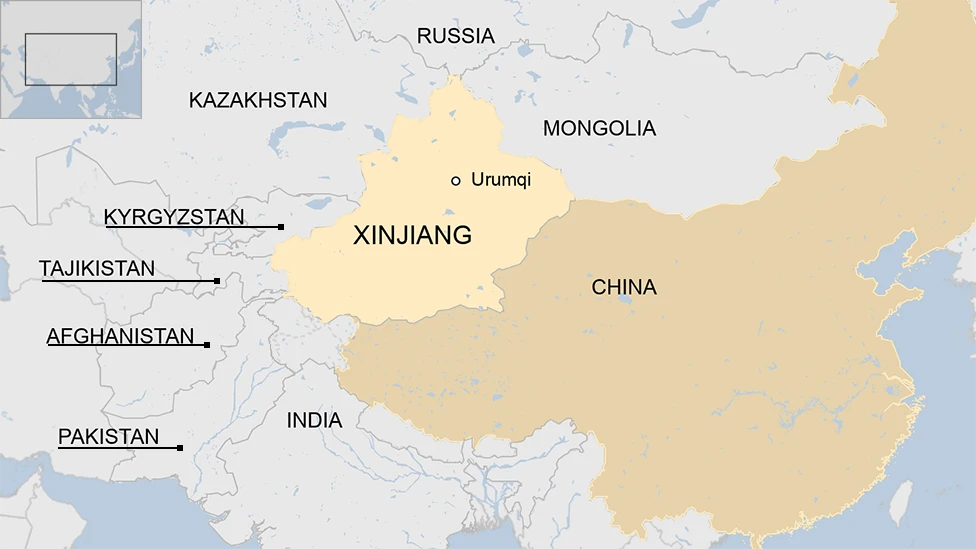
Map: BBC
Forced labor, foreign trade and direct investment
The Uyghur minority lives in the Xinjiang region, and the US has repeatedly denounced the existence of concentration camps and demands for forced labor, whose products are then exported. China denies all accusations of human rights violations in Xinjiang. The issue has become topical because at the G20 ministerial meeting held between September 30 and October 1, 2026 in Milwaukee, Argentina, together with the United States and Mexico, broke ranks with the rest of the G20 countries. The three countries signed a joint declaration condemning forced labor in global value chains, while the rest of the countries decided not to take a position. This declaration complements the Agreement on Reciprocal Trade and Investment concluded in February 2026 between Argentina and the US, which included the issue of imports made with forced labor. This places Argentina in a prominent position, one on which it must act accordingly.
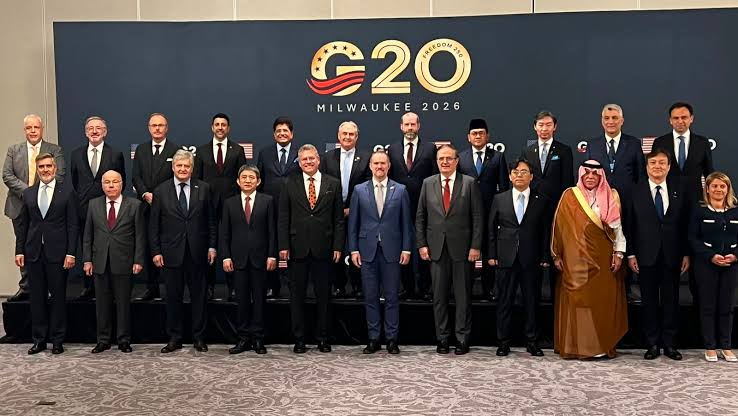
G20 meeting in Milwaukee - October 2026
The G20 ministerial declaration: what it says and what it implies
The G20 ministerial declaration adopted notes that, although there was no consensus under the US chairmanship of the meeting, it highlights:
" Forced labor constitutes a grave violation of human rights and, likewise, a major trade concern, as it allows some producers to obtain unfair benefits from its use. The presence of these goods in global supply chains rewards inhumane and unlawful conduct, distorts trade and competition, undermines efforts to protect workers and promote responsible business conduct, and harms both workers and companies that do not resort to or depend on forced labor. The US chairmanship of the G20 encouraged members to adopt or maintain—and to effectively enforce—measures that prohibit the import or sale of goods produced through forced labor. Although no consensus was reached, the US chairmanship of the G20 commends the members that endorsed the Declaration on the Elimination of Forced Labor in Global Supply Chains—specifically Argentina and Mexico—and their commitment to prohibit the entry into their respective countries of goods produced through forced labor." (emphasis added)
The regulatory context: pressure that keeps escalating
To understand the weight of this declaration, it is necessary to review the regulatory background that precedes it. Section 307 of the US Tariff Act, the so-called Smoot-Hawley Act, has prohibited since 1930 the importation of goods produced with forced labor, prison labor or child labor. This prohibition gained new momentum with the enactment of the Uyghur Forced Labor Prevention Act in 2021, and turned that instrument into an active and systematic enforcement tool. Since then, Washington's pressure on import chains has intensified steadily, with a Task Force for enforcement of the law against forced labor that carries out more frequent audits, ever-expanding lists of suspect goods and an approach that is no longer limited to the final product but reaches inputs and components along the entire supply chain.
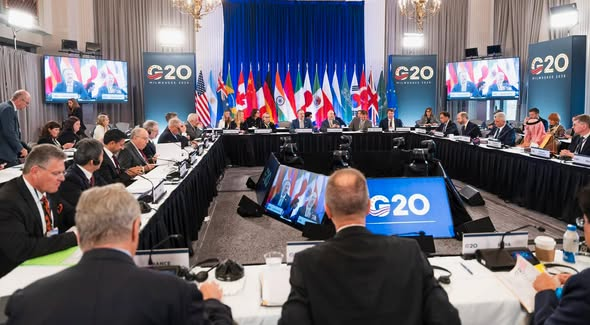
G20 meeting in Milwaukee - October 2026
How it may affect Argentina's export offering and its use to curb unfair imports
According to a recent report by the Argentine Industrial Union (UIA), dated September 9, 2026, 19.4% of Argentine companies point out that customs controls have a negative impact on their activity, mainly because they consider that these controls are not sufficient to prevent the entry of irregular merchandise, which generates unfair competition. Meanwhile, the CGT (General Confederation of Labor) has spoken out repeatedly against forced labor. The commitment that Argentina has assumed internationally in relation to foreign trade and forced labor is therefore not symbolic, nor is the risk of non-compliance, both externally and internally. The measures that Argentina adopts at customs to prevent the import of this type of product could serve to protect sectors that are genuinely affected by imports suspected of being made with forced labor, as we noted in a previous analysis of the Argentine textile sector. Indeed, activity in the textile industry has fallen 20% so far this year and job losses have accelerated: 28,322 jobs have been lost since December 2023. While imports of inputs and intermediate products declined, purchases of finished goods rose, with cumulative increases of 53.5% in garments and 21.8% in apparel manufacturing, according to a report by the Federation of Argentine Textile Industries (FITA) highlighted by Infobae.
In addition, Argentina exports to the United States products that, in their production or supply chains, could be subject to scrutiny over the origin of inputs and labor conditions in manufacturing. This assessment represents both a threat and an opportunity for competitive differentiation for local producers who can demonstrate verifiable standards. The textile sector, agribusiness and the footwear industry are sectors where it is important to begin improving the traceability of labor conditions along the supply chain, not only at the final link, since this has become a growing requirement of institutional buyers in the United States and the European Union. In this context, the US Department of Labor maintains and periodically updates its list of goods produced with child or forced labor. The 2024 report published by the US Department of Labor (TVPRA) identifies products from dozens of countries, with a sectoral breadth that ranges from critical minerals to textiles and agribusiness products, all of them sectors central to Argentina's export offering.
The sectors in which the US Department of Labor alleges there is forced labor or child labor in Argentina are: bricks, cotton, garlic, garments, grapes, olives, strawberries, tobacco, tomatoes and yerba mate.
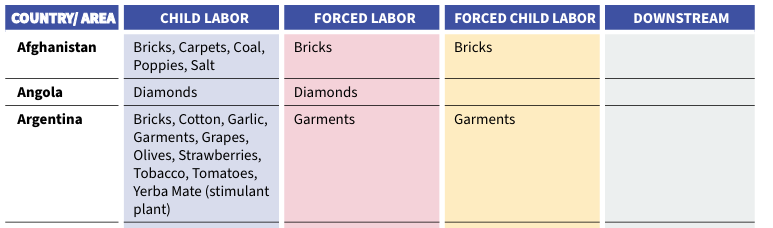
The risk of exposure to trade sanctions for noncompliance is not abstract: it can materialize in higher tariffs, cargo detentions, exclusion from tariff preference programs and reputational damage affecting the entire export category.
Road map for implementation: what the State, companies and unions can do
The Ministry of Foreign Affairs, the Ministry of Labor and foreign trade bodies such as the Customs Service and Prom Argentina will have to build a concrete road map that turns the political commitment into verifiable procedures for both imports and exports.
- Controlling imports, and their origin, will require detailed studies of supply chains and effective oversight by customs.
- The provinces could, through their ministries and labor secretariats, step up their controls to prevent forced labor.
- The unions and business chambers affected by imports of products made with forced labor should launch investigative processes and support the measures the government adopts to keep those products out of the country and prevent unfair competition.
- Exporting companies, for their part, must urgently begin internal audits of their supplier chains, paying special attention to the most opaque links, such as outsourced contractors, input suppliers in informal economies and operations in production zones with a weaker labor inspection presence.
Developed countries took advantage of China's development by selling it capital goods and forming partnerships, as in the case of Starbucks and its expansion through direct investment in China, but the situation has changed and now rests on a difficult balance. Alignment with the US on this issue, in keeping with the commitments Argentina has assumed at the ILO, can be an interesting way to reshape foreign trade, but without neglecting neutrality toward the various trading partners.
Sources
- Pulso Internacional — The United States threatens to raise tariffs to prevent imports made with forced labor
- Pulso Internacional — Canada moves against imports of products made with forced labor
- hongkongfp.com
- U.S. Department of Labor — TVPRA List of Goods Produced by Child Labor or Forced Labor (2024)
- USTR — Chair's Statement: G20 Trade Ministerial (October 2026)
- USTR — G20 Chair's Statement (PDF document) (October 2026)
- USTR — US-Argentina Agreement on Regulatory Tariff Integrity (ARTI) (February 2026)
- Pulso Internacional — Opportunity and defense for Argentina's textile sector thanks to the US
- Pulso Internacional — Red card
Director of Pulso Internacional
Lawyer specializing in international trade and productive investment, with more than 25 years of experience in international trade negotiations as an adviser to governments and to companies going international. At Pulso Internacional we analyze foreign trade, bringing clarity and international context so that your company can export and invest more.
Related analysis

European Assessment of the EU-Mercosur Agreement: In 4 Months, European Exports Grow 9%
November 5, 2026 · 2 min
Why Has the US Increased Its Investment in Germany?
November 3, 2026 · 5 min