How to Optimize Agricultural Machinery Exports
Translated from the Spanish original. Read the original

Director of Pulso Internacional
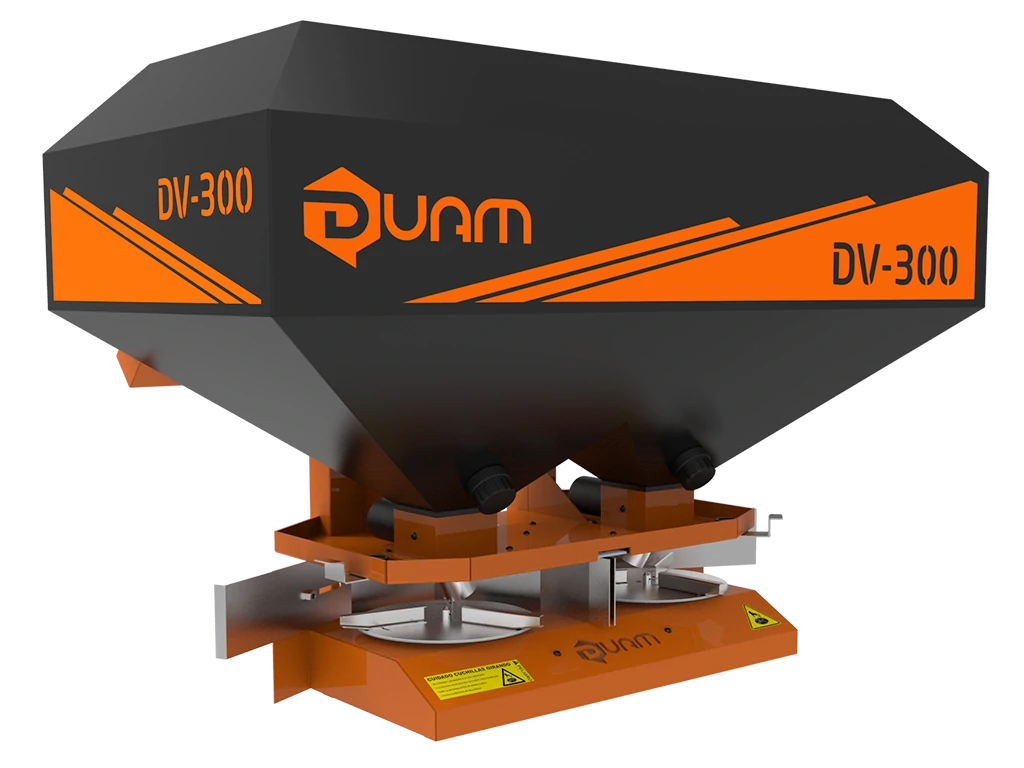
Agriculture has become a highly sensitive geopolitical and trade axis, with disputes over market access, sanitary standards, high technology, supply chains, food security, and sanctions over forced labor, which heightens the importance of investing in productive activities linked to agriculture. Among them are the Argentine manufacturers of agricultural machinery, who today face a particular domestic market: while foreign-owned companies account for approximately 60% of total sales in segments such as tractors and combine harvesters, domestic companies maintain leadership in seeders and implements. This asymmetric configuration, combined with production largely oriented to the domestic market and a low export share, represents both a challenge and an opportunity. In this article we will look at an overview of the agricultural machinery sector and its potential as a driver of foreign direct investment (FDI).
International overview of agricultural machinery and Argentine production
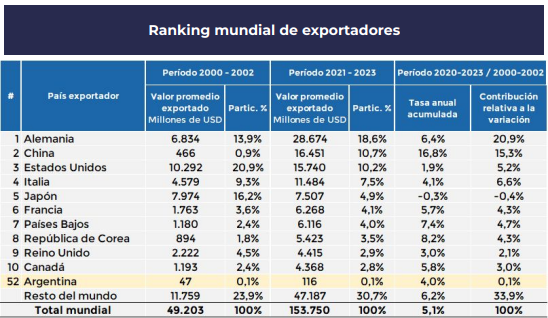
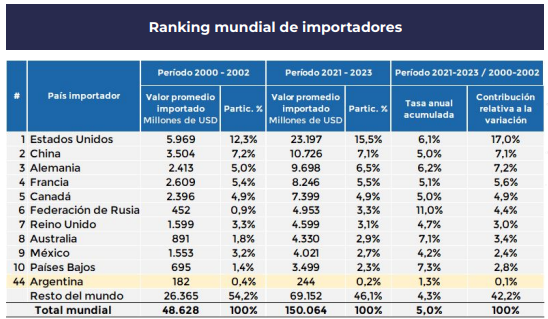
Between 2000 and 2023, global trade in agricultural machinery grew at a cumulative rate of 5.1% per year, exceeding US$150 billion on average over the last three years. Among the main exporting countries are the US, Germany, Belgium and China. In the region, Brazil is the leading exporter, mainly owing to the production carried out by subsidiaries of multinational companies that set up their production plants in its territory. The global agricultural machinery market is concentrated in 15 companies, which account for more than 60% of global sales. This degree of concentration, together with the high vertical integration of these companies, is one of the main constraints on the international marketing efforts of small and medium-sized enterprises. The sector, in addition to these 15 companies, which have several product lines and specialized global subsidiaries, is made up of local companies from developing countries with low-cost strategies. The high concentration in a few international companies, their limited productive presence in the country, and the absence of Argentine companies among those 15 leaders have strongly affected the meager export results of the Argentine agricultural machinery sector. To overcome this quasi-monopolistic concentration, several Argentine agricultural machinery manufacturers have specialized in the production of certain equipment, such as implements or seeders, which have been widely accepted in regional markets given their reliability, durability and proximity. According to the MECON (Ministry of Economy), Argentina ranks 52nd among global exporters (0.1% of the total) and 44th among importers (0.2% of global imports).
Source: MECON 2025
Source: MECON 2025
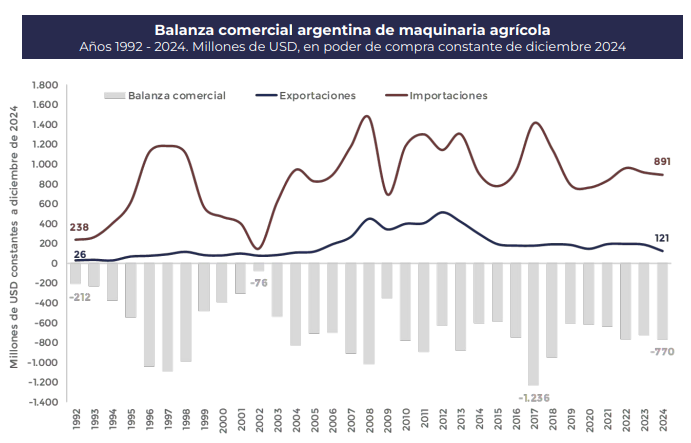
Since the early 1990s to the present there has been a growing deficit in the sector's trade balance, as exports rose from US$26 million to US$121 million while imports rose from US$238 million to US$891 million.
Source: MECON
The challenge for domestic producers of agricultural machinery is to cope with the growing share of Chinese machinery manufactured at subsidized prices, the entry into the country of European machinery, and the concentration process of the large companies, which have absorbed the new developments of companies worldwide by swallowing them up through mergers and acquisitions.
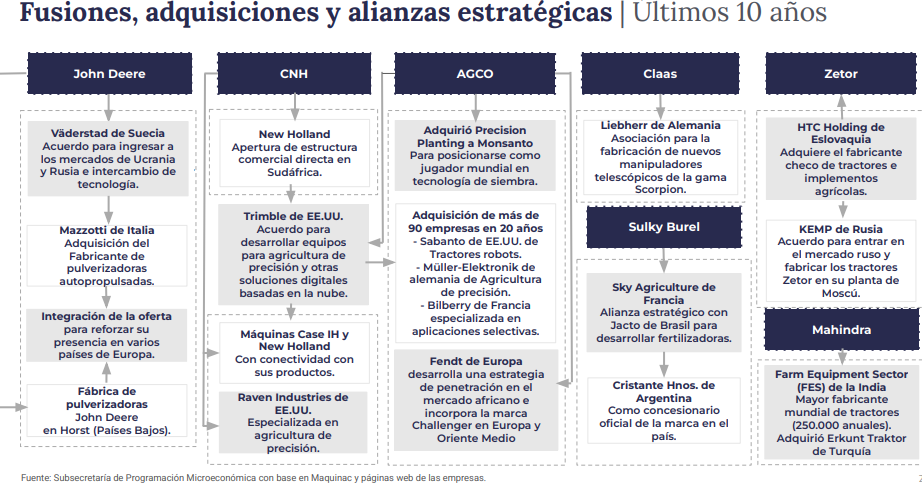
Source: MECON 2025
The geopolitical momentum of Argentine agriculture
The current geopolitical context structurally favors Argentina's agricultural sector and sends a clear message to Argentine agricultural machinery companies: reposition your commercial and productive strategies. Indeed, although agricultural machinery is a dynamic sector with an industrial tradition, agricultural machinery production in Argentina needs capital, technology and external markets to recover its activity and not depend only on good harvests. This situation is a key element for companies that can evaluate attracting technology and foreign direct investment (FDI) and pairing them with existing local capabilities. The sector is highly attractive for FDI, and although in 2025 Argentina only received USD 3.134 million in foreign direct investment (FDI), local companies can take advantage of the new framework of trade liberalization, such as the Interim Agreement between MERCOSUR and the EU. The same applies to the relationship with the US, whose tariffs on agricultural machinery, under Proclamation 11032, are set at 15% for agricultural machinery until 12/31/2027.
Strategies to Take Advantage of Trade Liberalization
Argentine agricultural machinery companies can capitalize on trade liberalization through three main pillars that redefine the sector's competitive advantages. The first is cost optimization through easier access to critical components: electronics, pneumatic systems, special steels and industrial software, with fewer tariff and regulatory restrictions. This is especially relevant in agricultural machinery, where added value depends more and more on sensors, automation and precision elements. Argentine companies that manage to integrate these components efficiently will be able to compete with imported products on both quality and price. In this regard, the Repostock Program launched by the national government, which facilitates the acquisition of imported inputs destined for export, can be a key tool. The second pillar involves becoming a regional export platform for Latin America, especially Brazil and Mercosur, and a technology hub tied to the global agricultural sector, in order to substitute Chinese inputs in the European and North American markets that face tariff restrictions. This strategy requires taking advantage of productive complementarities within the regional bloc and existing preferential agreements. The third pillar focuses on attracting specialized foreign direct investment, not only from the 15 largest companies in the sector internationally but also from small and medium-sized European, American and Brazilian companies. The strategic difference lies in the fact that Argentina's agricultural sector maintains global competitive advantages that can drive investment in the supplier chain. Argentine agricultural machinery has a clear opportunity to attract foreign direct investment and scale up exports if it takes advantage of trade liberalization to gain market size, improve access to inputs and link up with regional value chains. Success will depend on companies' capacity to combine local advantages with access to international technology, taking advantage of the favorable geopolitical momentum of the agricultural sector and the new regulatory frameworks for investment promotion. The strategic window remains open, but it requires investment and commercial positioning decisions that consolidate competitive capabilities before regional competition intensifies.
Sources
- Clarín — Copa inversiones extranjeras puesto quedó argentina incómoda gobierno
- MECON 2025 - Agricultural Machinery Industry - Year 10 - No. 82 - June 2025 Value Chain Reports ISSN 2525-0221 argentina.gob.ar
Director of Pulso Internacional
Lawyer specializing in international trade and productive investment, with more than 25 years of experience in international trade negotiations as an adviser to governments and to companies going international. At Pulso Internacional we analyze foreign trade, bringing clarity and international context so that your company can export and invest more.
Related analysis

European Assessment of the EU-Mercosur Agreement: In 4 Months, European Exports Grow 9%
November 5, 2026 · 2 min
Why Has the US Increased Its Investment in Germany?
November 3, 2026 · 5 min