Industrial Policy: Why Argentina Cannot Wait Any Longer
Translated from the Spanish original. Read the original

Director of Pulso Internacional
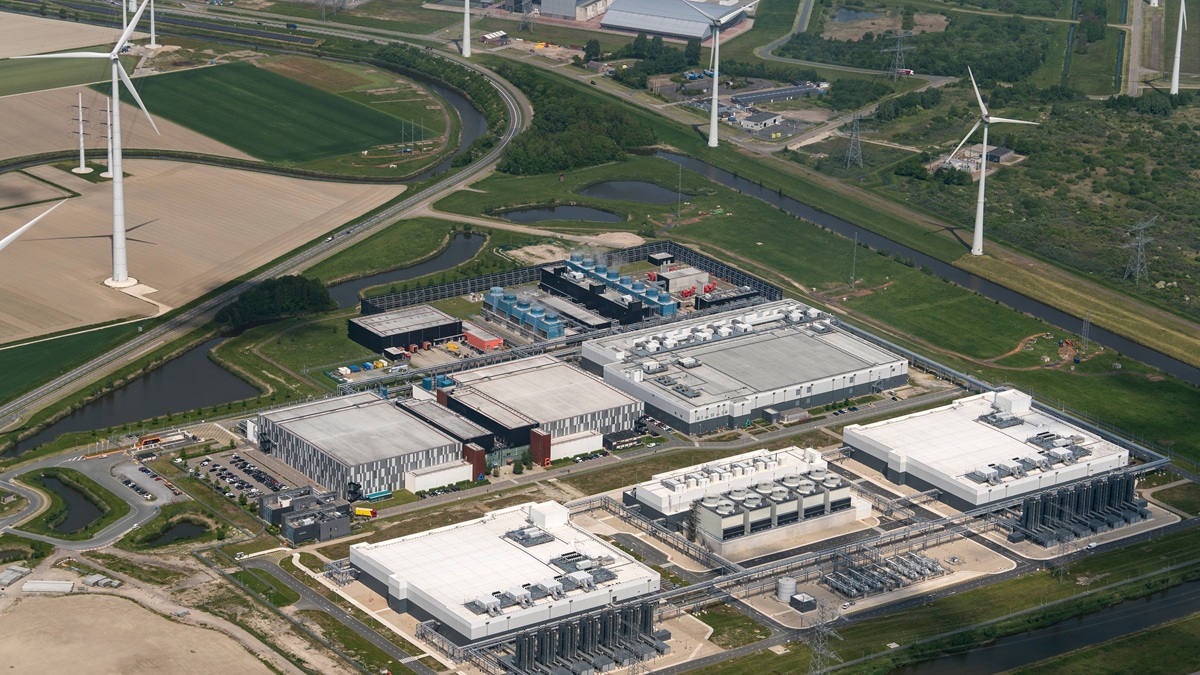
Geopolitical tensions, crossed threats of tariff increases, the weakening of the WTO's multilateral trade disciplines and growing economic security concerns are altering the conditions under which multinational companies invest abroad. Globally, 84% of foreign investors say that industrial policy is "extremely" or "very" important in foreign direct investment (FDI) decision-making. In addition, the majority (57%) believe that industrial policy has a positive impact on their company's performance, according to a recent report by the consultancy Kearney. UNCTAD observed that industrial policies had become widespread in recent years, as more than 100 economies had adopted industrial development strategies in the preceding ten years; since then, the number of investment-related incentives and industrial policy interventions has increased in both developed and developing countries.
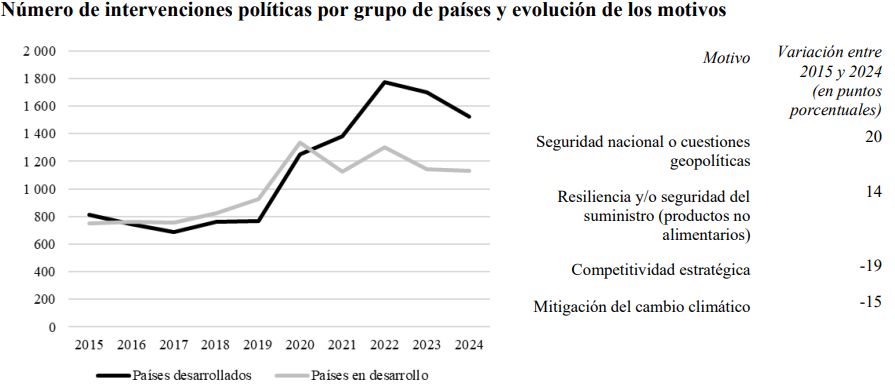
Source: UNCTAD
Without industries, trade liberalization implies vulnerability and raises a question that goes beyond the local debate, since the absence of a comprehensive industrial policy reveals a disconnect from the global trends that are redefining capital flows. This is happening in a context where the main economies have abandoned the principles of the pro-globalization Washington Consensus in favor of selective international investment strategies in a few geopolitically aligned countries, with companies seeking to reduce their exposure to possible political disruptions or market access risks.
Argentina presents itself as an attractive alternative for industrial foreign direct investment, but history has shown us that all the leading great powers have been at the technological forefront, and for that Argentina needs its industries. The lack of an industrial development strategy, or prioritizing only investments linked to the RIGI, means sacrificing its productive diversification, which is one of its most valuable assets.
This, added to Mercosur's integration with other regions such as the European Union and EFTA, requires that trade opening be considered together with the attraction of foreign direct investment.
Farewell to the Washington Consensus
The Washington Consensus, which dominated the 1990s and 2000s, held that companies were the vectors of decision-making and that the state had little to intervene in. The emergence and success of China as an industrial power thanks to decade-long planned industrial policies such as "Made in China 2025" has put the governments of developed countries in the uncomfortable position of giving up dogmas that until recently seemed unalterable and inherent to the success of Western countries. The European Union , owing to its economic security and defense concerns, has just strengthened its framework for screening foreign investment in sensitive sectors such as defense, semiconductors, artificial intelligence, critical raw materials and financial services. The resurgence of national industrial policies as a legitimate development tool coincides with the recognition that investment in artificial intelligence and digital infrastructure is increasingly linked to development priorities, confirming that the State has resumed an active role in guiding investment. This warning marked the opening of the 12th Multi-year Expert Meeting on Investment, Innovation and Entrepreneurship held on May 4 and 5, 2026 at UNCTAD. "Investment is a bet on the future, but that bet is increasingly difficult to make and more unequal in its results," said Pedro Manuel Moreno, UNCTAD Deputy Secretary-General, and this trend sets a historic precedent that forces a rethinking of FDI attraction strategies in emerging economies.
Sources
- European Parliament — Protecting strategic sectors from risky foreign investment
- UNCTAD — The AI investment boom risks widening the global development gap
- UNCTAD - TD/B/C.II/MEM.4/34 "International investment in turbulent times:
how to deal with geopolitics, uncertainty and artificial intelligence-related investments" unctad.org May 4 and 5, 2026.
Director of Pulso Internacional
Lawyer specializing in international trade and productive investment, with more than 25 years of experience in international trade negotiations as an adviser to governments and to companies going international. At Pulso Internacional we analyze foreign trade, bringing clarity and international context so that your company can export and invest more.
Related analysis
European Assessment of the EU-Mercosur Agreement: In 4 Months, European Exports Grow 9%
November 5, 2026 · 2 min
Why Has the US Increased Its Investment in Germany?
November 3, 2026 · 5 min