Argentina Ratifies the Mercosur-EFTA Free Trade Agreement
Translated from the Spanish original. Read the original

Director of Pulso Internacional
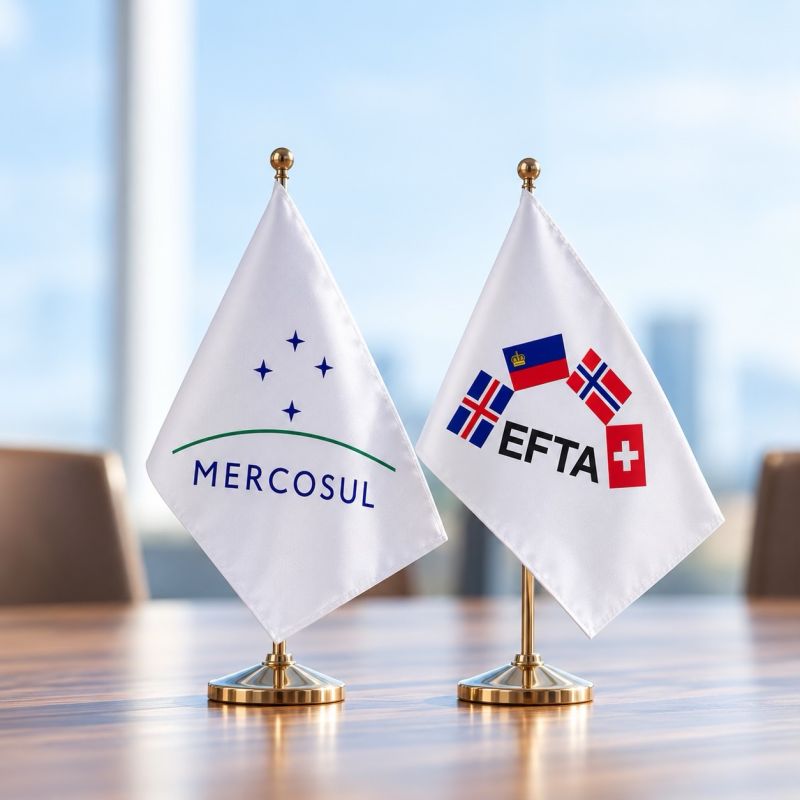
On November 27, 2026, the Argentine Senate completed the process of parliamentary ratification of the free trade agreement between MERCOSUR and EFTA, the bloc made up of Switzerland, Norway, Iceland and Liechtenstein, culminating a negotiating process that spanned more than two decades since the first exploratory talks in the early 2000s.
Brazil had already promulgated by decree the entry into force of the Mercosur-EFTA agreement on September 24, 2026, with phased implementation beginning with Iceland on October 1, 2026. The differentiated entry into force by EFTA member country reflects the technical and political complexity of the ratification process in each jurisdiction. Meanwhile, on October 13, 2026, a coalition of Swiss civil organizations formally launched in Bern the collection of signatures to call a referendum to block the free trade agreement between EFTA and MERCOSUR, approved by the Swiss Parliament barely three weeks earlier. The Swiss mechanism of direct democracy requires gathering 50,000 signatures in 100 days (expiring on January 21, 2026) to submit any federal law to a popular vote, turning the EFTA-MERCOSUR agreement into a political dispute with an uncertain outcome. The initiative reflects the social tensions in Switzerland, torn between the trade openness negotiated by the executive and internal sectoral resistance from agriculture, environmental groups, and anti-immigration groups, which question MERCOSUR's phytosanitary and sustainability standards.
All of this is taking place amid a process of geopolitical fragmentation and a concentration of negotiations among economic spaces (free trade zones), owing to the fragility of the multilateralism of the World Trade Organization.
The agreement in perspective: what EFTA is and why it matters
The EFTA (European Free Trade Association) is not the European Union, although it is frequently confused with it in local public debate. Its four members have a combined population of barely 14 million, but they have an average GDP per capita above US$70,000 and rank among the markets with the highest purchasing power in the world. Switzerland, in particular, is the seventh-largest foreign direct investor globally and is home to some of the most sophisticated value chains on the planet in sectors such as pharmaceuticals, precision watchmaking, premium agribusiness and financial services. Norway, for its part, is a benchmark market for seafood, energy and specialized machinery.
From the standpoint of trade policy, the MERCOSUR-EFTA agreement establishes a tariff phase-out schedule that, for the most part, covers the universe of agro-industrial products, manufactures of agricultural origin and industrial goods with added value. The agreed rules of origin provide for intra-MERCOSUR origin cumulation mechanisms, which means that inputs produced in Brazil, Uruguay or Paraguay can be incorporated into the Argentine export chain without losing tariff preference.
Argentina's export supply: sectors with the greatest potential to benefit
On September 18, 2026, the Argentine Chamber of Deputies formally established the Parliamentary Friendship Group with EFTA, highlighting the opportunities the agreement offers.
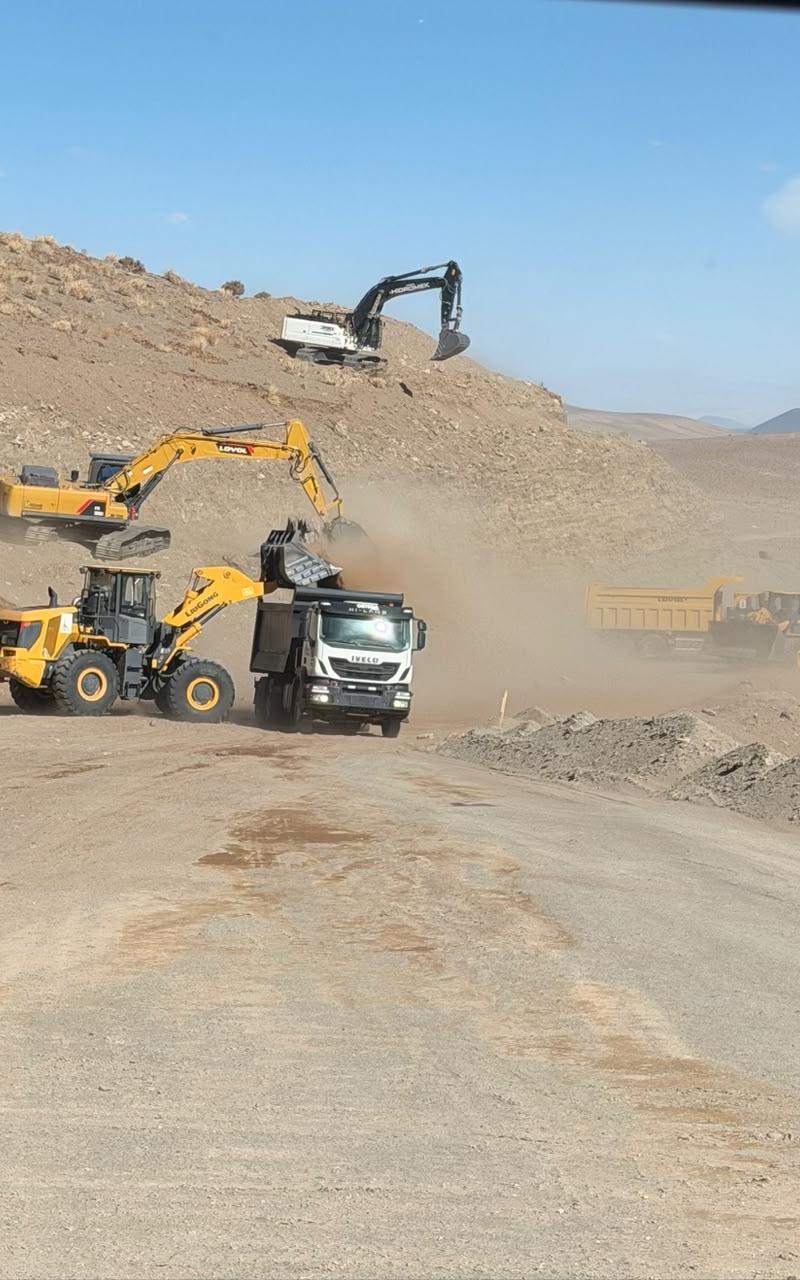
The potential for foreign direct investment from Norway to take advantage of Argentina's hydrocarbon potential is considerable.
An analysis of the structure of Argentine exports to EFTA markets makes it possible to identify at least four sectors with a real capacity to scale up their presence once the tariff phase-out schedule begins to operate:
- High-value food and agribusiness: varietal wines, olive oil, beef with certified traceability, packaged honey and legumes. The Swiss market, with its Codex Alimentarius standards and growing demand for sustainably sourced products, represents a differential opportunity for exporters that already hold international certifications.
- Fishing and seafood: the gradual elimination of tariffs in Norway and Iceland opens up a scenario of direct competition, but also of complementarity, given that both countries are large net importers of species that Argentina produces in volume: hake, Patagonian prawn and squid.
- Manufactures of industrial origin (MOI): chemicals, auto parts, mid-complexity capital goods and embedded software. Tariff reductions in these segments are more gradual, but the signal of preferential access is, in itself, an incentive for exporters of greater technological complexity to invest in origin certification and the adaptation of technical standards.
- Knowledge-based services: although the agreement mainly covers goods, its provisions on investment create more predictable conditions for Argentine technology and consulting firms seeking to establish themselves in high-income markets.
The geopolitical context: Mercosur in the era of global trade realignment
The ratification of the agreement with EFTA comes at a time when the architecture of international trade is undergoing its greatest reconfiguration since the founding of the WTO in 1995. The advance of friend-shoring, the proliferation of mega-regional agreements such as the CPTPP and the RCEP, and the simultaneous pressure from the United States and the European Union to establish shorter and more reliable value chains make preferential agreements instruments of strategic positioning as much as tools for market access. EFTA is in the midst of a process of trade expansion through bilateral agreements such as the one recently signed with Vietnam.
In this context, the Mercosur-EFTA agreement is part of a broader integration sequence that includes the ongoing negotiations with the European Union , whose political agreement was concluded in December 2024 but still faces obstacles to full European ratification, and the exploratory dialogues with Canada, South Korea and Indonesia. For Argentina, which has historically viewed trade-opening processes with ambivalence, the geopolitical moment is clear: the margins of preference granted by an FTA are most valuable precisely when global trade fragments into blocs and preferential access becomes scarcer.
Implications for companies and provincial governments
We have options for how to take concrete advantage of the trade and investment preferences arising from the agreement. It is the starting point for positioning in high-value markets. Implementation, as always, depends on the institutional will of provincial governments and companies to translate legal text into real trade flows. We can help you do it. Contact us.
Director of Pulso Internacional
Lawyer specializing in international trade and productive investment, with more than 25 years of experience in international trade negotiations as an adviser to governments and to companies going international. At Pulso Internacional we analyze foreign trade, bringing clarity and international context so that your company can export and invest more.
Related analysis
Argentina Climbs to Fifth Place Among Peru's Suppliers, Overtaking Mexico
November 22, 2026 · 11 min
Indonesia Signs Trade Agreement with the EU and Competes with Mercosur in That Market in 2027
November 22, 2026 · 4 min