The Mercosur-EFTA Agreement Enters into Force in Brazil
Translated from the Spanish original. Read the original

Director of Pulso Internacional
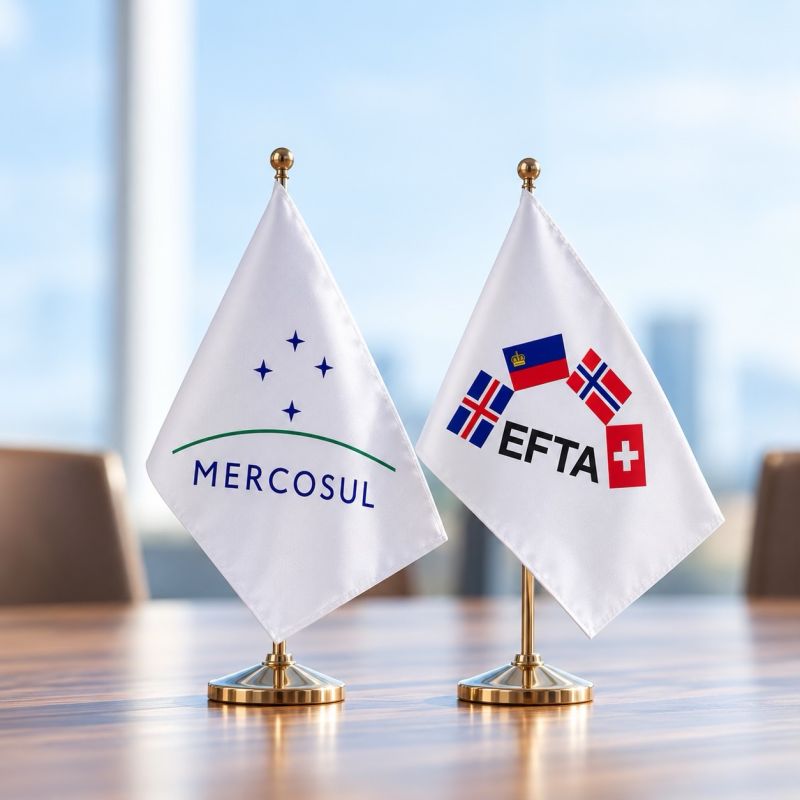
On September 24, 2026, Brazil's Official Gazette of the Union (Diário Oficial da União) published the promulgation decree of the free trade agreement between MERCOSUR and EFTA, marking a milestone in the trade diversification strategy we have been following. The legal instrument establishes a phased entry into force: the agreement with Iceland will apply from October 1, 2026, while with Norway it will do so from November 1. The cases of Switzerland and Liechtenstein remain subject to the completion of their respective domestic incorporation processes. This differentiated form of implementation reflects the different institutional speeds within a bloc that, although small in population, concentrates very significant purchasing power and direct investment capacity. Moreover, the entry into force of the agreement at separate paces among the Mercosur countries is a precedent to be taken into account, one that speaks to the new negotiating flexibility. All of this within a process of geopolitical fragmentation and concentration of negotiations among economic spaces (free trade zones), owing to the fragility of the multilateralism of the World Trade Organization.
The scale of access: figures that justify the urgency
The numbers emerging from the agreed text set a significant precedent for the bloc's international integration. Considering the universe of agricultural and industrial products, 98.9% of the value currently exported by Brazil to EFTA will be covered under free trade conditions. In the specific case of Norway, that coverage reaches 99.8% of Brazilian exports. In the industrial and fisheries sectors, tariff elimination is total from the first day of entry into force: 100% of the import tariffs applied by the EFTA partners will be dismantled immediately. The scope of the agreement is not limited to tariff access: the text covers disciplines on rules of origin, services, investment and government procurement, which makes it a new-generation agreement with cross-cutting implications for the industrial policy of the States Parties. The tariff conditions and the operational mechanisms for using the preferences are available on the Brazilian portal Siscomex, which significantly reduces the frictions of adoption by the Brazilian private sector.
The size of the markets and the investment potential
It is evident that EFTA cannot be measured exclusively in terms of market volume. Switzerland, Norway, Iceland and Liechtenstein have a combined population of just 14 million inhabitants, but their economies display levels of per capita income and productive sophistication that place them among the most attractive markets in the world for higher value-added goods, and they are also potential investors.
Beyond trade issues, direct investment must also be gauged; Norway in particular manages the largest sovereign wealth fund on the planet and is a significant net importer in sectors such as processed foods, animal proteins and industrial manufactures. Switzerland, for its part, concentrates global value chains in pharmaceuticals, precision machinery and financial services, with a demand for primary and industrial inputs that MERCOSUR. The agreement, in this sense, operates on two simultaneous levels: that of immediate market access —through tariff reduction— and that of long-term strategic positioning, insofar as it consolidates MERCOSUR as a valid interlocutor in the architecture of agreements of the enlarged European economic space, in line with the still-unfinished process of ratification of the MERCOSUR-European Union agreement.
Argentina: the other side of the agreement that has not yet entered into force

While Brazil moves forward with the operational implementation of the agreement and enables its export sector to use the tariff preferences from next October, Argentina is still going through the parliamentary stage of the domestic incorporation process. On September 18, 2026, the national Chamber of Deputies formally established the Parliamentary Friendship Group with EFTA, highlighting the opportunities of the agreement; however, the establishment of a friendship group does not replace the legislative approval that enables the instrument's entry into force. In sectors such as meat, hides, leather goods, steel products and auto parts —where both countries compete in similar niches—, swift approval by the Argentine Congress is required. Every month of delay has a measurable cost in terms of competitive positioning.
Sectoral implications and pending agenda
For the Argentine export sector, once the agreement finally enters into force, the greatest opportunities are concentrated in processed primary products, medium-technology industrial goods and the food sector.
The entry into force of the Mercosur-EFTA Agreement in Brazil marks an era in which the South American bloc is advancing at different speeds in economic integration.
Sources
Director of Pulso Internacional
Lawyer specializing in international trade and productive investment, with more than 25 years of experience in international trade negotiations as an adviser to governments and to companies going international. At Pulso Internacional we analyze foreign trade, bringing clarity and international context so that your company can export and invest more.
Related analysis
European Assessment of the EU-Mercosur Agreement: In 4 Months, European Exports Grow 9%
November 5, 2026 · 2 min
Why Has the US Increased Its Investment in Germany?
November 3, 2026 · 5 min